

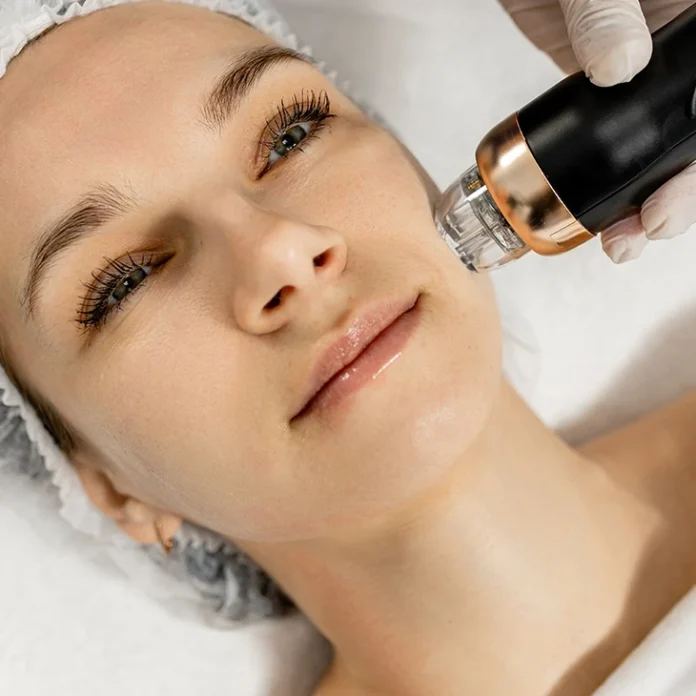
RF microneedling combines tiny needle penetrations with radiofrequency energy delivered beneath the skin, creating controlled heat at selected depths. The appeal is subtle rather than theatrical: smoother-looking texture, softer-looking fine lines and a firmer overall finish over time. The catch is important—this is a medical procedure, and technique, device choice and provider experience matter.
The useful way to judge it is by what happens after the glossy before-and-after photo: how the skin behaves during recovery, how gradually the result develops and whether the improvement is worth the cost and risk. The structure here follows the treatment-focused brief supplied for this article.
For anyone considering RF microneedling, the quick facts below are a better starting point than promises of an instant facelift.
| What to Know | Practical Expectation |
|---|---|
| Session length | Often around an hour, depending on treatment area and numbing time |
| Typical US cost | Commonly several hundred dollars to the low thousands per session |
| Number of sessions | A course of roughly two to four may be recommended |
| Downtime | Redness, sensitivity or pinpoint bleeding may occur; some people resume routine activities within a day |
| Results window | Improvement develops gradually rather than immediately |
| Fuller result | Often judged over several months as skin remodeling continues |
| Best suited to | People seeking improvement in texture, wrinkles, scars or mild laxity after professional assessment |
| Not suited to | Everyone; medical history, medications, skin condition and treatment area matter |
| Upkeep | Maintenance may be suggested as results fade with normal aging |
| Biggest caution | Burns, scarring, fat loss and nerve damage have been reported with certain RF microneedling uses |
Session and recovery estimates vary by device, area and treatment settings. Cleveland Clinic describes appointments of about an hour and commonly recommends multiple treatments, while published patient-reported pricing varies widely. The FDA issued a safety communication on October 15, 2025 after receiving reports of serious complications with certain uses of RF microneedling devices.
What RF Microneedling Actually Is
RF microneedling sits between ordinary microneedling and more aggressive energy-based resurfacing. Small needle-like electrodes enter the skin and deliver radiofrequency energy at controlled depths, producing localized heating below the surface. The FDA describes these devices as Class II medical devices and specifically says RF microneedling should be regarded as a medical procedure rather than an at-home cosmetic treatment.
That distinction matters. A beauty appointment can often be judged by finish and comfort. An energy-based procedure needs another question first: who is operating the device, what device are they using and why have they chosen those settings for your skin?
How it works, in plain terms
Traditional microneedling creates controlled punctures. RF versions add thermal energy through the needle electrodes. The goal is to create a controlled response beneath the surface so changes in texture and firmness develop gradually as the treated tissue remodels.
This is why the mirror immediately after treatment tells you little about the final result. Early redness or swelling is recovery, not the finished effect. Cleveland Clinic notes that fuller results may become apparent over roughly three to six months from the first treatment.
How it differs from regular microneedling
Regular professional microneedling relies on controlled needle penetration without RF energy. RF microneedling adds heat beneath the skin, making the treatment meaningfully different in both mechanism and risk profile.
That does not automatically make it “better.” Someone focused on modest surface texture may not need the added energy, expense or risk. The more sensible comparison is whether the extra component meaningfully addresses your particular cosmetic goal.
Who RF Microneedling Is Really For
A good candidate is not simply anyone who wants tighter-looking skin. RF microneedling makes more sense when the concern is specific enough to justify an energy-based procedure and the person accepts that improvement is gradual and variable rather than guaranteed.
Professional evaluation matters because microneedling is not suitable for everyone. The FDA recommends discussing expected benefits, risks, medical history and alternatives with a qualified health care provider before proceeding.
Skin concerns that may respond well
RF procedures are commonly offered to people seeking improvement in the appearance of facial wrinkles, textural irregularity, acne scarring or mild laxity. FDA-cleared microneedling devices have specific authorized uses, while the exact clearance and indication vary by device, so the device being used deserves more attention than the treatment’s marketing name.
A realistic candidate wants refinement. If your expectation is a dramatic surgical-level lifting effect, the gap between the sales pitch and the probable cosmetic change becomes much wider.
Who should skip it
Anyone with an active skin problem in the treatment area, relevant medication use, bleeding concerns or other medical factors should discuss those issues before booking. The FDA’s microneedling guidance also flags circumstances including pregnancy or breastfeeding, active infections, certain immune conditions, current or recent isotretinoin use, a tendency toward keloid scarring and some medication histories as reasons professional assessment may be necessary.
Conditions that mean asking a professional first
Do not try to self-clear yourself through an online checklist. Tell the provider about medications, allergies, previous reactions to aesthetic procedures, pigmentation changes, scarring history and any ongoing skin issue. The point is not to collect enough “yes” answers to qualify. It is to identify reasons the procedure may need to be delayed, modified or avoided.
Timing conflicts with other services
Stacking procedures because a clinic offers a package can complicate recovery. Ask how recent peels, lasers, injectables, prescription skincare or other treatments affect the timing of the session. The FDA notes that risks from combining microneedling devices with other products or using them outside reviewed indications may not be established.
What Happens During an RF Microneedling Appointment
An RF microneedling visit usually involves more preparation than the device touching the skin for a few minutes. There is cleansing, assessment, numbing, treatment and post-procedure care. Cleveland Clinic describes topical numbing and an overall procedure time of about an hour, though individual appointments vary.
Knowing the sequence also makes it easier to spot a rushed appointment.
Before you arrive
Follow the instructions from the provider who assessed you rather than copying a generic social-media routine. Cleveland Clinic advises discussing blood-thinning medication and notes that some ingredients and medications may need special consideration before microneedling.
What to do the night before
Keep the routine boring unless your clinician has told you otherwise. Avoid experimenting with a peel, aggressive exfoliant or unfamiliar active because arriving irritated makes it harder to distinguish pre-existing sensitivity from a treatment reaction.
If you are preparing for a wedding, shoot, interview or major event, do not book your first session immediately beforehand. Allow enough buffer for redness or unexpected sensitivity to settle. That matters if the outfit depends on a clean neckline, open back or camera-ready complexion.
What to bring and what to wash off
Arrive according to the clinic’s instructions, generally with the treatment area free from heavy cosmetics and products. Bring a list of medications or products if there is any chance you will forget the names during the consultation.
And bring questions. The FDA specifically recommends asking which device will be used and choosing a licensed health care provider with training and experience using RF microneedling devices.
The appointment, stage by stage
The exact protocol changes with device, treatment area and provider. What should not change is deliberate assessment and clear communication.
Cleansing and preparation
The area is cleaned and prepared. Topical numbing is commonly used to reduce discomfort before treatment.
Setting the treatment plan
Needle depth and energy are not fashion presets. They should be chosen according to the treatment area, the device and the provider’s clinical judgment. Ask what is being adjusted and why.
The part people notice
As the handpiece works across the skin, sensations can include pressure, warmth or discomfort. The important distinction is between expected sensation and something that feels sharply or persistently wrong. Speak up rather than trying to win a pain-tolerance contest.
The finish
After treatment, the area may appear pink or red and may feel warm or tight. Pinpoint bleeding or bruising can also occur with microneedling procedures.
How long it takes start to finish
Around an hour is a reasonable planning estimate for some facial sessions, but larger areas, longer numbing periods and different protocols can extend the visit.
Do not schedule the appointment in a tiny gap between meetings. Even if you technically can return to normal activity quickly, you may prefer not to arrive at dinner or a client presentation with visible redness.
Results: What to Expect and When
RF microneedling is poorly suited to an instant-gratification mindset. Early post-treatment changes include recovery effects. The cosmetic result develops later.
That slower timetable can actually work well for wardrobe and event planning. Someone preparing for engagement photos or a major occasion months ahead has room to assess how the skin responds before deciding whether another session makes sense.
The first day
Expect the treated skin to look recently treated. Redness, tightness, tenderness, swelling or pinpoint bleeding can occur with microneedling procedures.
A first-day mirror check should answer “How is my skin recovering?” rather than “Did it work?”
Week one to week four
Surface irritation usually settles well before the complete cosmetic result appears. Cleveland Clinic says many patients return to routine activities quickly, while the longer-term changes continue developing afterward.
This is also when discipline matters. Do not turn the recovery period into a skincare experiment.
Where expectations run ahead of reality
“Tighten and refine skin” describes the aesthetic ambition, not a guaranteed outcome. RF procedures are not substitutes for surgery, and Cleveland Clinic explicitly notes that RF microneedling cannot reproduce surgical results.
The best result may be the kind another person cannot name: smoother-looking makeup, softer texture in side lighting or slightly firmer-looking contours. If you need a dramatic transformation to feel the money was well spent, discuss that before paying for a series.
Cost, Frequency and Booking RF Microneedling
Cost is one of the biggest reasons to think in terms of a treatment plan instead of a single appointment. US pricing varies sharply by city, provider credentials, device and treatment area.
Older patient-reported RealSelf data placed sessions roughly between $600 and $2,300, with an average just above $1,000, but those figures should be treated as a broad historical reference rather than a guaranteed current quote.
What it typically runs and why prices swing
Expect quotations to move with location, treatment area, provider experience and the equipment being used. A high price does not prove skill. A bargain does not prove value.
Ask for the complete cost of the proposed course rather than focusing only on the introductory session price.
How often to repeat it
Cleveland Clinic says two to four treatments may commonly be recommended, with the exact plan determined during consultation.
Do not buy a large prepaid package before understanding why that number of sessions is appropriate for you. A treatment plan should follow assessment, not the other way around.
Questions to ask before you book
Ask who performs the procedure, what their RF-specific training is, which device they use, whether that device is FDA cleared for the proposed use, how the settings are selected and what complications they have a protocol for managing. The FDA specifically advises patients to seek a licensed, trained provider and ask which device is planned.
Also ask to see results from people whose skin and concern resemble yours rather than the clinic’s single most dramatic case.
Aftercare That Actually Protects the Result
After RF microneedling, the goal is not to “speed up” recovery with more products. The better instinct is to avoid unnecessary irritation and follow the provider’s written instructions.
The FDA notes that skin may be more sensitive to sunlight and skincare products after microneedling.
The first 24 hours
Treat newly worked-on skin as newly worked-on skin. Follow instructions about cleansing, moisturizer, sun exposure and makeup rather than assuming your normal routine is automatically appropriate.
If redness, swelling or another reaction is intense, worsening or concerning, contact the treating health care provider instead of trying to troubleshoot it with social-media advice.
The rest of the cycle
Once the surface feels normal again, consistency generally matters more than piling on strong products.
Products to pause
The exact pause depends on your provider’s protocol. FDA guidance notes that ingredients including retinol, glycolic acid and alcohol-containing products may sting or irritate recently microneedled skin.
Habits that undo the work
Poor sun protection and repeated irritation make little sense after paying for a procedure intended to improve appearance. Follow the clinician’s sun-care instructions and resist the urge to pick at flaking or rough areas.
Risks, Side Effects and Sensible Caution
This section deserves more attention than the before-and-after gallery. The FDA’s October 2025 safety communication reported serious complications associated with certain uses of RF microneedling, including burns, scarring, fat loss, disfigurement and nerve damage. The agency said its evaluation was ongoing and advised patients to seek trained, licensed health care providers.
More routine microneedling reactions can include redness, dryness, tightness, itching, peeling, discomfort, bruising, crusting and temporary bleeding. Less common problems listed by the FDA include pigment changes and infection.
Persistent pain, unusual weakness or numbness, worsening skin changes, signs of infection or any reaction that worries you deserves professional assessment. Cosmetic reassurance is not a substitute for medical evaluation.
At-Home Versions: What Works, What Doesn’t
There is no sensible DIY version of professional RF microneedling. The FDA is unusually direct on this point: RF microneedling is a medical procedure and RF microneedling devices should not be used at home.
Consumer dermarollers and superficial home microneedling tools are not equivalent. The AAD notes that at-home products generally produce less noticeable results and can still cause irritation, infection, scarring or pigment and texture changes when misused.
If the professional procedure is outside your budget, a well-tolerated skincare routine and sun protection are more sensible compromises than trying to recreate an energy-based medical procedure yourself.
Where RF Microneedling Gets Oversold
The weakest marketing language around RF microneedling usually makes gradual refinement sound like structural transformation. “Lift,” “tighten,” “resurface” and “rejuvenate” can collapse several different expectations into one impressive-sounding package.
The treatment gets especially hard to justify when someone has mild concerns that already respond well to consistent skincare, or when their desired change is so large that a minimally invasive procedure is unlikely to satisfy them. Cleveland Clinic cautions that the procedure is not a replacement for surgery.
The cheaper route that can deliver much of the visual payoff for some people is less exciting: daily sun protection, a simple routine they actually follow and professional advice on one or two evidence-based products suited to their skin. RF should earn its place on top of that foundation, not replace it.
Frequently Asked Questions
Is RF microneedling worth it for skin tightening?
It can be worthwhile when the goal is modest, gradual improvement and the person accepts the cost, multiple-session possibility and procedural risks. It makes less sense when the expected result is comparable to a surgical lift. Discuss the likely magnitude of change with the treating provider before booking.
How long does RF microneedling take to show results?
Do not judge it in the first few days. Cleveland Clinic says the best results are often seen roughly three to six months after the first treatment as changes continue developing over time.
How many RF microneedling sessions do you need?
There is no universal number. Cleveland Clinic says roughly two to four treatments are typically recommended in its practice, while the appropriate course depends on the person, treatment area, device and desired cosmetic outcome.
Does RF microneedling hurt?
Topical numbing is commonly used, but that does not guarantee a sensation-free appointment. People may notice warmth, pressure or discomfort. Tell the provider immediately about unexpectedly intense burning or pain rather than assuming it is something you are supposed to tolerate.
Can RF microneedling tighten and refine skin before a wedding?
Potentially, but do not experiment right before the event. Because redness can occur and the final cosmetic change develops gradually, plan the consultation months rather than days ahead. That gives you time to see how your skin responds before deciding whether another treatment fits the schedule.
Can you wear makeup after RF microneedling?
Instructions vary by provider and device. Microneedled skin may temporarily be more sensitive to cosmetics and skincare products, so follow the treating clinician’s guidance about when to restart makeup instead of assuming your usual routine is safe immediately afterward.
Is RF microneedling safe to do at home?
No. The FDA’s current guidance says RF microneedling is a medical procedure and that RF microneedling devices should not be used at home. It recommends seeking a licensed health care provider with training and experience using these devices.
What are the serious risks of RF microneedling?
The FDA has received reports of burns, scarring, fat loss, disfigurement and nerve damage with certain uses of RF microneedling devices. Anyone considering the procedure should discuss these risks, available alternatives and the provider’s experience before treatment.
Is regular microneedling the same as RF microneedling?
No. Standard microneedling creates controlled needle penetrations without the added radiofrequency energy. RF versions deliver heat through needle electrodes beneath the skin, changing both how the procedure works and the risk considerations that should be discussed before treatment.
What should I ask when booking RF microneedling?
Ask for the exact device name, the provider’s training and experience with it, why the proposed settings and treatment area make sense for you, what improvement is realistic and how complications are handled. That conversation is more useful than asking whether the clinic offers its strongest setting.
Good RF microneedling begins before a handpiece ever touches the skin. The procedure is easier to evaluate when the goal is specific, the expected change is modest and the safety conversation is taken as seriously as the result. If you decide to proceed, make your next step a consultation and ask one question first: which RF device will you use on me, and why?
Premium Skin Treatment Reports
Expert guides to facials, chemical peels, resurfacing treatments and modern skin-renewal procedures.