

A taper fade can sharpen a haircut without stripping away all the character on the sides. Instead of pushing a bald blend high around the head, many current versions keep the shortest section near the temples, sideburns, and neckline. The result feels cleaner than an all-scissor cut but softer than a dramatic skin fade.
These haircut ideas for men cover straight, wavy, curly, and coily textures, with options ranging from neat buzz cuts to longer curtain styles. The best choice depends on how much contrast you want, how often you visit the barbershop, and whether you prefer a polished or relaxed finish.
Men’s hairstyles in 2026 are shifting toward texture, movement, and softer grow-outs, though tailored buzz cuts, French crops, and clean outlines remain prominent. That makes the taper fade useful as a supporting detail rather than the entire haircut. It can frame a longer top, control bulky edges, or add structure around a beard without making the sides appear bare.
Below are 25 distinct options with visual descriptions, suitability advice, barber instructions, and AI image prompts.
1. Low Taper Fade With a Short Buzz Cut
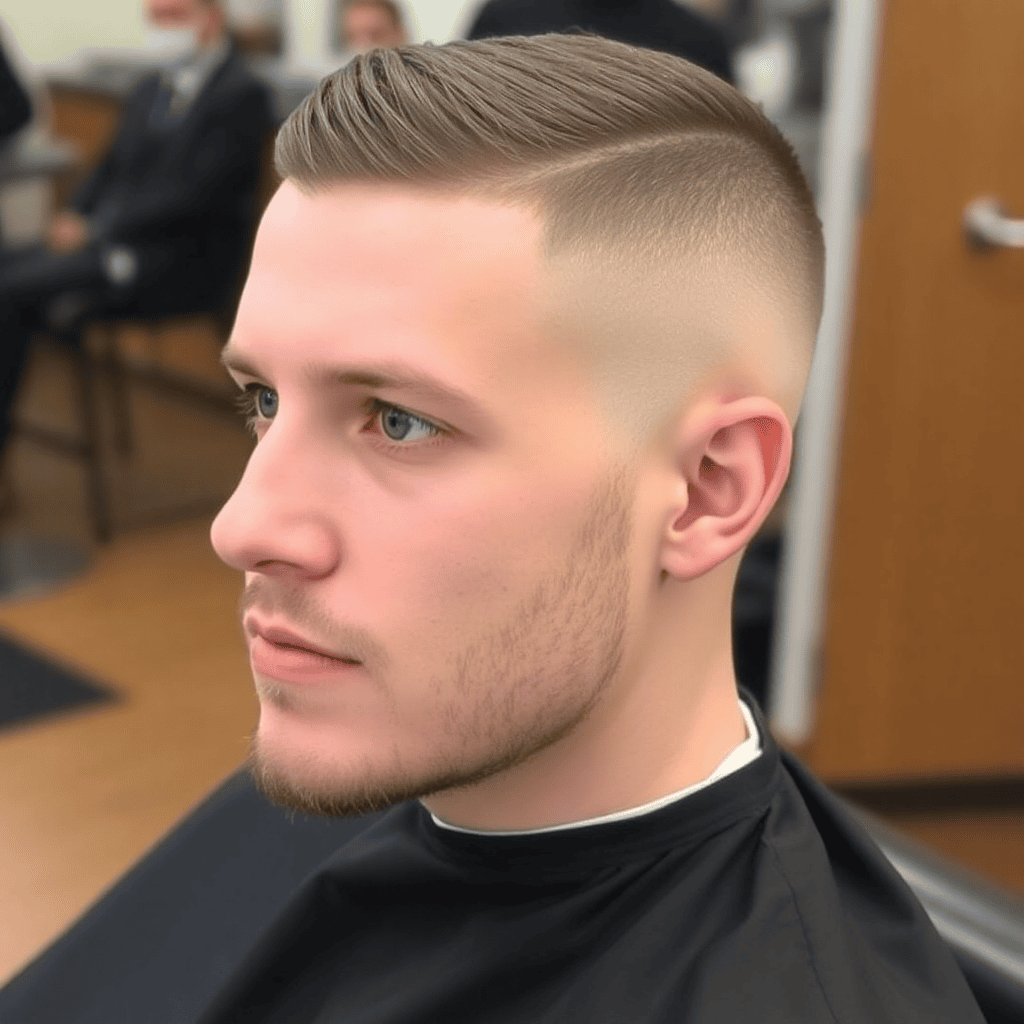
The top is clipped to an even quarter-inch length, creating a dense, uniform surface with no visible part. Around the sideburns and neckline, the hair drops from a darker shadow into a close low taper, while the area above the ears stays fuller than it would with a standard skin fade. A clean natural hairline keeps the result modern without making it appear overly drawn.
This is one of the easiest short haircuts for men with straight, wavy, or tightly curled hair. It also works well for square and oval faces because the even top follows the head shape without adding excess height. Ask the barber for a number two buzz on top, a low taper at the temples and nape, and a softly edged front. A trim every three to four weeks keeps the silhouette controlled, though the taper may lose its sharpness sooner.
2. Mid Taper Fade With a Clean Crew Cut
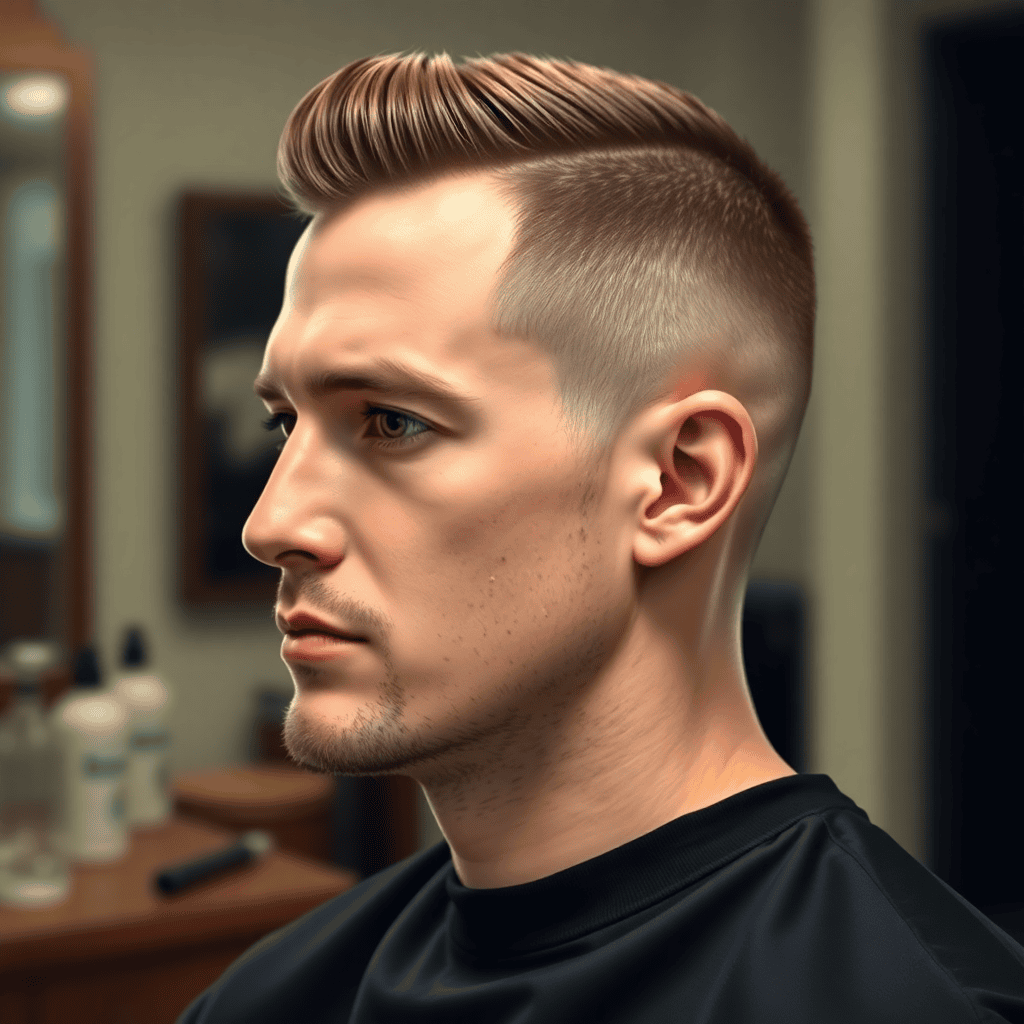
The crown and back of the top remain around one inch long, while the front gradually increases to about an inch and a half. The hair is brushed slightly upward and forward, forming a compact crew-cut shape. A mid taper begins near the upper sideburns and blends into the neckline, leaving visible weight through the sides instead of exposing the scalp.
Men with thick or straight hair can style this cut with little effort, making it a strong low maintenance men’s haircut. The extra height near the forehead can balance a round face, while the controlled sides keep wider square faces tidy. Tell the barber to create a traditional crew-cut graduation with a mid taper rather than a full mid fade. A small amount of matte paste can separate the front without making it stiff. Schedule a cleanup every three weeks if you want the temple blend to stay crisp.
3. High Taper Fade With a Sharp Lineup
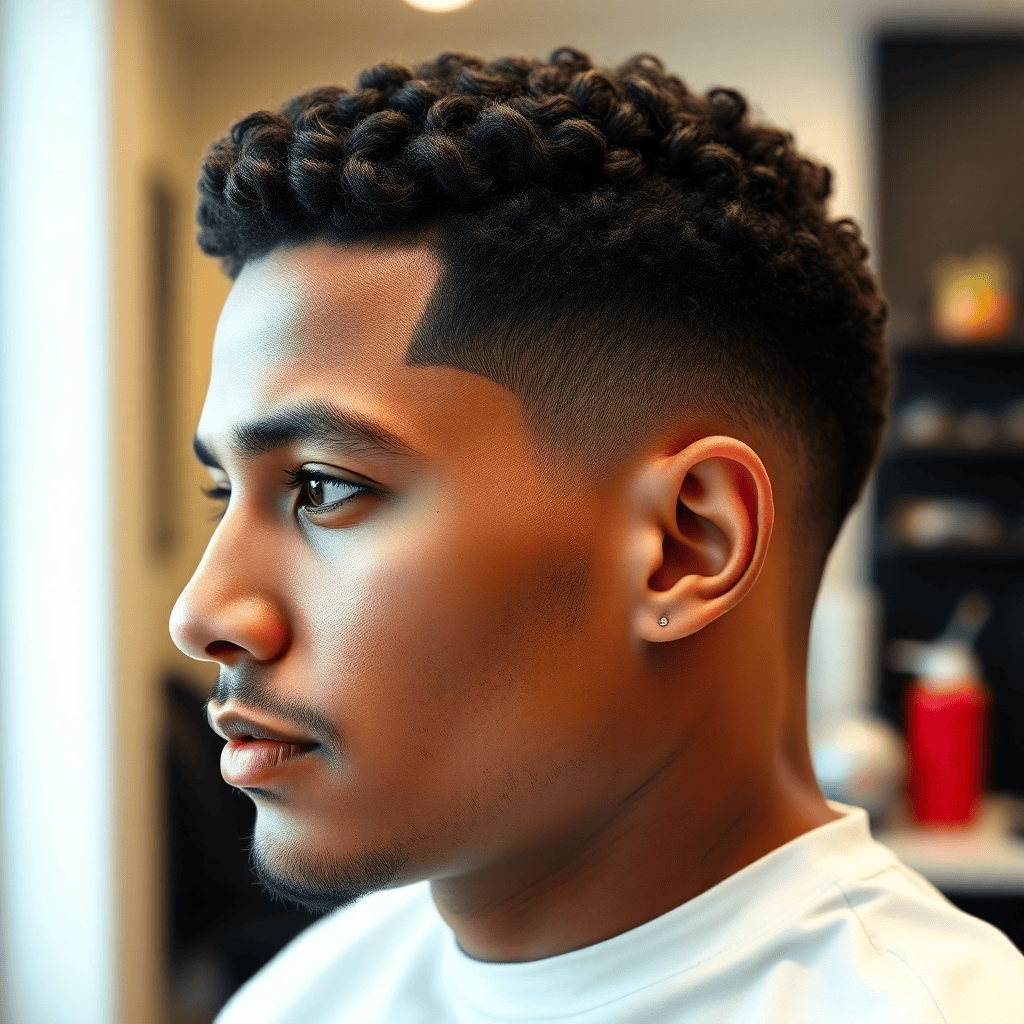
The top is cut close at roughly half an inch, with a subtle grain that follows the natural direction of growth. At each temple, the taper rises higher than usual and quickly blends from skin into dark stubble. The front hairline and corners are shaped into straight, precise edges, while the back remains smoothly tapered instead of fully faded.
This cut suits dense, coarse, or coily hair that can hold a clear outline. It is often selected among fresh haircuts for men who prefer a strong barbershop finish, though the exposed corners require regular care. Men with long faces may want slightly less height at the temples because a high taper can make the face appear longer. Ask for a high temple taper, a natural crown, and a lineup that follows your existing hairline rather than pushing it backward. Touchups every one to two weeks preserve the graphic detail.
4. Low Taper Fade With a Textured French Crop
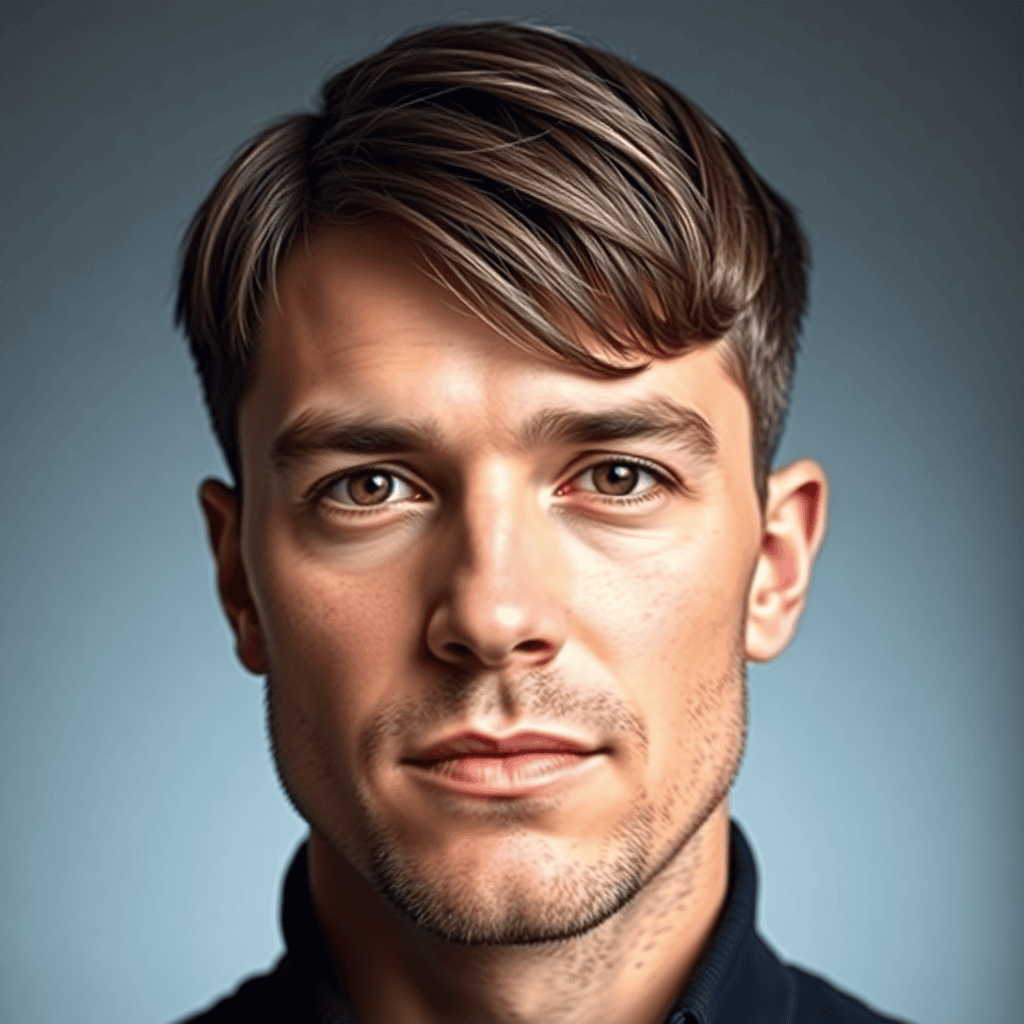
Choppy layers cover the top at about two inches, moving forward into a short, irregular fringe. The sides keep enough darkness to connect naturally with the textured crown, while a low taper removes weight only near the sideburns and neckline. The fringe is broken into small points rather than cut as one heavy horizontal block.
The French crop remains one of the more adaptable modern haircuts for men because it can reduce daily styling while giving the top a deliberate shape. Current grooming guidance often pairs the crop with tight sides, choppy scissor texture, and a soft forward fringe. It suits straight or slightly wavy hair and can help soften a tall forehead. Ask for point-cut texture, two inches on top, and a low taper that leaves the upper sides dark. Work a pea-sized amount of matte clay through dry hair using your fingertips.
5. Temple Taper Fade With a Short Caesar Cut
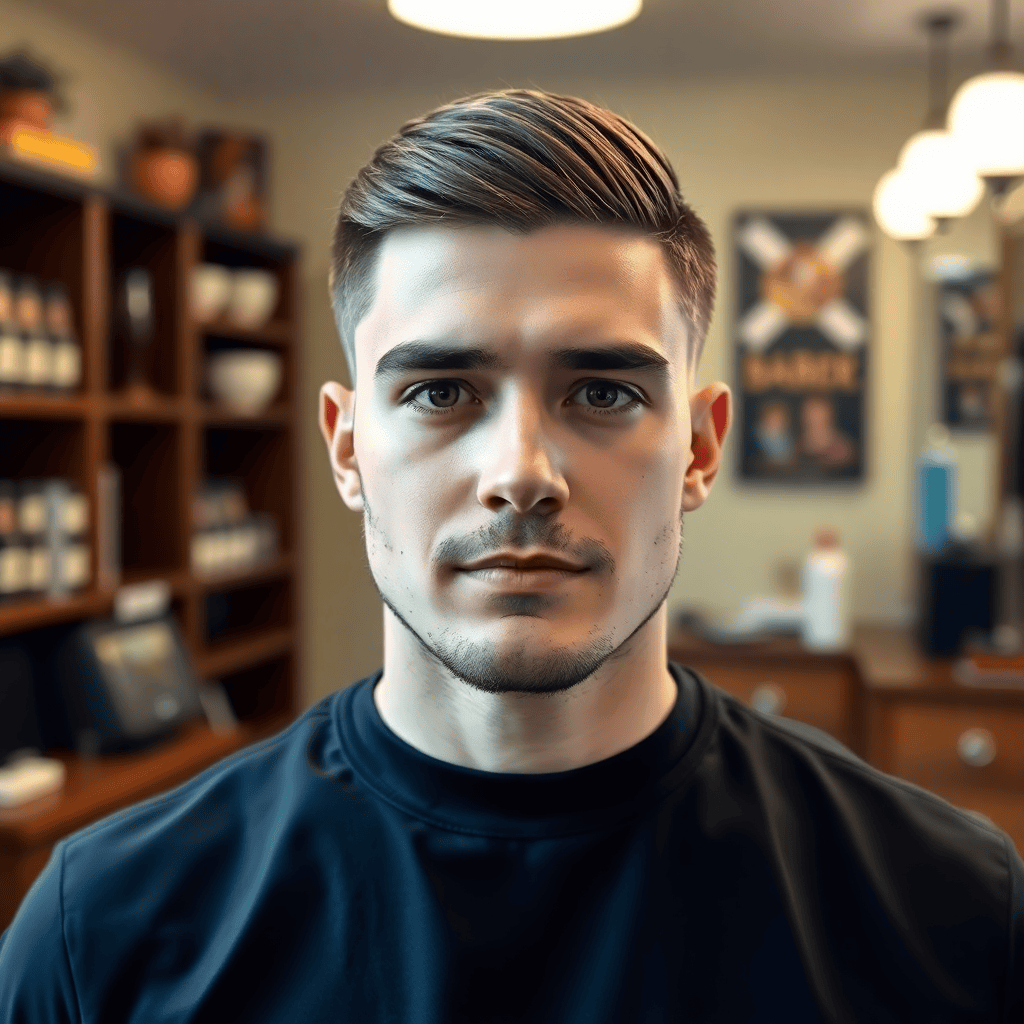
The top sits close to the scalp at about one inch and is brushed directly forward. A short, straight fringe rests high on the forehead, while the sides remain nearly the same length as the crown. Only the temple points and lower neckline fade down, giving the Caesar shape a clean frame without removing its compact, rounded character.
This variation works well for straight, coarse, or tightly curled hair. It is also useful for men who want a short haircut for a receding hairline because the forward direction can make the front look more balanced without trying to disguise every corner. Ask the barber for a short Caesar, light texture through the top, and a temple taper that does not travel over the ears. A soft lineup can add definition, but an overly low fringe may make a short forehead appear smaller. Style with a light cream or leave it product-free.
6. Low Drop Taper With a Messy Textured Top
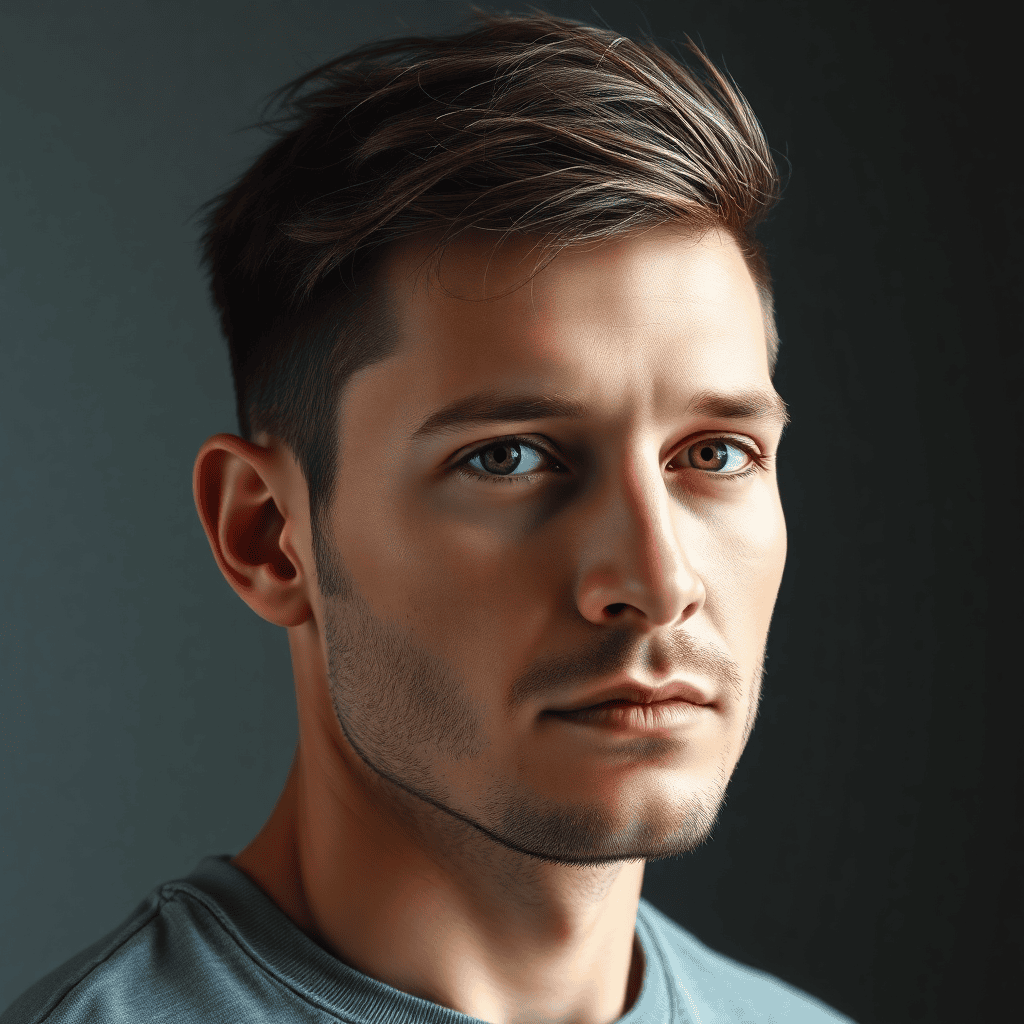
The top measures about two and a half inches and is cut into loose, uneven layers. It lifts gently near the front before falling into a broken, finger-styled surface. The taper stays low at the temples, then curves downward behind each ear and follows the natural neckline, creating a soft drop shape without clearing the entire lower side.
This style gives thick hair room to move while keeping the edges controlled. The lowered curve can complement oval and square faces because it preserves width around the upper sides. Ask for a low drop taper with scissor-cut sides and plenty of internal texture on top. The barber should avoid thinning the ends so heavily that the hair becomes wispy. Apply a light texture spray to damp hair, blow-dry in different directions, and finish by pinching a few sections with matte paste. The messy finish makes minor growth less obvious between appointments.
7. Mid Taper Fade With a Short Brushed-Up Quiff
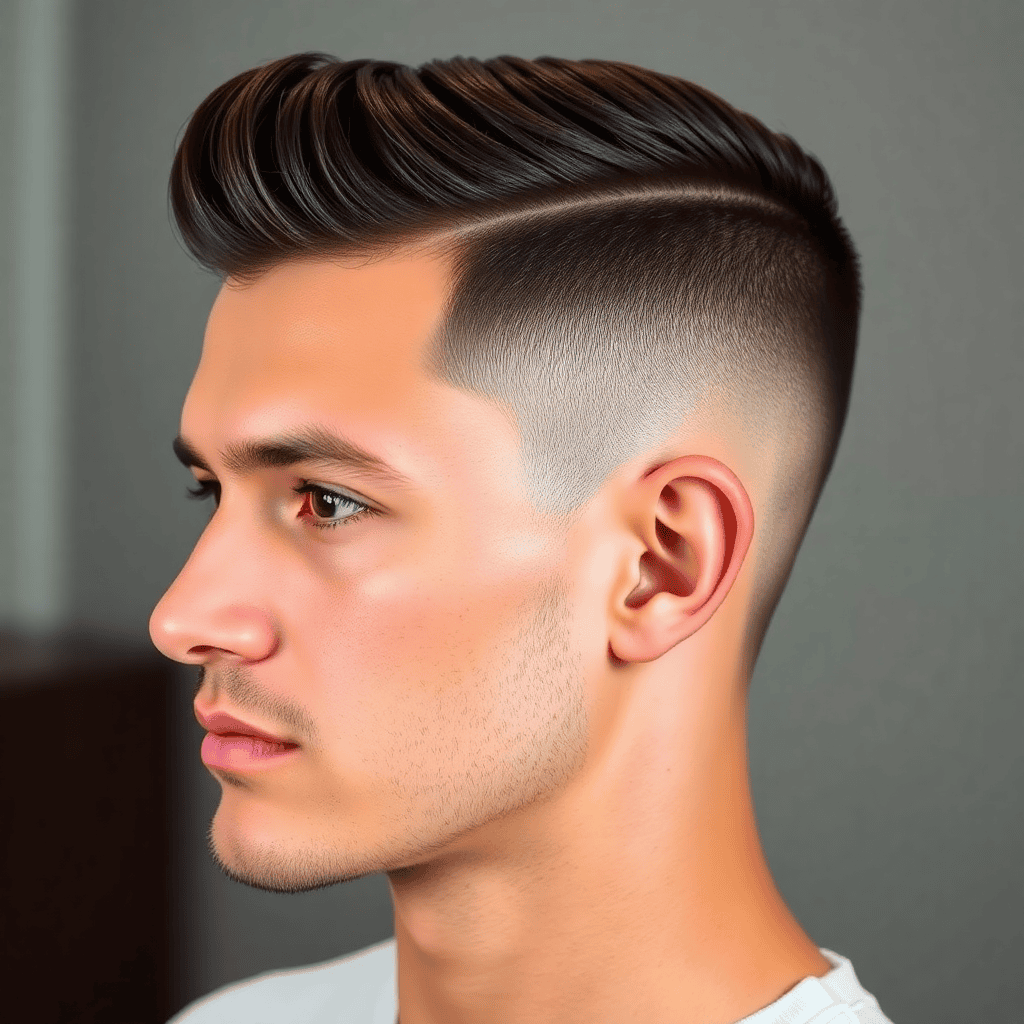
The top is left around three inches at the front and gradually shortened toward the crown. Hair rises from the forehead in a loose backward curve, forming a short quiff with separated strands rather than a solid wall of volume. A mid taper cleans the sideburn area and lower neck, while the upper sides are scissor-blended into the longer top.
Men with straight or wavy hair can use this cut to add height without committing to a tall pompadour. It is a useful haircut for round face men because the lifted front creates a more vertical outline. Ask for three inches at the fringe, a shorter crown, and a mid taper that retains some side weight. Blow-dry the front upward with a vented brush, then press it back lightly with matte paste. Fine hair may need a texture powder at the roots, while dense hair benefits from controlled layering to prevent the quiff from leaning forward.
8. Low Taper Fade With a Natural Side Part
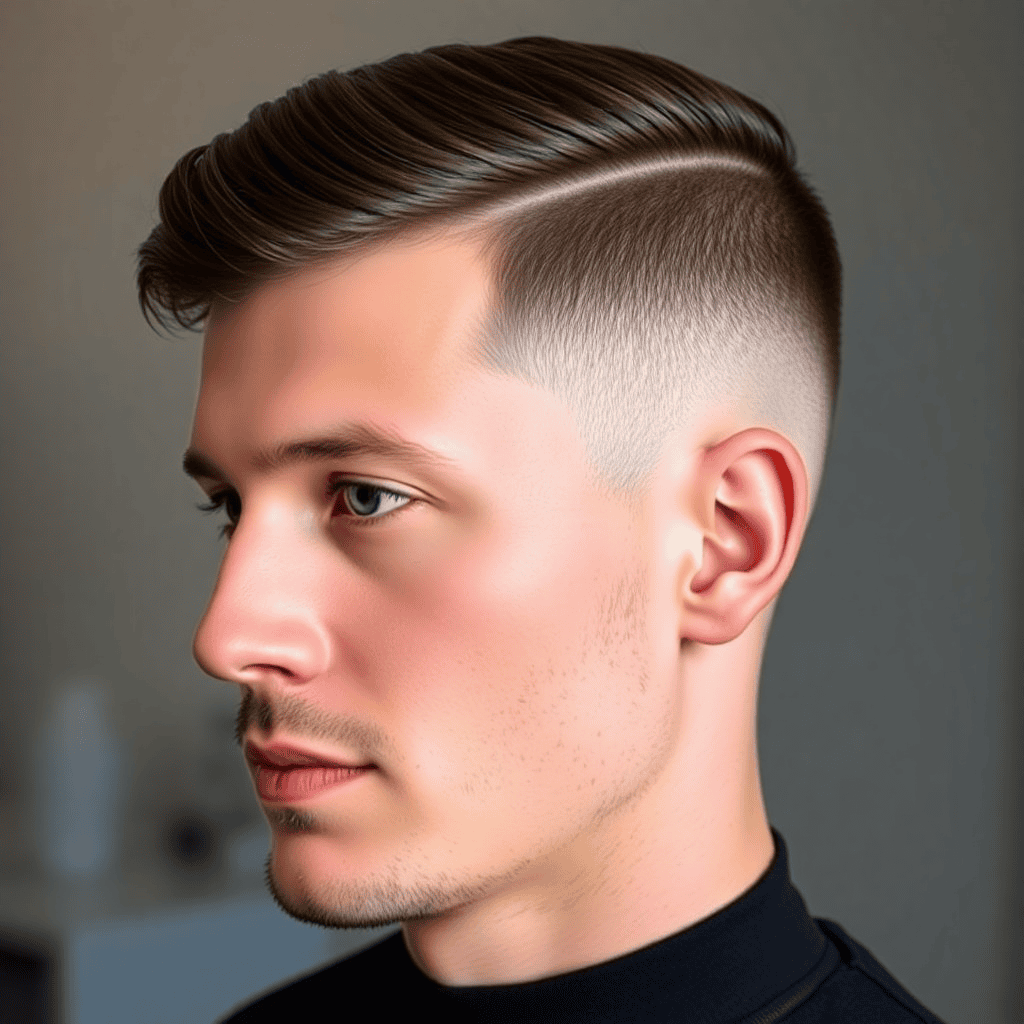
The top ranges from two and a half to three inches, with a visible but unshaved part placed along the natural growth line. Hair is combed sideways with a gentle lift at the front, while the opposite side settles close to the head. The low taper removes bulk near the sideburns and nape, leaving the middle and upper sides long enough for a smooth blend.
This restrained version fits professional haircuts for men because it looks tidy without relying on a severe hard part or bald side panel. It suits straight and mildly wavy hair, particularly on oval, square, and heart-shaped faces. Ask the barber to locate your natural part, use scissors over comb through the sides, and finish with a low taper. A light grooming cream creates flexible control for the office. Avoid heavy gel unless you want a wetter, more formal finish. The part can also be worn less precisely on casual days.
9. Ivy League Haircut With a Low Taper Fade
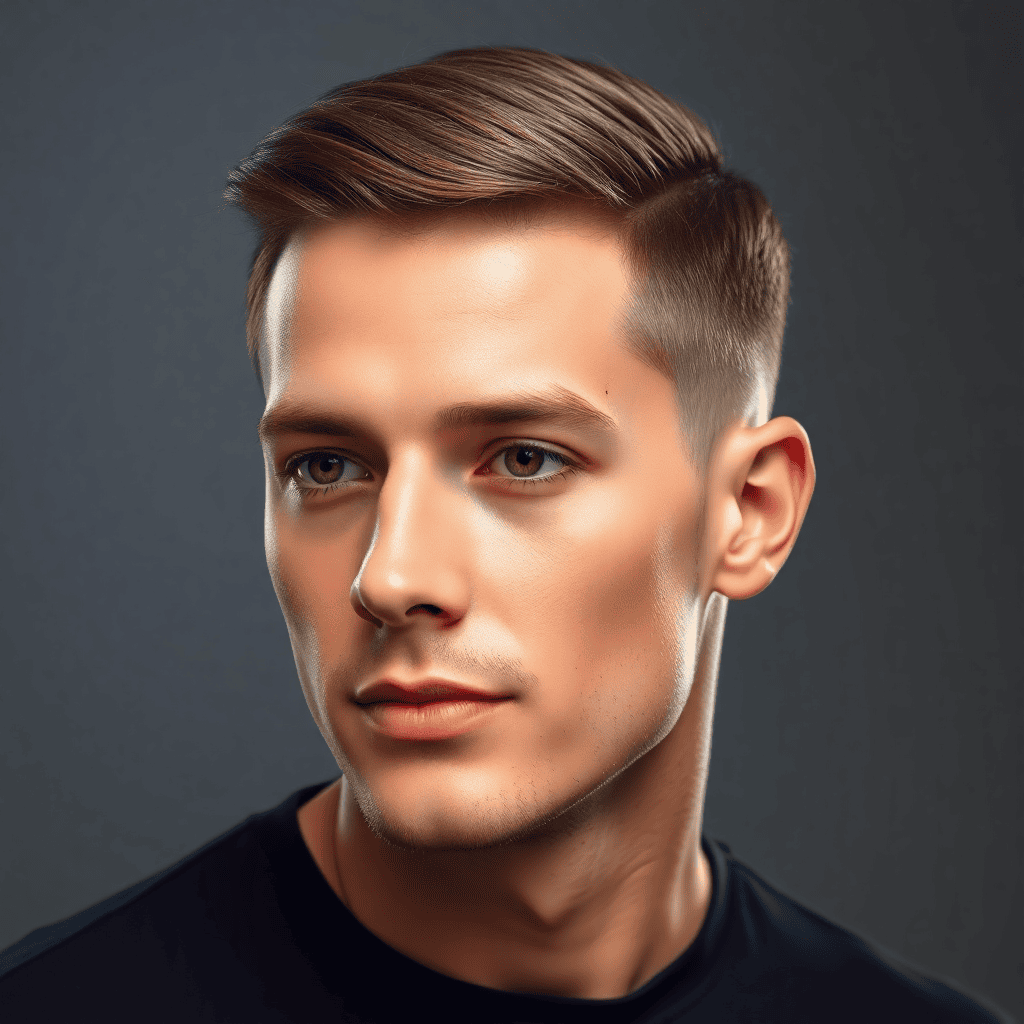
The front is kept near two inches, allowing it to sweep sideways, while the crown gradually shortens to a neat half-inch. The sides follow the head closely but retain enough length to be combed. A low taper appears only around the ear points and neckline, producing a traditional Ivy League profile with cleaner modern edges.
This is one of the more reliable business haircuts for men who need a cut that can shift between formal and casual settings. It suits straight or slightly wavy hair and can work for men over 30, 40, or 50 without looking tied to one age group. Ask for a classic Ivy League with a soft side part, tapered perimeter, and no shaved separation. Use a small amount of cream for a natural office finish or matte paste for a relaxed weekend texture. The shape usually remains presentable for four weeks, although the neck may need an earlier cleanup.
10. Mid Taper Fade With a Slicked-Back Top
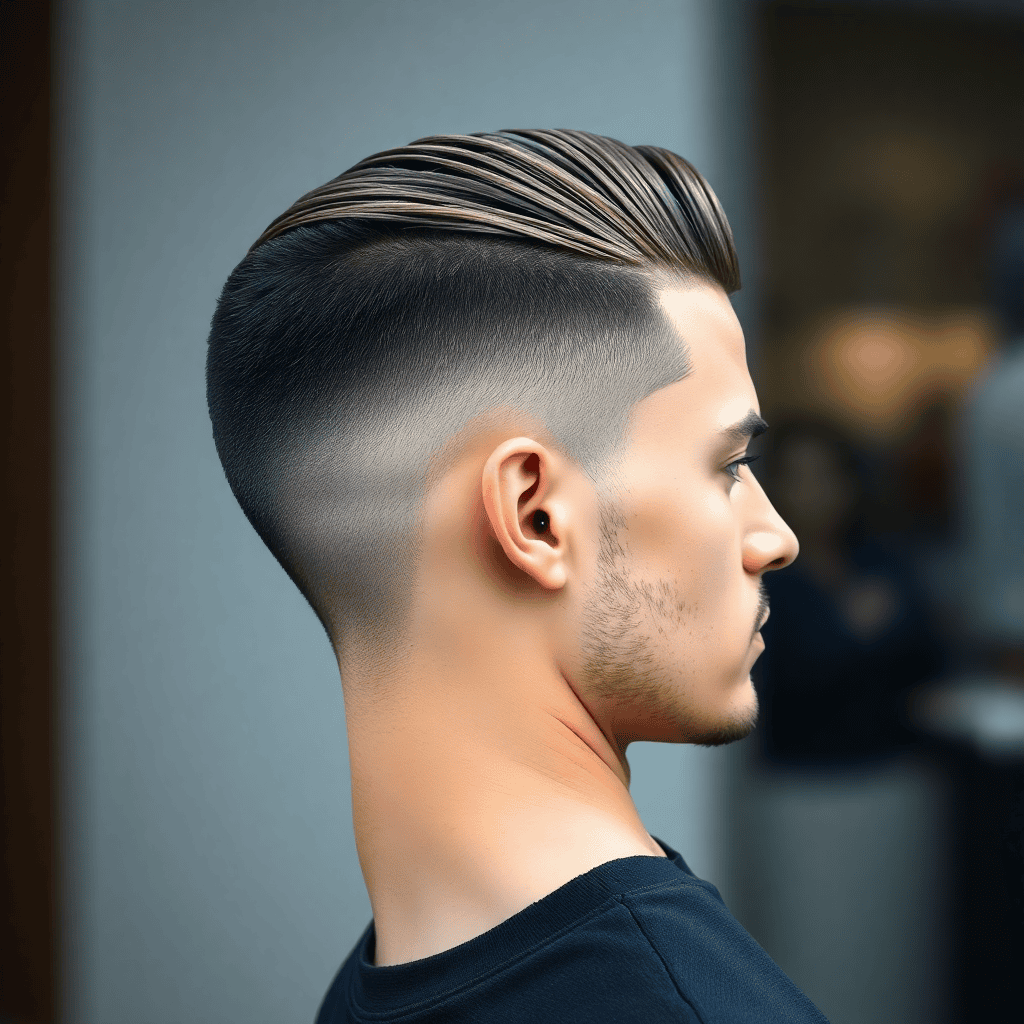
The top remains three to four inches long and is combed directly backward from the forehead. Fine layers prevent the surface from looking flat, while the crown follows the same rearward direction. A mid taper cleans the temples and lower back, with the upper sides kept long enough to connect smoothly into the brushed-back shape.
This version provides the control of a slick back without the harsh separation of an undercut. It is best for medium or thick straight hair, though loose waves can add a softer finish. Ask for a layered brushback, a mid taper, and enough corner length to keep the top connected. Men’s Health notes that brushback styles need sufficient top length and a gradual clipper blend through the lower sides and back. Blow-dry backward first, then apply cream or medium-hold pomade. Avoid loading product onto the roots, which can collapse the shape.
11. Temple Taper Fade With a Modern Pompadour
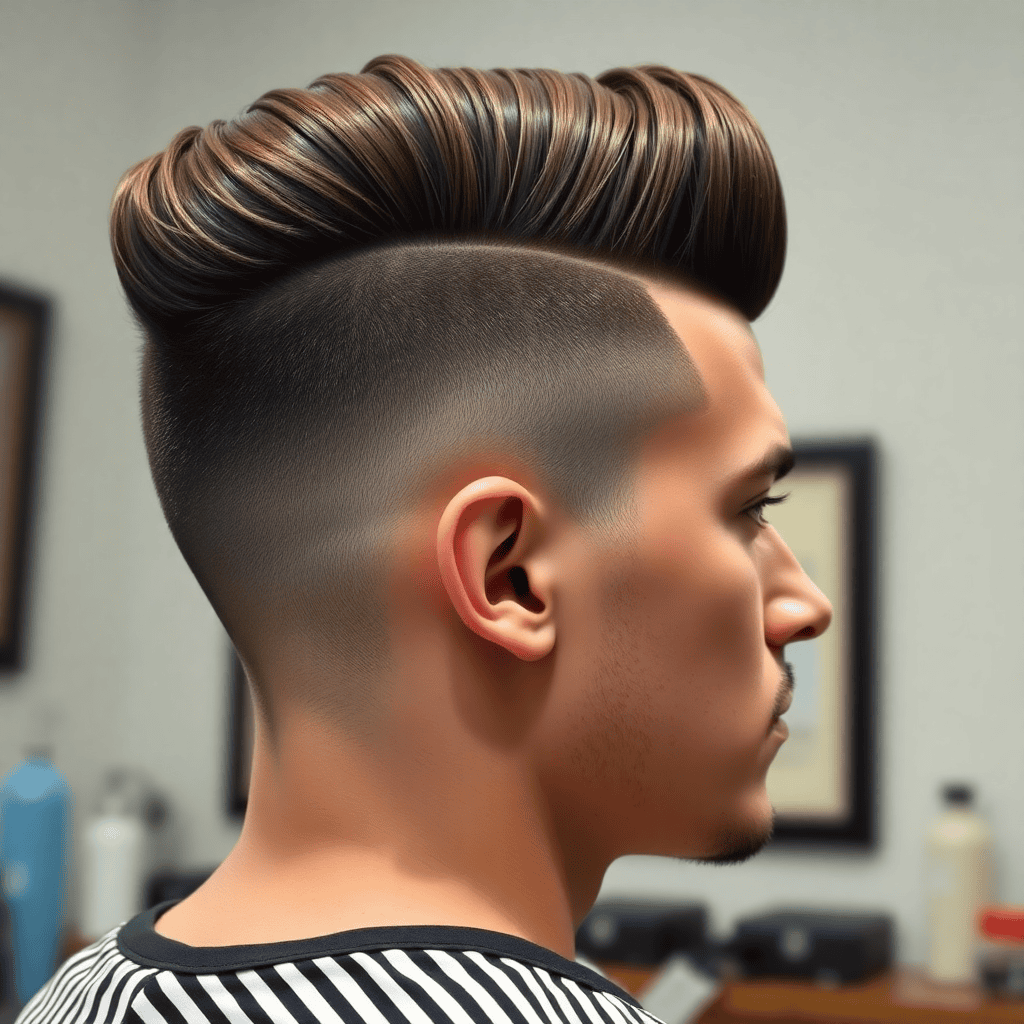
The front rises four inches above the forehead before curving backward into a gradually shorter crown. The surface is smooth but not helmet-like, with a few visible comb lines adding structure. Temple tapers create narrow points of contrast beside the forehead, while the sides remain full enough to support the height of the pompadour.
This shape works best for dense straight or wavy hair with enough strength to hold volume. It can lengthen a round face, but men with long faces may prefer a lower front. Ask for a connected pompadour with scissor-cut sides and a temple taper rather than a high fade. A round brush and blow dryer are almost mandatory; direct warm air upward at the roots before rolling the hair back. Finish with a medium-hold pomade, using less near the front than you think. Expect more morning styling than most popular men’s haircuts.
12. High Taper Fade With a Spiky Textured Top
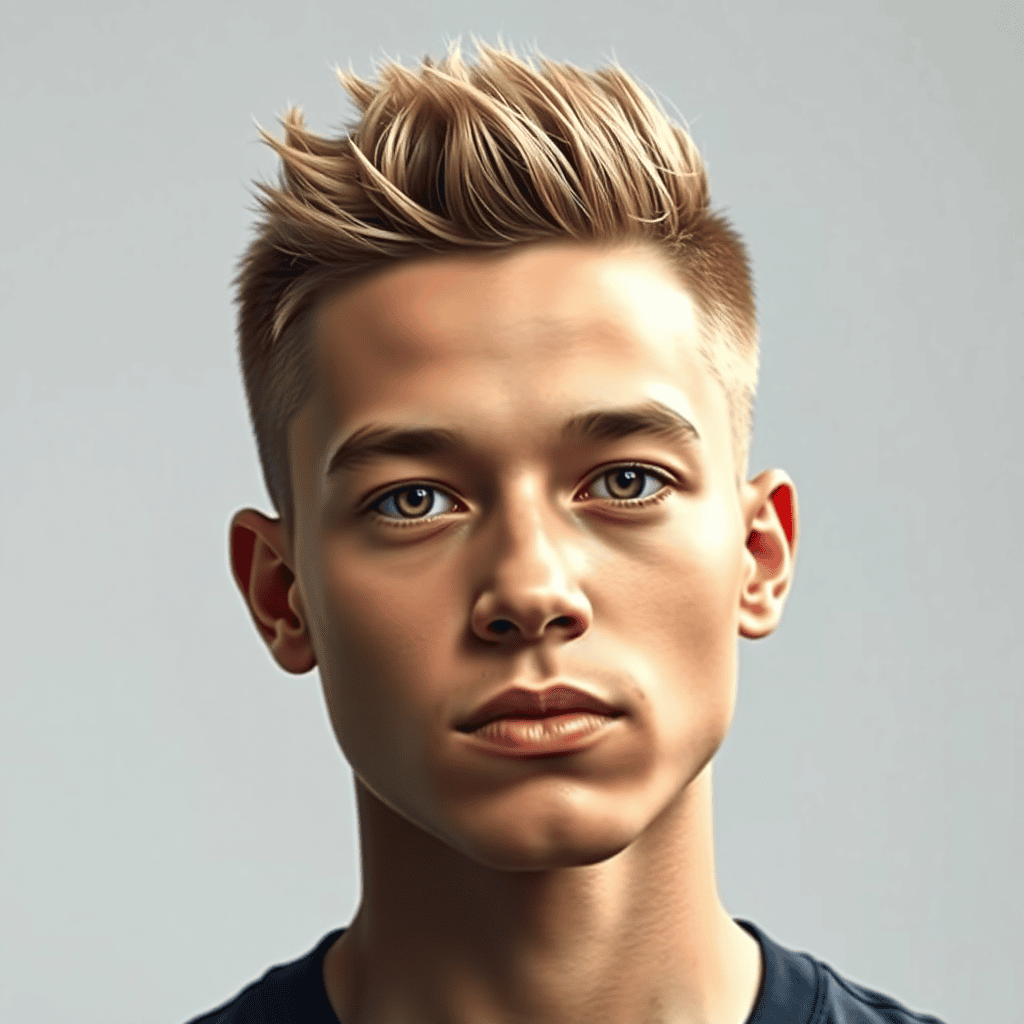
The top measures two to three inches and is chopped into short, separated sections. The strands point upward and slightly forward, producing irregular spikes rather than stiff vertical needles. A high taper climbs above the temple corners and blends rapidly into the upper sides, while the neckline remains tight and clean.
This energetic cut fits thick straight hair that naturally stands away from the scalp. It also works among haircuts for teenage guys and young men because it can be restyled in several directions. Ask for heavy point cutting, a high temple taper, and a soft transition behind the ears. Men with thin hair should keep the spikes shorter so the scalp does not become too visible. Blow-dry upward with your fingers, then rub matte clay between your palms before touching the ends. The taper needs regular cleanup, but the broken top can grow for several weeks without losing its purpose.
13. Burst Taper Fade With a Short Faux Hawk
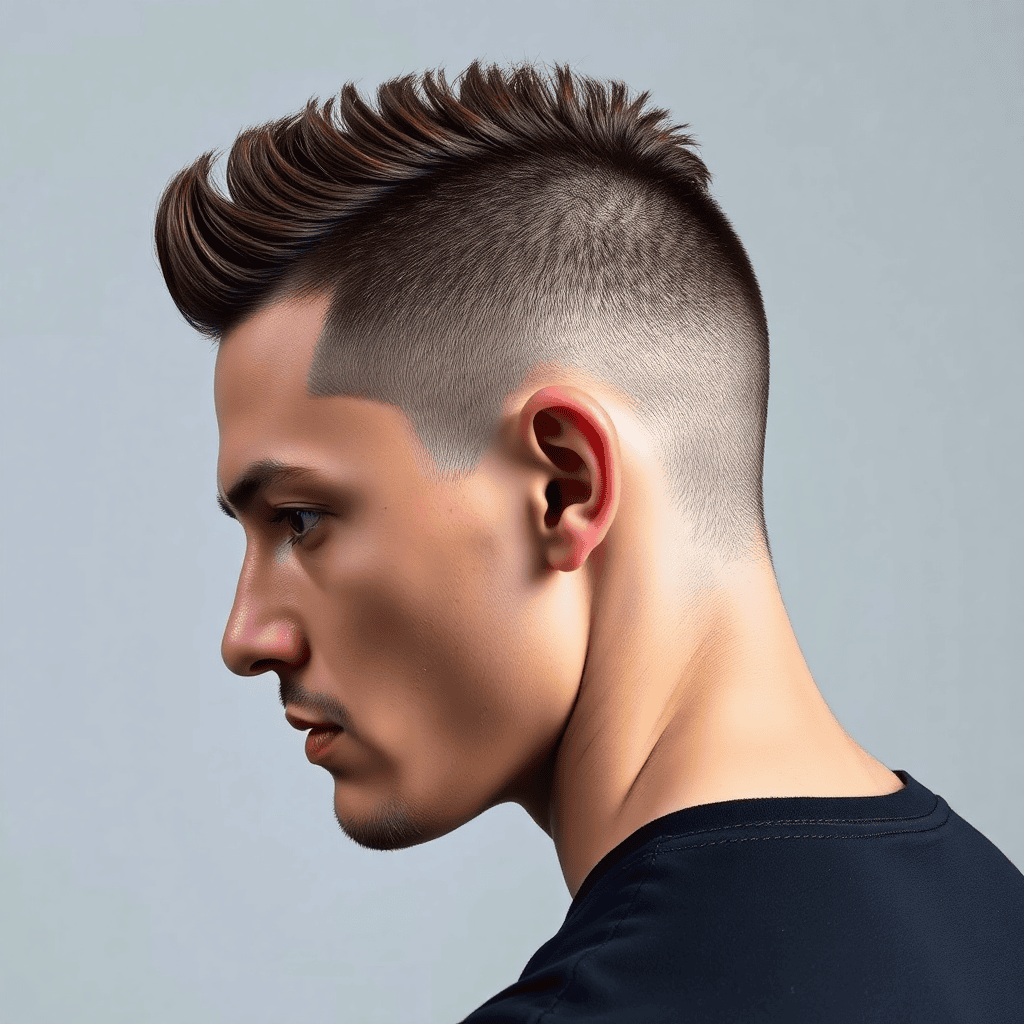
A narrow strip of hair runs from the front hairline toward the crown at about two and a half inches long. It is pushed upward and inward to create a soft faux-hawk ridge. Around each ear, the taper curves in a semicircle, while the back stays fuller and connects into the center strip instead of being faded flat.
The curved burst shape follows the movement of faux hawks and mullets, making it different from a straight low or mid fade. GQ’s barbering guide describes a burst fade as a circular blend around the ear that supports styles with length through the center and back. This version suits oval, square, and round faces, though the center should stay lower on long faces. Ask for a short faux hawk with a burst taper, textured ends, and no hard disconnection. Style with matte fiber and finger pressure from both sides.
14. Blowout Taper Fade With a Rounded Top
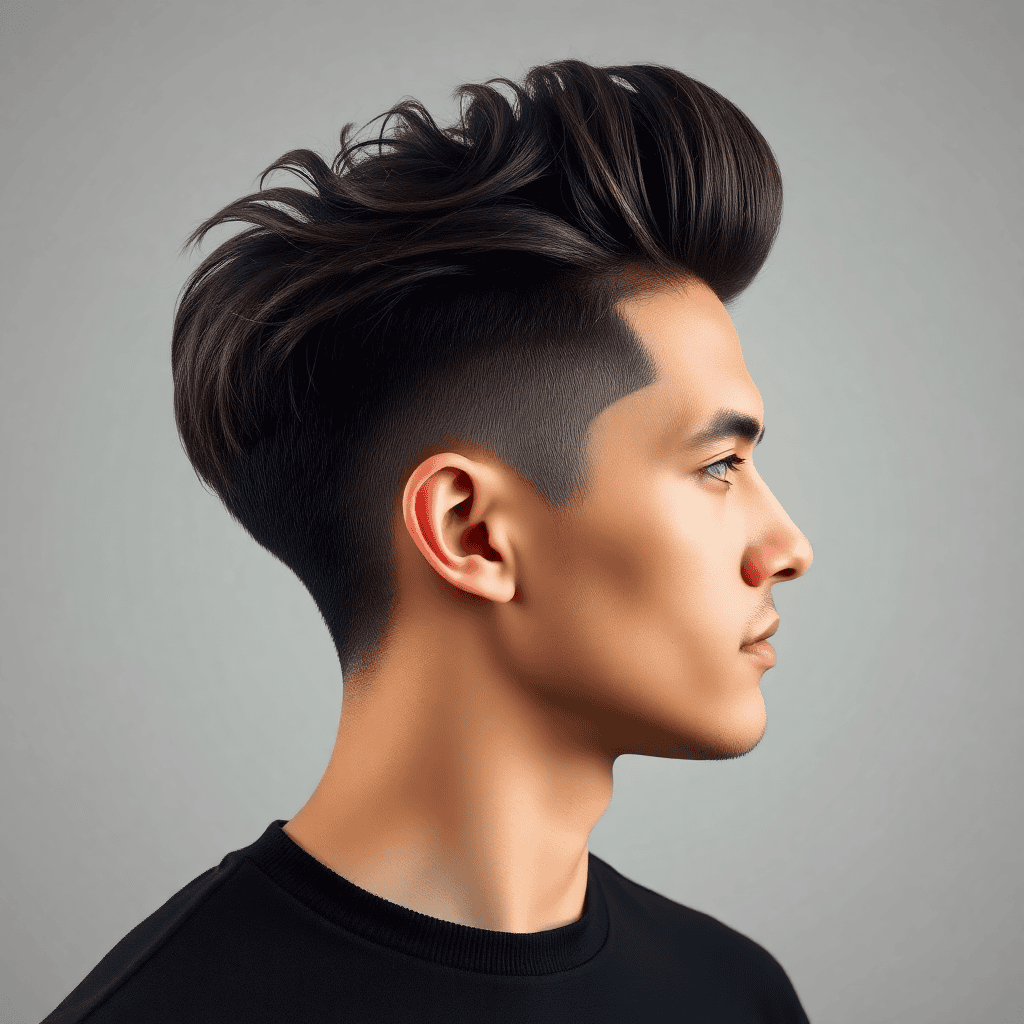
The hair stands three to four inches high around the front, sides, and crown, forming a wide, airy shape. Curls or loose textured strands push outward rather than lying in one direction. A low temple taper and tight neckline create clean edges beneath the expanding top, giving the haircut its recognizable blowout silhouette.
This is one of the more expressive trending haircuts for men with thick waves, curls, or dense straight hair. It adds width and height, so men with narrow or long faces should keep the top moderate. Ask for a blowout shape with layered bulk removal, a low temple taper, and a tapered nape. The barber should preserve the rounded outer edge instead of flattening the sides. Use a diffuser for curls or a blow dryer with finger lifting for straighter textures. Light mousse or curl cream offers movement; heavy wax can pull the shape downward and make it look greasy.
15. Low Taper Fade With a Blunt Edgar Fringe
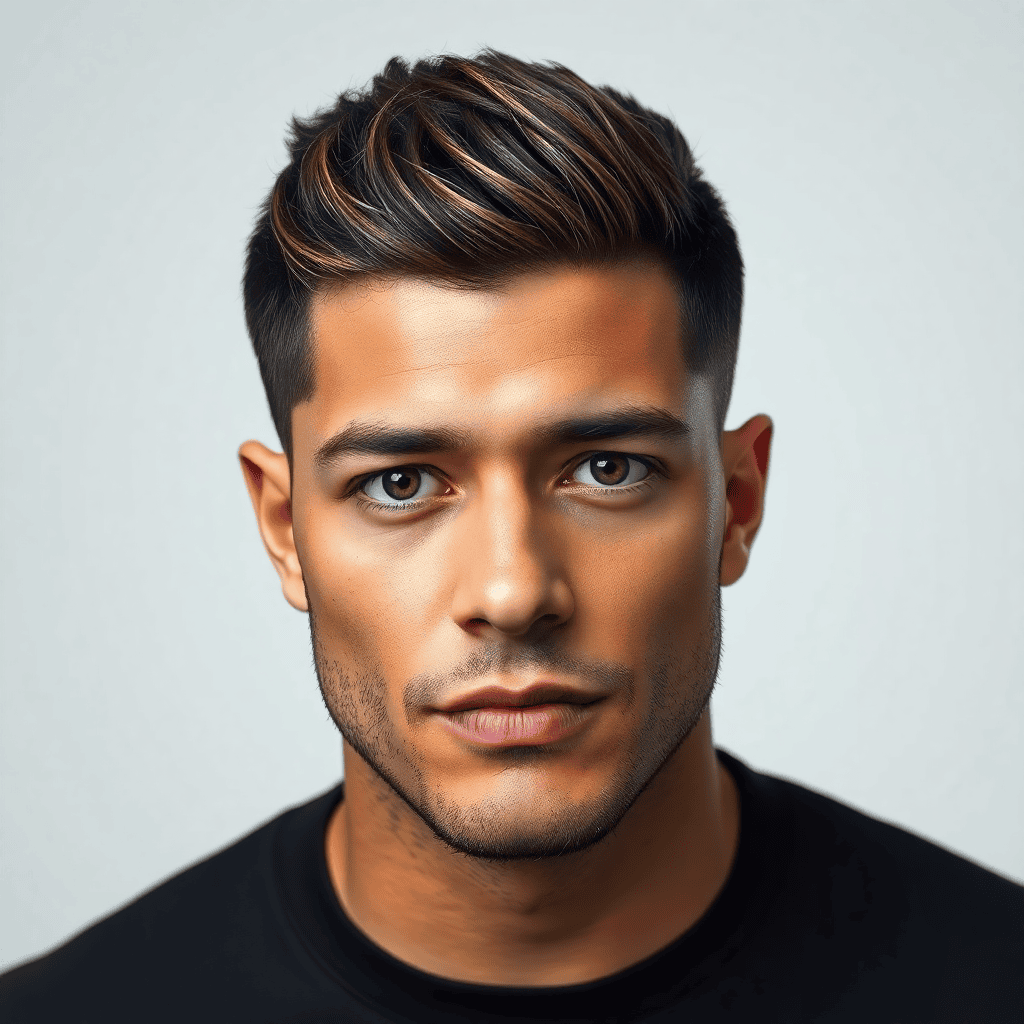
The top is cut to about two inches and directed forward from the crown. A blunt horizontal fringe sits across the upper forehead, with slight texturing behind it to prevent the top from appearing solid. The sides retain dark weight, while a low taper sharpens the sideburns and curves neatly around the lower back.
The Edgar is designed around a visible front line, making it stronger and more graphic than a French crop. It suits thick straight, wavy, or coarse hair that can hold a defined edge. Men with round faces may prefer extra texture and height at the crown so the fringe does not widen the face. Ask for a short textured Edgar with a low taper and a straight front that follows your natural hairline. Maintenance is demanding around the fringe; even small growth changes the shape. Matte cream keeps the top controlled without creating an overly shiny block.
16. Low Taper Fade With a Curly Fringe
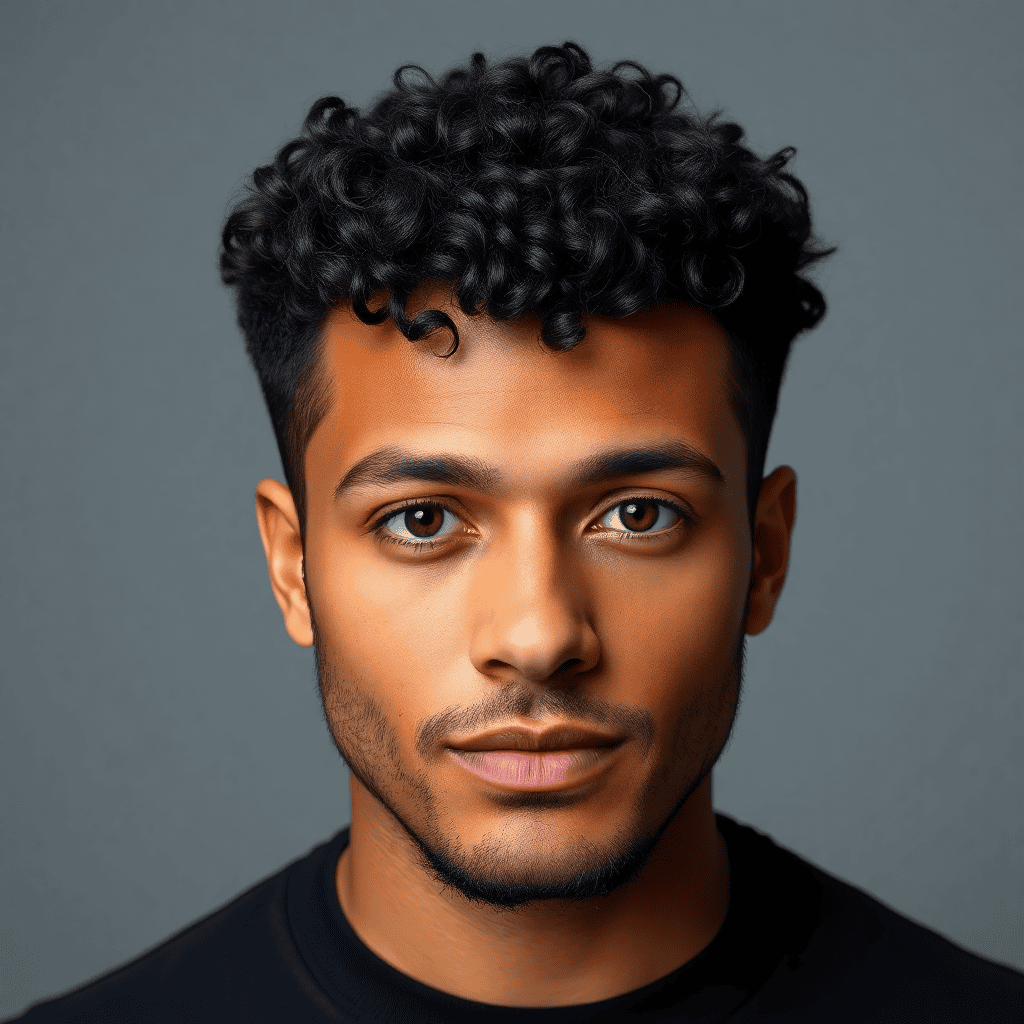
Natural curls remain three to four inches long across the top and fall loosely toward the forehead. The fringe ends at different points, creating a soft, uneven frame above the eyebrows. The sides are shaped with scissors to follow the head, then reduced into a low taper around the temples and neckline.
This is a strong choice among haircuts for curly hair men because it preserves curl movement rather than forcing every strand upward. It can soften square faces and add width to long faces, though the fringe should be shorter for a small forehead. Ask the barber to cut the curls in their natural dry pattern, remove bulk near the corners, and keep the taper low. Use curl cream on wet hair, scrunch upward, and dry with a diffuser at low speed. Brushing after drying can break apart the curl groups and create unwanted volume. Plan the length around shrinkage..
17. Mid Taper Fade With a Wavy Brush-Up
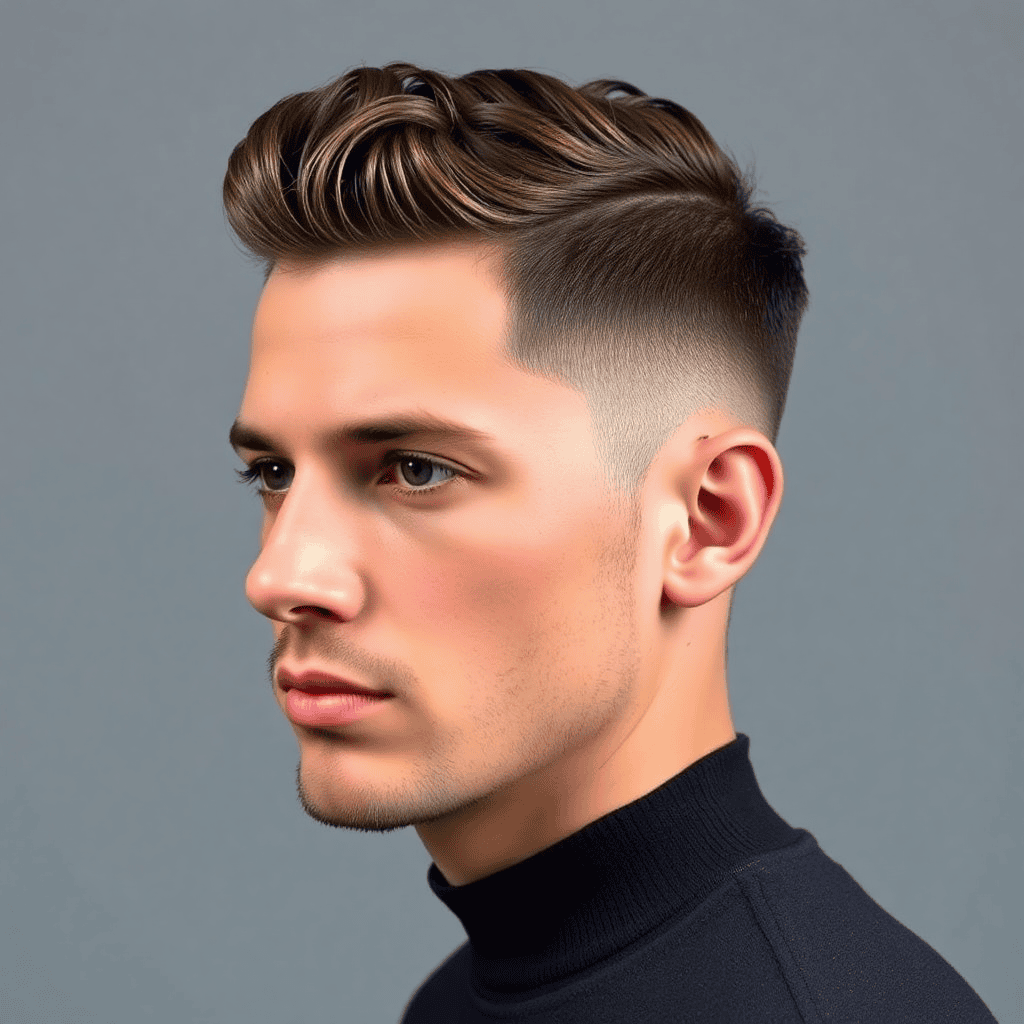
The top measures about four inches and is directed upward and backward with the fingers. Natural waves remain visible, creating bends and separated ridges across the surface. A mid taper removes weight from the temple area and lower neck, while the upper sides stay blended into the top with no hard shelf.
This cut makes the most of haircuts for wavy hair men because it works with the natural pattern instead of pressing it flat. It can balance oval and round faces by adding moderate height without narrowing the sides too much. Ask for a layered wavy top, connected sides, and a mid taper at the perimeter. Apply sea-salt spray or light mousse to damp hair, then blow-dry with your hands rather than a fine comb. A small amount of paste can control the front once dry. The style looks better with movement, so avoid shaping every wave into the same direction.
18. High Top With a Clean Temple Taper

Dense coily hair rises two to four inches above the scalp in a structured high-top shape. The front and upper sides form clear vertical walls, while the top surface can remain flat or slightly rounded. Small temple tapers fade to skin beside the lineup, and the neckline is cleaned without removing the full side panel.
This option suits men with tightly coiled hair who want height and a defined outline. The vertical shape can lengthen a round face, while a lower, wider top works better for a long face. Ask for a shaped high top, sharp but natural corners, temple tapers, and a clean nape. The top should be picked evenly before trimming so the final silhouette does not tilt. Use a curl sponge or wide-tooth pick depending on the finish you prefer. Regular edge appointments matter more than frequent removal from the top.
19. Rounded Afro With a Low Temple Taper
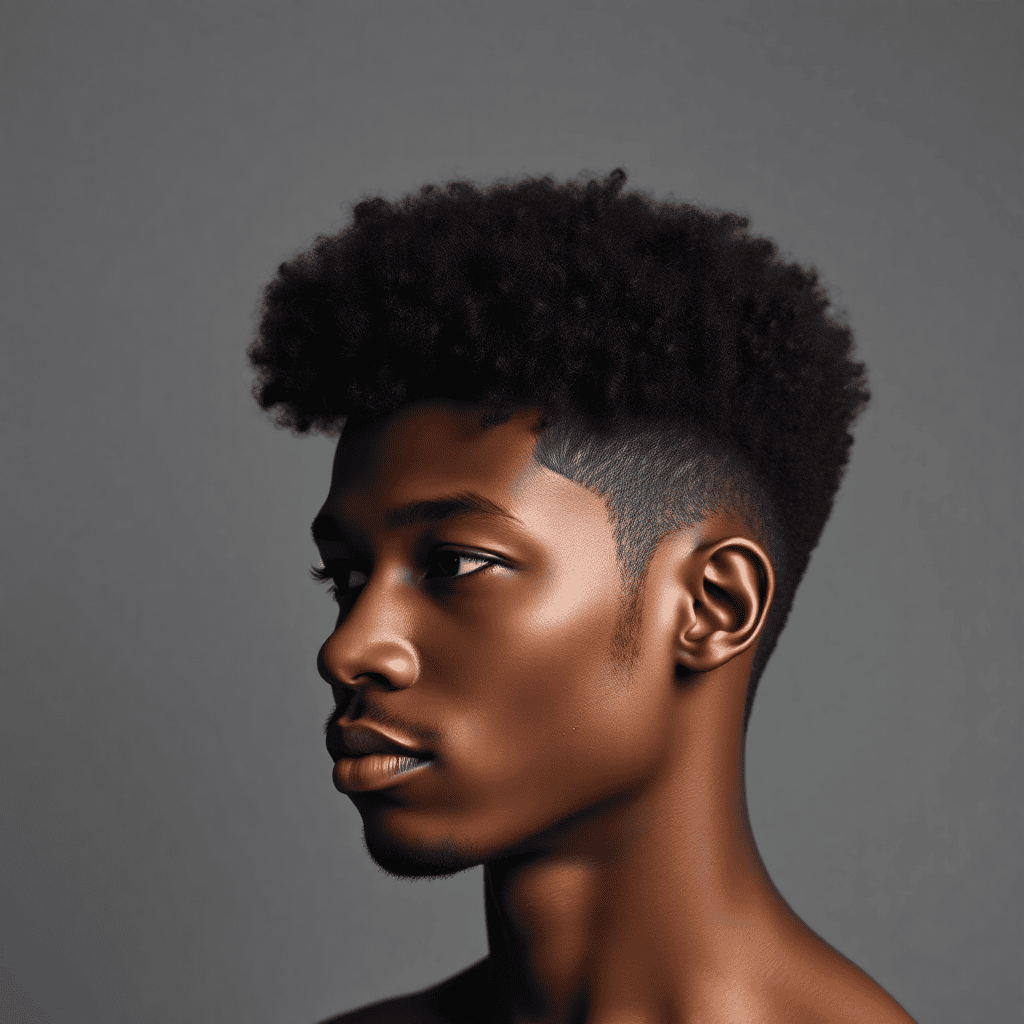
The hair forms a rounded Afro measuring roughly three inches across the top and sides. The outer shape remains soft and evenly balanced, with no flat top or sharp corner. A low temple taper clears the sideburn area, while a matching nape taper gives the back a clean base without disturbing the full rounded silhouette.
This style lets coily texture remain central while making the perimeter easier to manage. It is among the more adaptable haircuts for Black men because the diameter can be adjusted to suit density, face shape, and daily routine. Ask the barber to pick out the hair, sculpt a balanced round form, and taper only the temples and nape. Excessive thinning can produce gaps, so shaping is more important than removing bulk. Moisture and gentle detangling help retain the outline between cuts. A satin sleep surface may also reduce morning flattening and friction.
20. 360 Waves With a Low Taper Fade
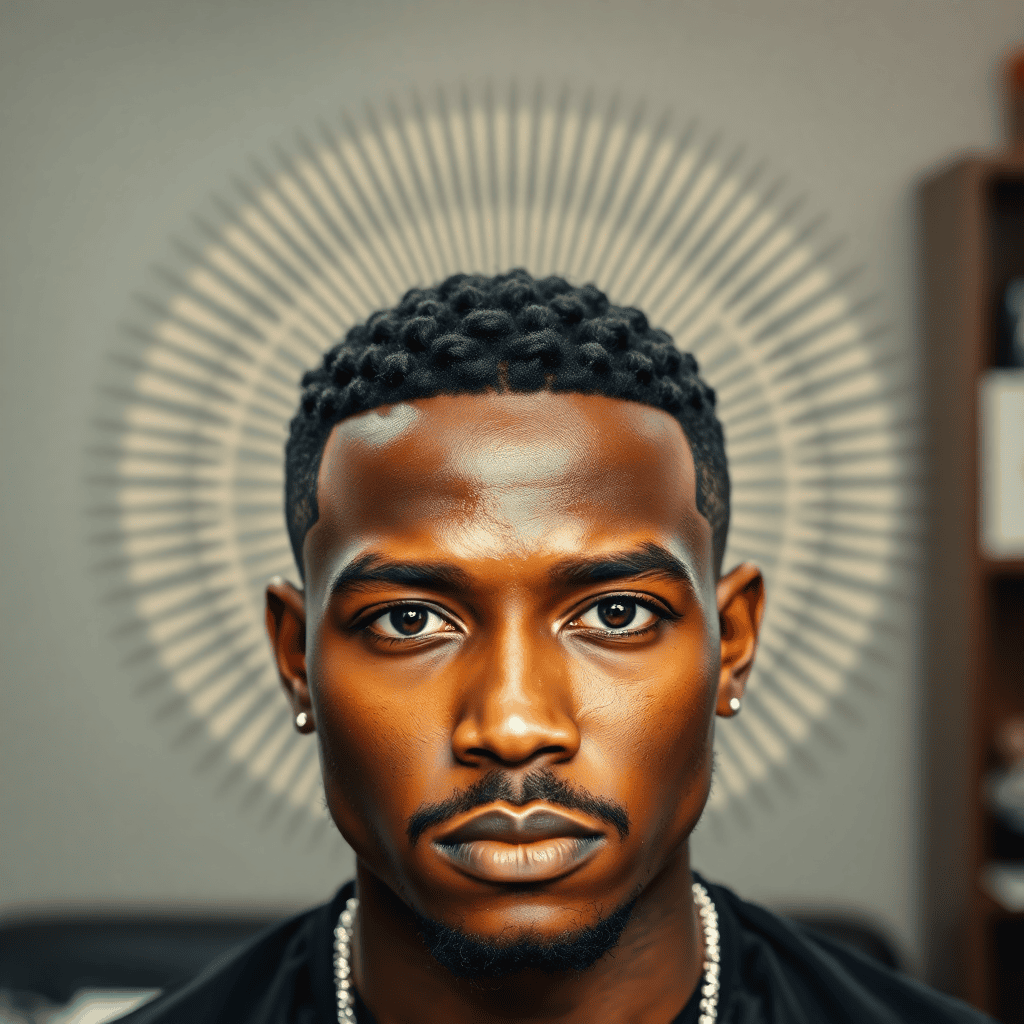
The top and sides are clipped close enough to reveal a continuous ripple pattern flowing outward from the crown. The waves follow curved rows toward the forehead, ears, and neckline. A low taper fades the sideburns and lowest section of the neck, while the rest of the hair stays dark enough for the wave pattern to remain visible.
This cut depends more on brushing and established hair direction than dramatic length differences. It suits coarse or coily hair that forms defined waves at short lengths. Ask for a cut with the grain, a low taper, and a lineup that respects the existing front edge. Cutting too low may erase part of the pattern, so tell the barber how long you have been developing it. Use a soft or medium wave brush based on current length, and keep styling products light. The taper may need cleanup before the main wave area needs another cut.
21. Short Twists With a Temple Taper Fade
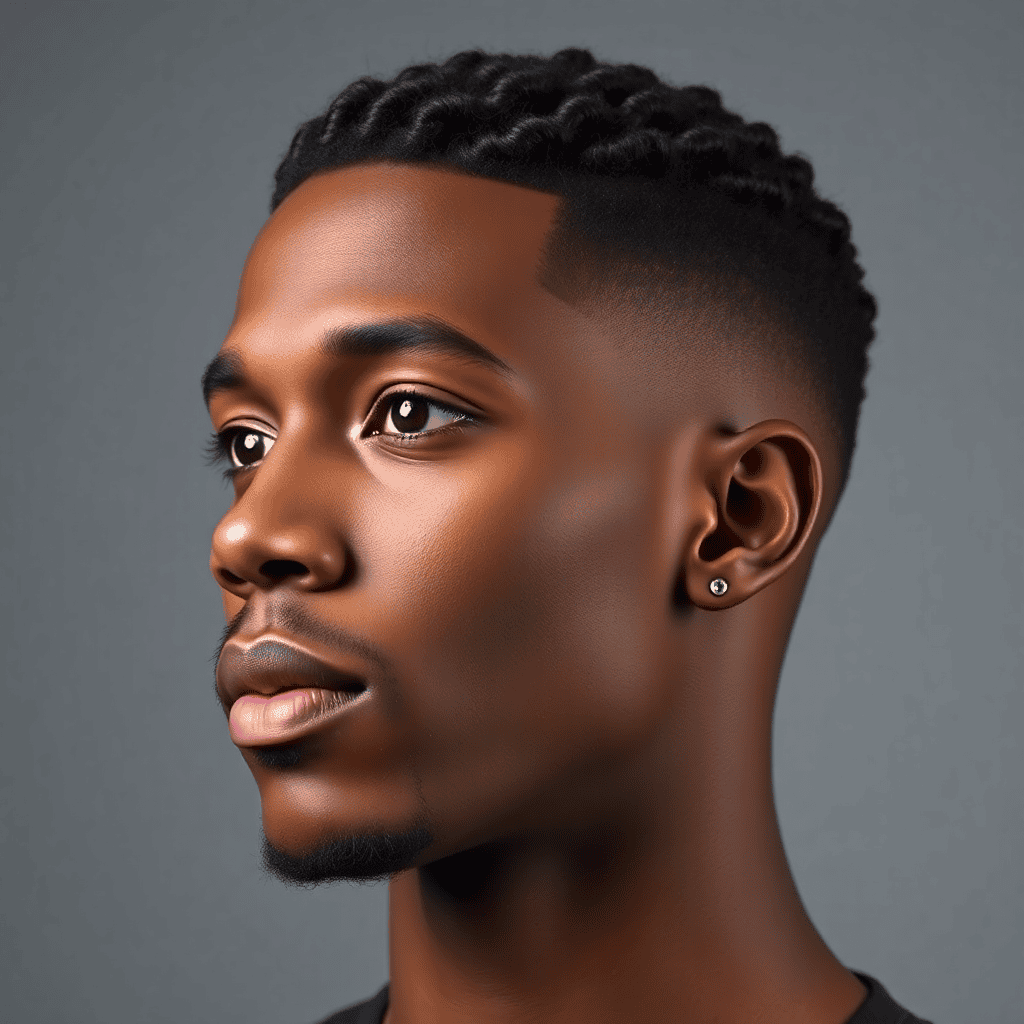
Individual twists cover the top at roughly two to three inches long, forming small rope-like sections with visible separation at the roots. The sides remain short and dark, connecting naturally into the twisted top. A temple taper fades tightly at the front corners, while the neckline is tapered into a clean rounded or squared finish.
The style gives coily hair texture and definition without requiring long twists. It works well for active routines because the top can remain in place between daily styling sessions, though the sections still need proper care. Ask for short two-strand twists on top with a temple taper and low neckline cleanup. The barber should complete the taper without cutting into the first row of twists. A light leave-in product can reduce dryness, while heavy buildup may blur the section lines. Protect the twists while sleeping to help them keep their shape.
22. Braided Top With a Low Taper Fade
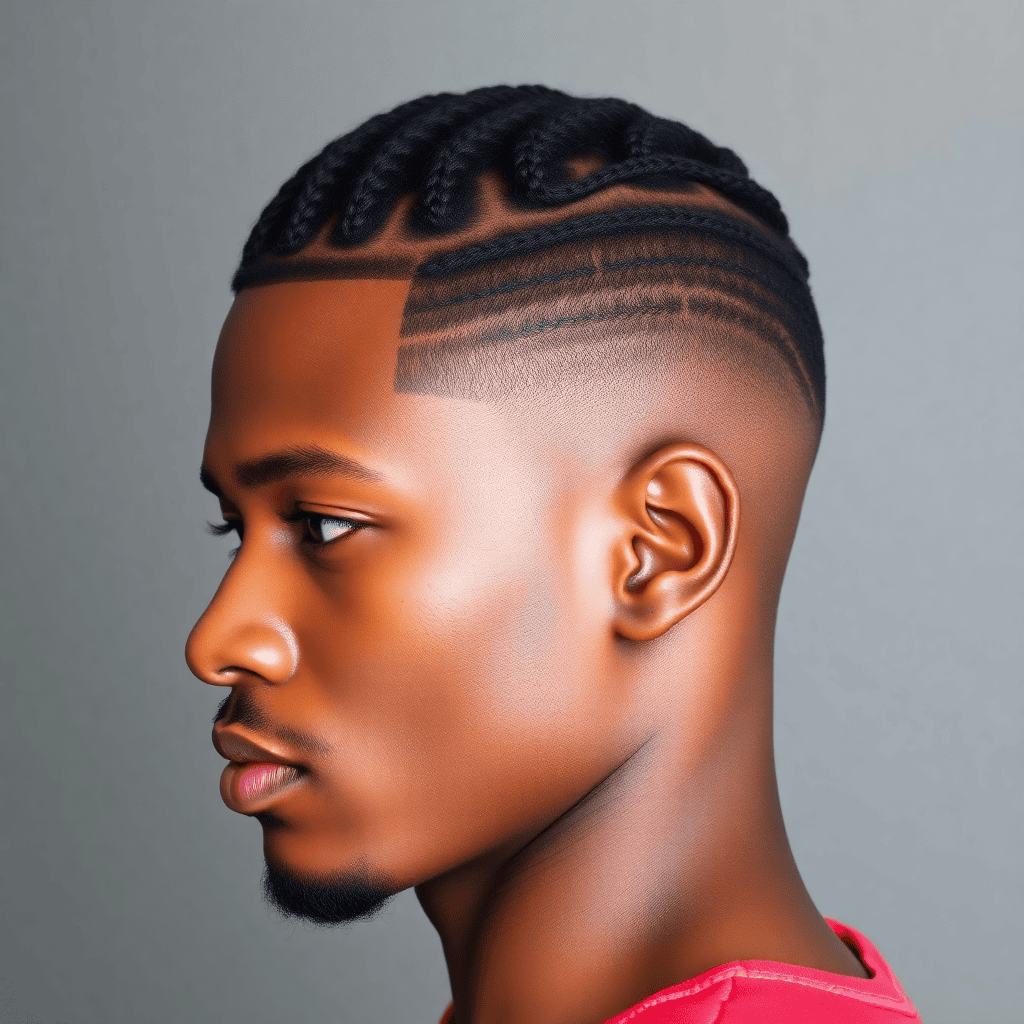
Several clean braids travel backward from the forehead toward the crown, ending near the upper back of the head. The braid pattern can be straight and parallel, while the side panels remain short but visibly dark. A low taper removes hair around the sideburns and nape, separating the structured braid work from a neatly finished perimeter.
This variation combines protective styling with a restrained fade. It suits dense coily or curly hair with enough length to braid securely. Ask the braider and barber to plan the design together so the braid sections do not extend into the taper zone. The front should not be lined too deeply because that can create a growing gap between the braids and hairline. A low taper generally ages more softly than a high bald fade. Keep the scalp clean according to your regular grooming routine, and avoid pulling the braids tighter for the sake of sharper photography.
23. Medium Loc Top With a Temple Taper

Medium locs extend four to six inches from the top and fall naturally toward the forehead, sides, or back. The lower sides remain full enough to support the locs, while small temple tapers create clean spaces near the face. A neat nape taper controls the back without turning the haircut into a disconnected undercut.
This style keeps more fullness than a high-faded loc cut, producing a softer profile as it grows. It can be paired with glasses or facial hair because the cleaned temple area prevents the front from feeling crowded. Ask for a conservative temple and nape taper while preserving the base of every loc. The barber should identify where each loc begins before using clippers. Styling can be changed by tying the top loosely or allowing selected locs to frame the face. Edge maintenance varies, but cutting too frequently into the base may gradually reduce fullness.
24. Burst Taper Fade Mullet With a Textured Back
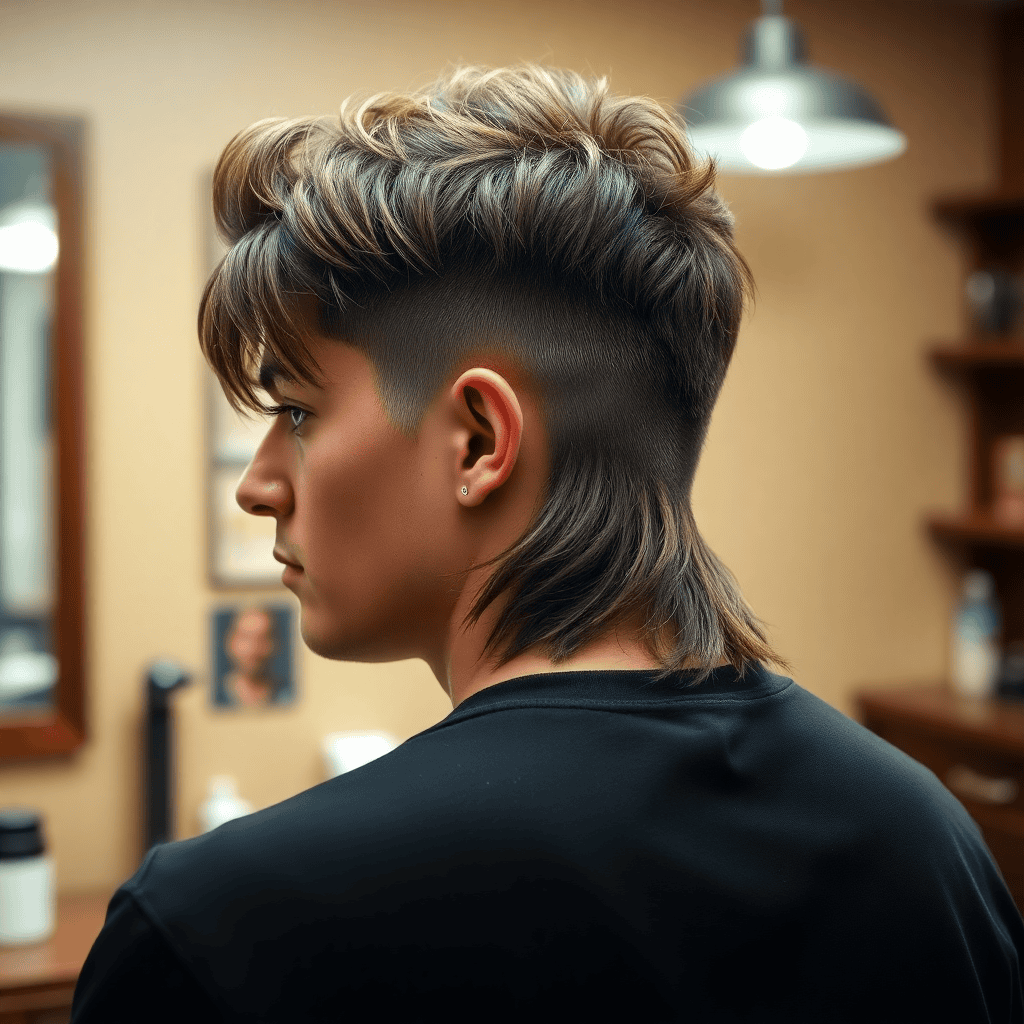
The front and crown stay three to four inches long with choppy, upward texture, while the back extends past the upper neckline in loose layers. A curved burst taper circles each ear but stops before reaching the longer tail. The front hairline remains natural, and the contrast comes from the exposed ear area against the textured center and back.
This is one of the bolder stylish haircuts for men, combining a current taper shape with the unmistakable length of a mullet. It works best for thick straight, wavy, or curly hair that can support layered movement. Ask for a modern short mullet, a burst taper around the ears, and a soft connection from crown to back. Men’s Health advises asking for medium crown length and a subtle side fade when seeking a longer mullet transition. Use texture spray and let the back move rather than pressing it flat.
25. Curtain Hairstyle With a Soft Low Taper
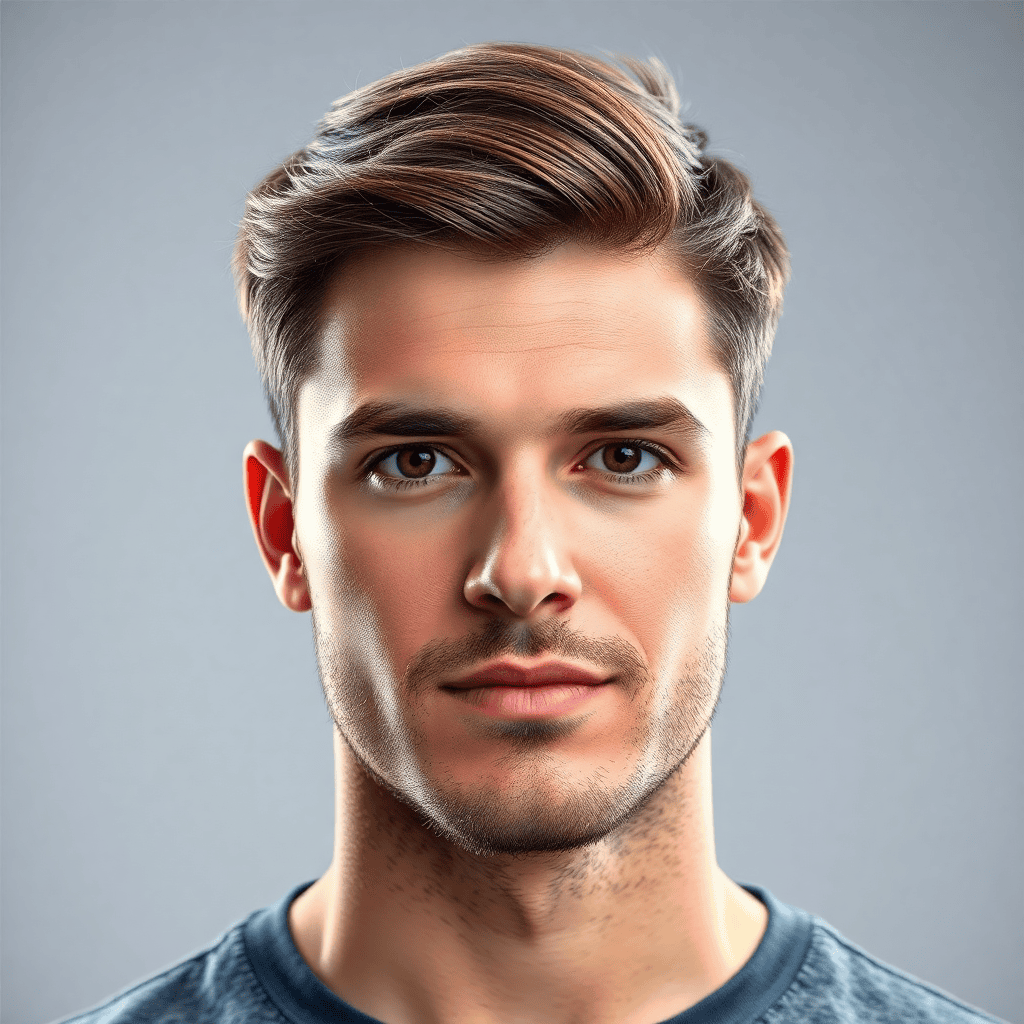
The top reaches five to six inches and separates near the center, creating two loose curtains that sweep away from the forehead. Soft layers allow the ends to bend around the temples, while the back reaches the upper collar in a controlled flow. A subtle low taper cleans the sideburns and neckline without making the long upper shape appear disconnected.
This is the longest option in the collection and reflects the move toward softer, grown-out men’s hairstyles. Center parts and curtain fringes have remained visible in 2026 trend coverage, often with added layering and natural movement. It suits straight or wavy hair and works especially well on oval, square, and longer faces when the side volume is preserved. Ask for a layered curtain cut with a light perimeter taper. Blow-dry the front away from the center using a round brush, then finish with a flexible cream. Avoid a high taper, which can leave the longer top hanging over an empty side panel.
Conclusion
Choosing between these 25 styles starts with three practical questions: How much top length can your hair support, how much contrast flatters your face, and how often are you willing to return for cleanup? Low tapers preserve fullness and grow out softly. Mid tapers offer stronger definition without exposing the entire side. High and burst tapers create more impact, but they show growth sooner.
Straight hair can hold clean parts, crops, quiffs, and brushbacks. Wavy hair benefits from layered tops that allow movement. Curly and coily hair can carry fringes, Afros, twists, waves, locs, or structured high tops while using the taper as a small framing detail.
Before choosing haircut ideas for men from a single photograph, save two or three references showing different angles. Tell the barber what you like in each one, including top length, temple height, neckline shape, and preferred amount of scalp exposure. Reference images reduce confusion because terms can mean different things across barbershops.
The most current taper fade is not always the shortest one. Often, it is the version that removes the right amount of hair and leaves everything else free to move.
Frequently Asked Questions
1. Which taper fade works best for a round face?
A low or mid taper with added height on top can make the face appear longer. Keep some darkness through the upper sides rather than fading them completely bare. A short quiff, brush-up, pompadour, or textured crop with controlled height usually works better than a wide, flat fringe.
2. What taper fade suits a square face?
Square faces can support clean lineups, crew cuts, side parts, and textured crops. A low or mid taper keeps attention on the strong jaw without making the head appear too narrow. Softer top texture can balance sharply defined facial angles.
3. Is a taper fade suitable for a long face?
Yes, though excessive height should be avoided. Choose a low taper with side volume, a curtain style, curly fringe, Caesar cut, or relaxed side part. A high taper paired with a tall pompadour may stretch the face visually.
4. What is the best taper haircut for an oval face?
Oval faces can wear most taper heights and top shapes. The main goal is avoiding extreme proportions, such as bare high sides with an excessively tall top. Crew cuts, crops, waves, curls, side parts, and medium-length brushbacks are balanced choices.
5. Can a taper fade help balance a big forehead?
A textured fringe, French crop, Caesar, Edgar, or curtain top can reduce the amount of visible forehead. Keep the taper low so the sides retain enough fullness. A tall slick back may draw more attention to the forehead instead.
6. Do taper fades work with straight hair?
Straight hair shows clean graduation and sharp texture clearly. It can be styled into crops, quiffs, spikes, side parts, slick backs, and curtain cuts. Ask for layering if the top tends to fall flat or form a heavy block.
7. Which taper fade is best for wavy hair?
A low or mid taper with a layered top usually keeps the wave pattern visible. Brush-ups, messy crops, blowouts, and curtain hairstyles allow natural bends to remain part of the finish. Heavy thinning may weaken the wave shape.
8. Can men with curly hair get a taper fade?
Curly hair pairs well with low temple tapers, curly fringes, rounded tops, and blowout shapes. The taper cleans the perimeter while leaving curl length above it. Ask the barber to consider shrinkage before deciding the final top length.
9. What taper style works for tight coils?
Temple tapers and low nape tapers work well with Afros, waves, high tops, twists, braids, and locs. These focused blends clean the outline without removing the density needed to support the top style.
10. Is a taper fade good for thick hair?
A taper can control heavy sideburns and neckline growth while allowing the barber to remove bulk with scissors elsewhere. Thick hair supports quiffs, pompadours, textured crops, blowouts, and slick backs, though internal layering may be needed.
11. Can fine hair carry a taper fade?
Fine hair can look fuller when the taper is not taken too high. Keep enough weight through the sides and choose short textured tops, compact quiffs, or crew cuts. Excessive top length can separate and reveal more scalp.
12. What taper fade works for coarse hair?
Coarse hair holds buzz cuts, Caesars, crops, high tops, waves, and shaped lineups well. A barber can adjust the blend to match the density. Moisture and suitable conditioning help prevent the top from appearing dry or overly expanded.
13. What should I say when asking for a taper fade?
Name the taper height, the shortest length, the top style, and the neckline shape. For example: “Low temple and nape taper, number two at the shortest point, two inches of textured length on top, and a natural neckline.”
14. What is a low taper fade?
The shortest blend stays close to the sideburns, ear edges, and lower neckline. Much of the side remains darker and fuller. It creates a subtle cleanup and usually grows out more softly than a higher fade.
15. What is a mid taper fade?
The transition begins higher around the temples and lower sides than a low taper. It produces more visible contrast while retaining some upper-side weight. Mid fades are often considered adaptable across short, medium, and longer top styles.
16. What is a high taper fade?
The shortest blend reaches above the temple area, exposing more of the side profile. It pairs best with compact tops, sharp lineups, or styles needing strong contrast. Growth becomes noticeable sooner because the blend begins so close.
17. What do clipper guard numbers mean?
Higher guard numbers leave more hair. A number one leaves roughly one-eighth inch, while a number two leaves about one-quarter inch. Guard systems can vary slightly, so describing the desired visible length and showing a photo is helpful.
18. Should I ask for a skin taper or shadow taper?
Choose a skin taper for maximum contrast and exposed scalp near the edges. Choose a shadow taper when you want a dark trace of hair at the shortest point. Shadow tapers tend to look softer as they grow.
19. Why should I bring reference photos to the barber?
Photos show the exact taper height, top texture, fringe length, and overall silhouette you prefer. Barber terminology is not identical everywhere, so visual references reduce the chance that “low,” “short,” or “textured” will be interpreted differently.
20. Which product is best for a textured taper haircut?
Matte paste, clay, or light fiber can separate short layers without adding much shine. Start with a small amount on dry hair. Thick application can make textured pieces stick together and reduce the airy finish.
21. Should I use pomade with a taper fade?
Pomade works well for side parts, slick backs, pompadours, and polished brushbacks. Water-based formulas often provide easier washing, while heavier products create stronger control. The taper itself needs no product; focus application on the top.
22. Is hair cream suitable for a taper haircut?
Hair cream is useful for natural side parts, loose waves, curls, curtains, and softer professional styles. It gives control without the stiff appearance of gel. Fine hair should receive only a small amount to prevent flattening.
23. Can texture powder add volume to a taper fade?
Texture powder can lift fine or straight hair at the roots, especially in short quiffs, crops, and brush-ups. Apply sparingly to dry hair, work it through with fingertips, and avoid placing too much along the visible scalp.
24. Do I need a blow dryer for a taper hairstyle?
Short buzz cuts, waves, Caesars, and many crops need little or no blow-drying. Quiffs, pompadours, curtains, blowouts, and brushbacks benefit from directed airflow because heat helps establish height, direction, and shape before product is added.
25. Which brush should I use for a taper fade hairstyle?
Use a vented brush for quick lift, a round brush for curved volume, a wide-tooth comb for curls, and a wave brush for established wave patterns. Finger styling is often better for messy crops and natural wavy finishes.
26. Can gel be used on modern taper styles?
Gel can create a firm wet finish for slicked styles, but it may become stiff or flaky when overapplied. Cream, paste, or pomade usually offers more movement. Apply gel only to the top rather than rubbing it into the faded area.
27. How often should a taper fade be trimmed?
A sharp skin taper may need cleanup every one to two weeks. A shadow taper can often go two to four weeks, depending on growth speed and personal preference. Longer, softer styles remain presentable even after the edges lose definition.
28. How can I make a taper fade last longer?
Choose a lower shadow taper, keep the neckline natural, and avoid an overly sharp skin transition. These details make regrowth less obvious. Light home cleanup around stray neck hairs may help, but the main blend is safer in professional hands.
29. Does a taper fade grow out better than a full fade?
It often does because the shortest area covers less of the head. The fuller upper sides can merge with new growth more naturally. A high skin fade usually shows a stronger line of regrowth as the shaved section returns.
30. Can I grow long hair while keeping a taper?
A temple and nape taper can clean the perimeter while the top, sides, and back continue growing. Tell the barber that length retention is the main goal so too much hair is not removed from the areas needed for the final shape.
31. Should I taper the neckline while growing out my hair?
A light nape taper can prevent the back from appearing untidy during awkward stages. Keep it low and natural. A high neckline may create a visible shelf as the surrounding hair becomes longer.
32. How do I maintain a taper fade between barber visits?
Keep the hair clean, style the top according to its texture, and brush loose neck hairs away. Avoid trying to rebuild the fade with clippers unless you understand blending, since one high pass can change the entire shape.
33. Are taper fades considered summer haircuts for men?
Short taper styles can feel cooler around the ears and neck, but longer tops also work in summer when styled lightly. Buzz cuts, crew cuts, crops, waves, and short curls need less daily handling in hot weather.
34. Is a taper fade suitable for thinning hair men?
A restrained mid or high taper can reduce excess density around the sides, making the top-to-side difference less obvious. Keep the top compact and textured. Long strands combed across sparse areas may separate throughout the day.
35. What is a good short haircut for a receding hairline?
A buzz cut, crew cut, Caesar, or French crop with a low taper can create a deliberate shape around the front. The goal is balance rather than covering every recession point. Ask the barber to preserve the natural hairline.
36. Can a taper fade work for a widow’s peak?
Yes. A short brush-up, side part, textured crop, or slick back can include the peak as part of the design. Avoid forcing the front into a perfectly straight line if doing so would remove healthy corner hair.
37. Are taper fades appropriate for men over 40?
Age does not prevent the cut from working. Softer low tapers, Ivy League cuts, side parts, crew cuts, and brushbacks tend to look polished without appearing severe. Hair density, workplace expectations, and maintenance matter more than age.
38. Which taper cuts suit hairstyles for older men?
Short side parts, textured crew cuts, compact crops, brushed-back layers, and low-taper buzz cuts are practical choices. Leaving a little side weight often creates a softer outline than taking the fade high against thinner hair.
39. Can hairstyles for balding men include a taper fade?
A taper can support a close buzz, short crew cut, or shaved style by keeping the perimeter neat. It does not change hair growth, but it can create a more even visual relationship between thinner top areas and denser sides.
40. What is the difference between a taper and a fade?
A taper usually concentrates gradual shortening around the sideburns and neckline. A fade may blend a larger portion of the sides and back into a much shorter length. Barbers sometimes use the terms together for a taper fade.
41. How is a low taper different from a low fade?
A low taper targets smaller edge areas near the temples and nape. A low fade normally continues around the head above the ears, removing more side weight. The taper gives a subtler result with fuller side panels.
42. What is the difference between a crop and a Caesar cut?
A crop usually has choppy top texture and an irregular forward fringe. A Caesar is more uniform, with a shorter top and a straighter horizontal fringe. Both can be paired with low temple or neckline tapers.
43. How does an Edgar differ from a French crop?
The Edgar has a more prominent blunt front line and often a rounded or bowl-like upper outline. A French crop usually uses softer fringe points and more irregular top texture. The Edgar requires more frequent front-edge maintenance.
44. Is a burst taper the same as a drop fade?
No. A burst taper curves in a circular shape around each ear. A drop fade travels around the head and falls lower behind the ears, forming a broader descending line across the sides and back.
45. What is the difference between a skin taper and a regular taper?
A skin taper reaches bare scalp at its shortest point. A regular or shadow taper leaves a small amount of visible hair. Skin creates greater contrast, while a shadow finish blends more softly during regrowth.
46. Are taper fades still part of men’s hairstyles 2026?
Yes, though the trend has moved away from treating a tight fade as the default choice. Current styles often combine subtle tapers with longer texture, French crops, tailored buzz cuts, curtains, mullets, curls, or softer brushbacks.
47. Can a taper fade be worn in a professional workplace?
Low and mid tapers with crew cuts, Ivy League tops, side parts, short curls, or brushbacks usually fit professional settings. Keep the hairline natural, the top controlled, and the contrast moderate when the workplace favors conservative grooming.
48. Which taper fades qualify as popular men’s haircuts?
Low-taper crops, buzz cuts, crew cuts, blowouts, curly tops, waves, and side parts remain widely recognizable choices. Popularity varies by region and community, so suitability should take priority over copying a trend exactly.
49. How should a taper fade connect with a beard?
Ask the barber to blend the sideburn into the beard gradually rather than leaving a dark block between them. The beard’s highest point, density, and cheek line should guide how low or high the temple transition begins.
50. Can taper fades be paired with haircuts for men with glasses?
Yes. A clean temple taper creates space around the arms of the glasses, while fuller upper sides prevent the head from appearing narrow. Side parts, curls, crops, and curtain styles can all be adjusted to frame the glasses naturally.
Modern Haircuts and Hairstyles for Men
Explore flattering cuts for different hair types, face shapes, lengths, textures, and personal styles.