
Wavy hair already has shape, movement, and volume, so the right haircut does not need heavy styling to look interesting. The main goal is controlling bulk without cutting away the bends that give the hair its character. That may mean a clean fade, a layered medium cut, or longer hair shaped to move naturally.
The strongest haircuts for wavy hair men can choose depend on wave pattern, density, face shape, and daily routine. Shorter cuts make thick waves easier to manage, while medium and long styles show more texture. This guide gives you 25 clear options, from cropped barbershop cuts to shoulder-length layers, with visual details and barber instructions for each one.
Men’s grooming in 2026 has moved toward softer outlines, natural movement, and longer shapes alongside familiar fades and crops. Current coverage also points to renewed interest in manageable mullets and loose, expressive lengths. Whether you want a low maintenance men’s haircut or a bold change, start with the cut that works with your waves instead of forcing them flat.
1. Short Wavy Crop With Tapered Sides
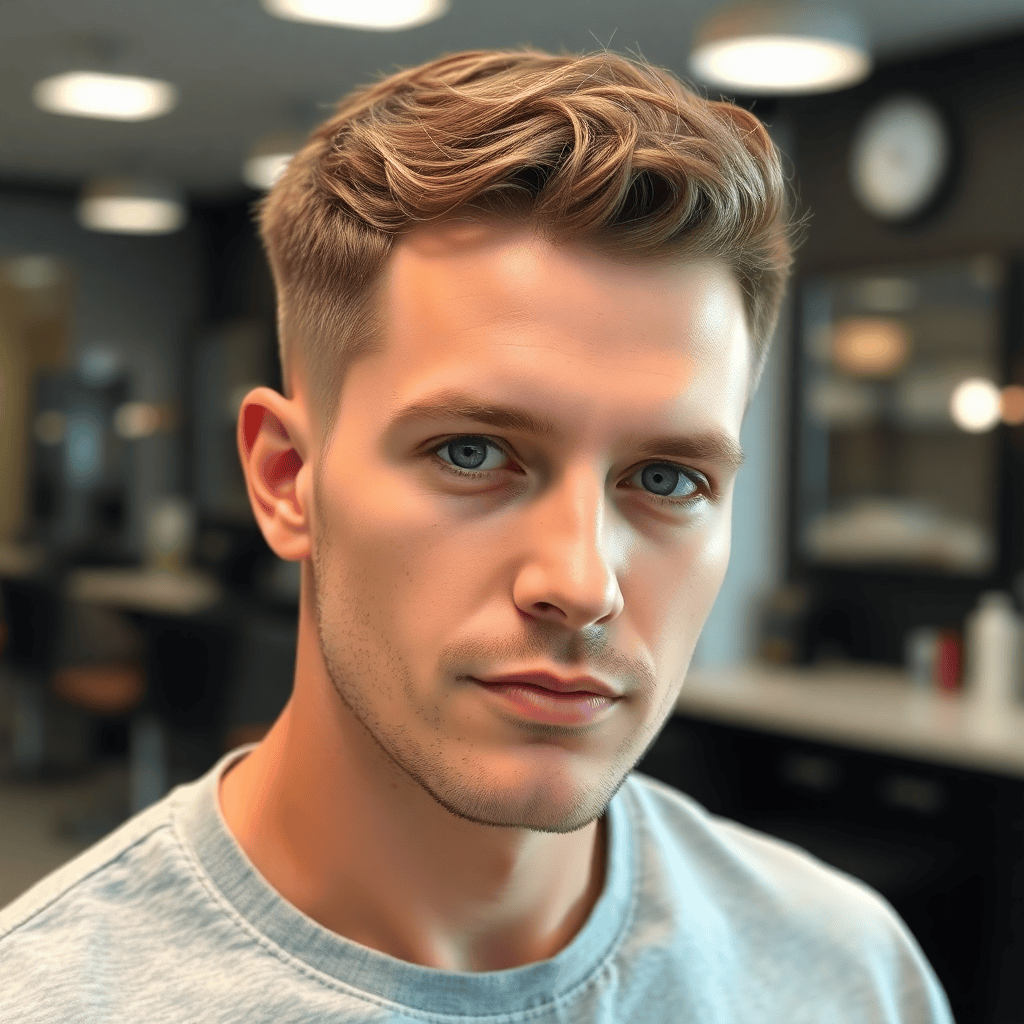
The top is cut about one to one and a half inches long, leaving enough length for small waves to form across the head. The sides gradually shorten around the temples and ears without exposing much skin, while the neckline stays softly tapered. The front edge is textured rather than cut into a hard, straight line.
This is one of the easier short haircuts for men with loose or uneven waves. Ask your barber for point-cut texture on top and a natural taper around the edges. Work a pea-sized amount of matte cream through towel-dried hair, then press the waves forward with your fingers.
2. Low Taper With Short Natural Waves
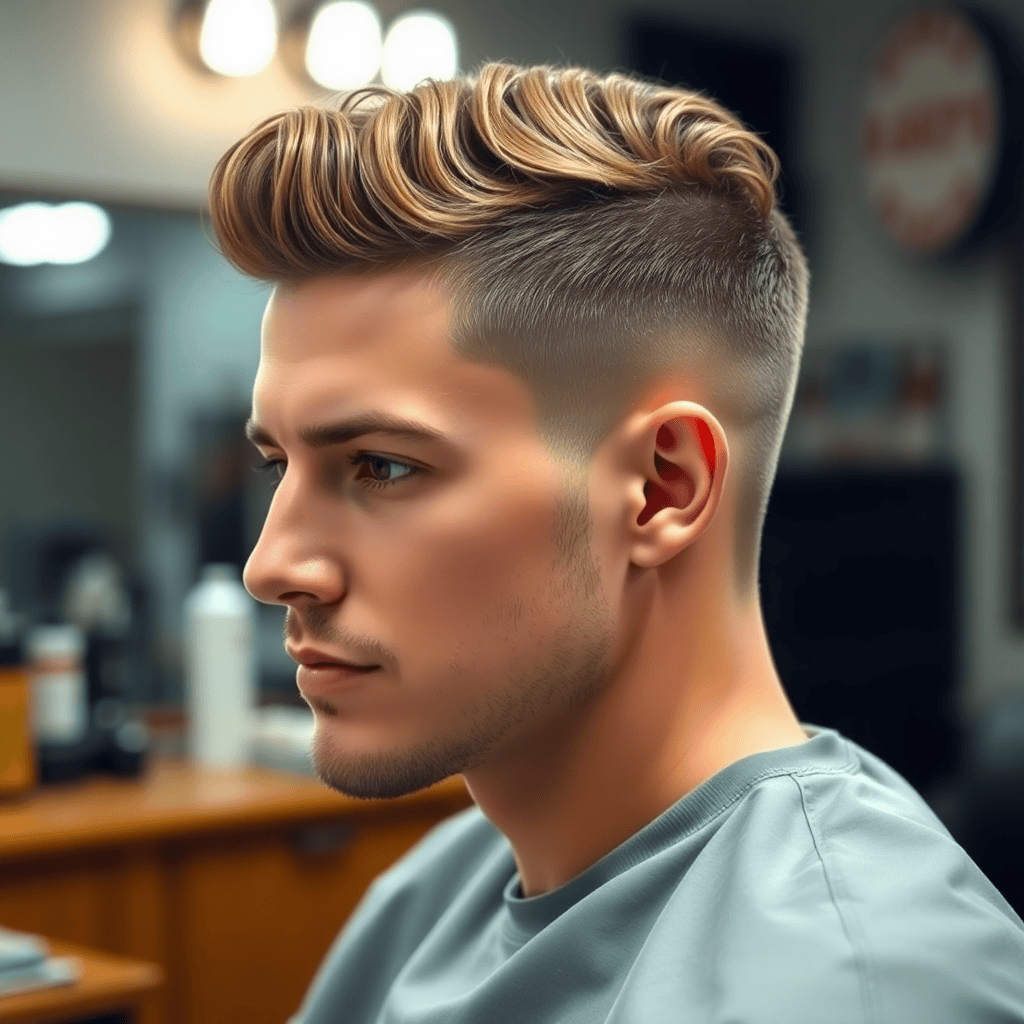
Short waves sit two inches long across the top, following their natural direction instead of being combed into a fixed shape. The hair becomes gradually shorter near the sideburns and lower neckline, but the area above the ears remains full. A clean yet natural hairline keeps the finish neat.
The low taper suits men who want visible texture without a sharp contrast between the top and sides. It works well for oval, square, and longer faces because it does not add excessive width. Tell the barber to keep weight at the temple corners and remove bulk with scissors rather than thinning every section.
3. Low Skin Fade With Wavy Textured Top
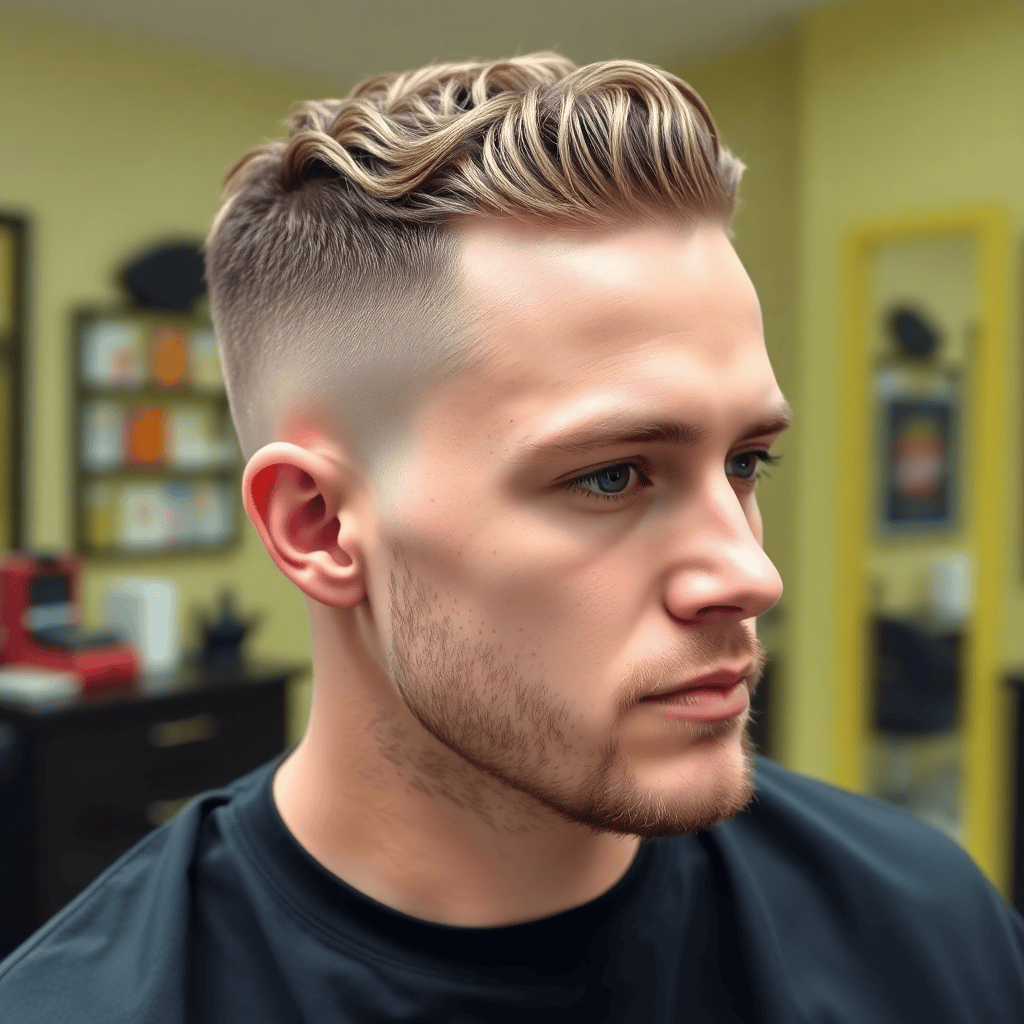
The sides begin at bare skin near the lower ears and blend into darker hair below the temples. On top, two inches of wavy hair are cut into uneven textured layers and styled slightly forward. The fringe breaks into separate curved pieces instead of sitting as one heavy block.
This contrast makes natural movement stand out, which is why similar cuts remain popular men’s haircuts. It can flatter round faces by drawing attention upward, though the skin section needs regular cleanup. Ask for a low skin fade with a soft connection into the crown. Finish with matte paste for separation without flattening the waves.
4. Mid Fade With Tousled Short Waves
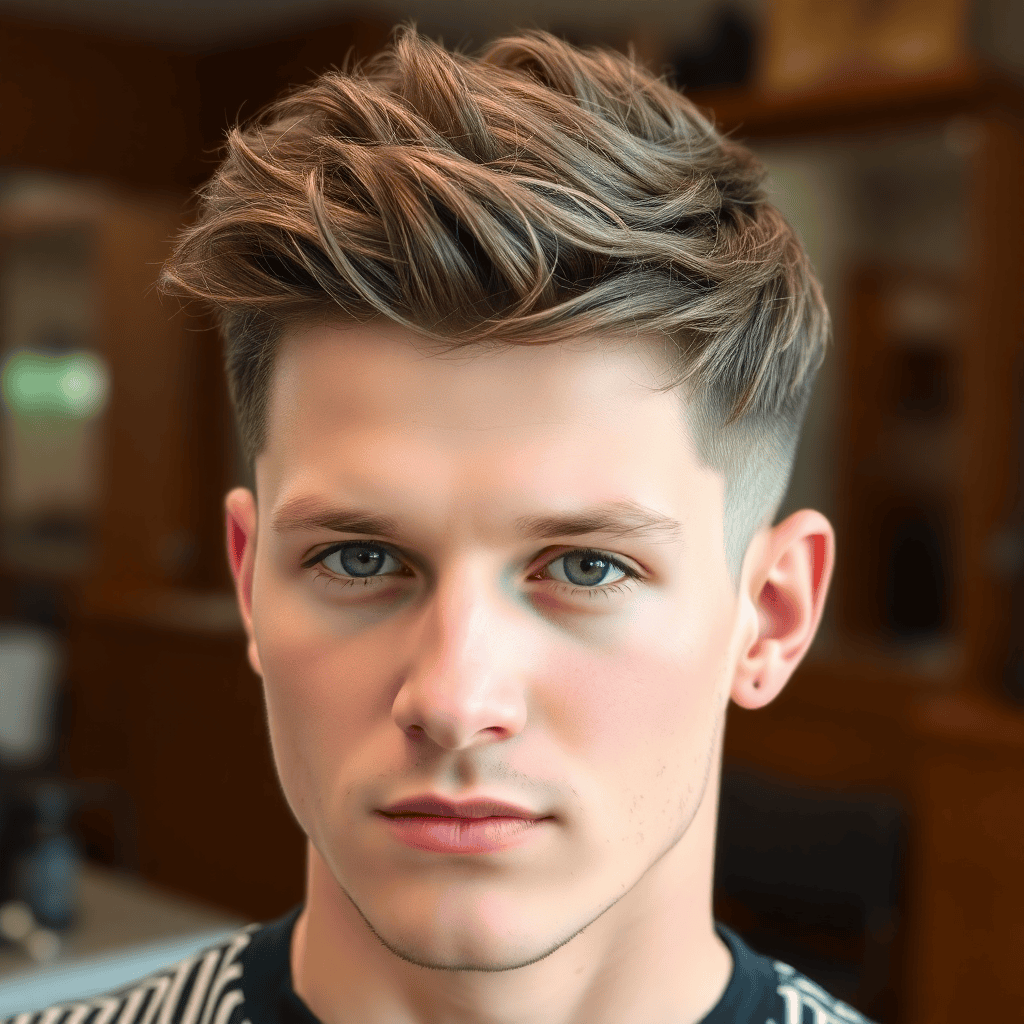
The fade starts around the middle of the sides, creating a clear shift from close-cut hair to a dense wavy top. About two and a half inches remain above the forehead, while the crown is cut slightly shorter. The waves are styled upward and forward with a loose, windblown finish.
A mid fade brings more structure than a taper but is less extreme than a high fade. It is useful for thick hair that expands around the sides. Ask the barber to debulk the ridge above the fade without cutting deep into the wave pattern. Finger-style the top after blow-drying on low speed.
5. High Fade With Wavy Brush-Up
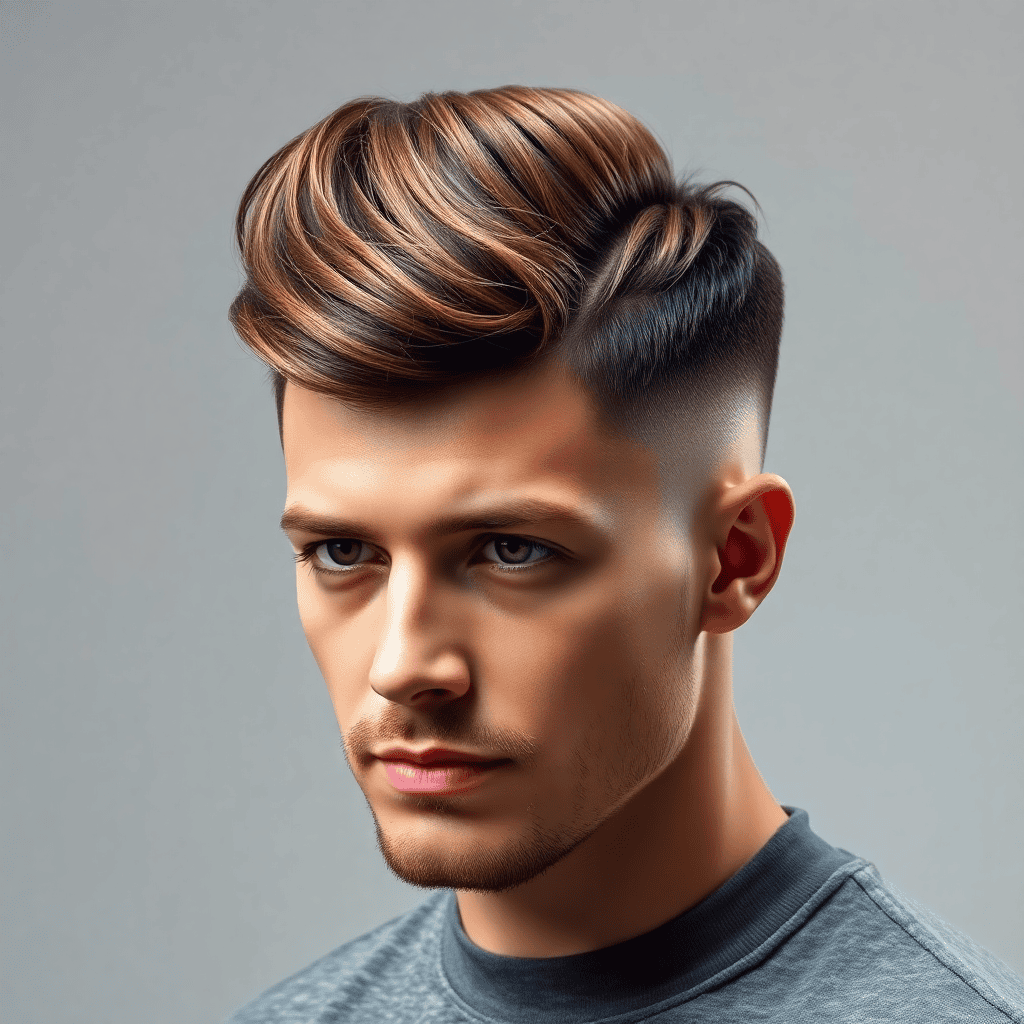
The sides are faded high above the temples, leaving a narrow band of darker hair beneath the longer top. Three inches of waves are directed upward from the forehead and pushed slightly back. The front rises higher than the crown, creating a tall silhouette with visible bends.
This cut works best on dense hair that can hold height. It may lengthen a round or chubby face, but men with long faces should keep the front lower. Ask for a blended high fade rather than a disconnected shelf. Apply light mousse to damp hair, then lift the roots with your fingers while blow-drying.
6. Wavy Caesar Cut With Soft Fringe
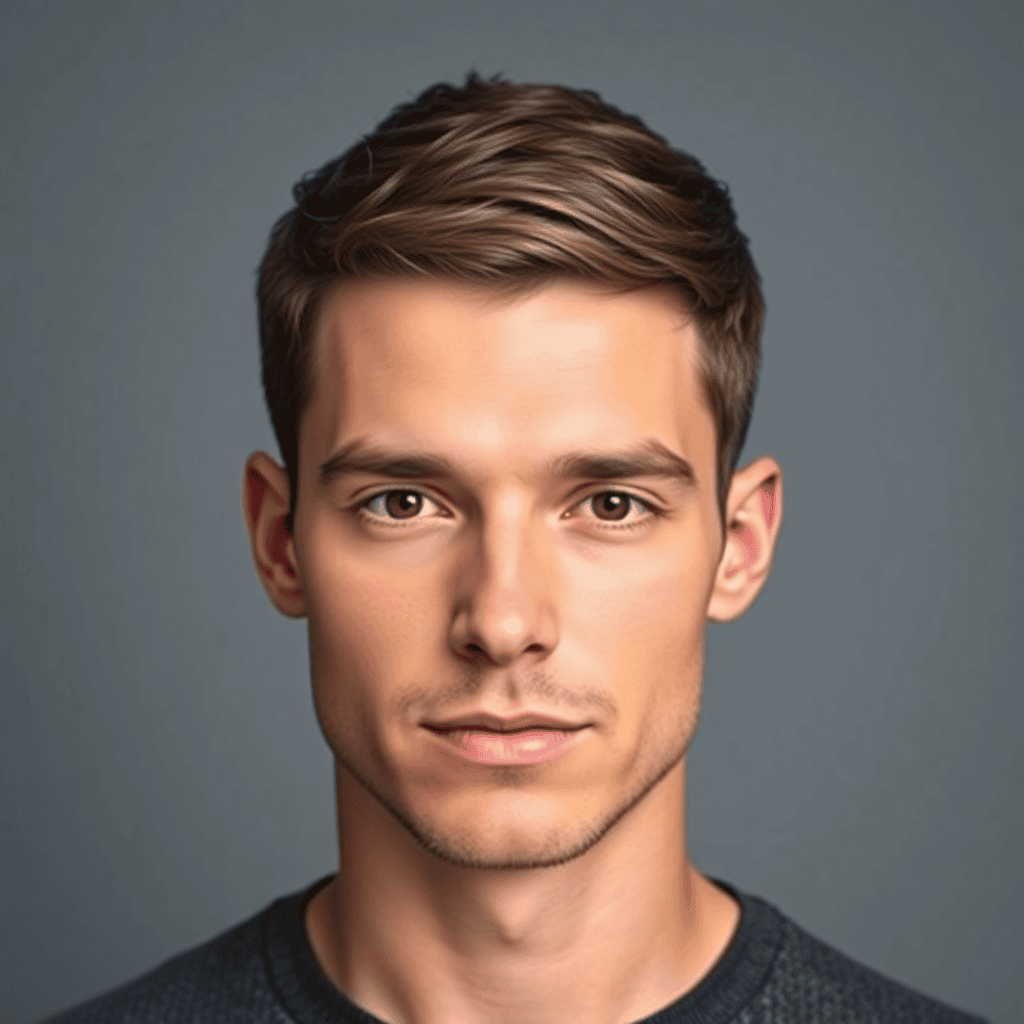
The top measures roughly one and a half inches and is combed toward the forehead, allowing small waves to form along the surface. A short, soft fringe curves across the upper forehead without a ruler-straight edge. The sides are clipper-cut but kept dark enough to match the compact top.
This is a controlled choice for men whose waves become untidy at longer lengths. It can also reduce the visible height of a larger forehead. Ask for a textured Caesar with a soft perimeter and no blunt bowl shape. A small amount of styling cream helps keep the fringe together while preserving movement.
7. French Crop With Broken Wavy Fringe
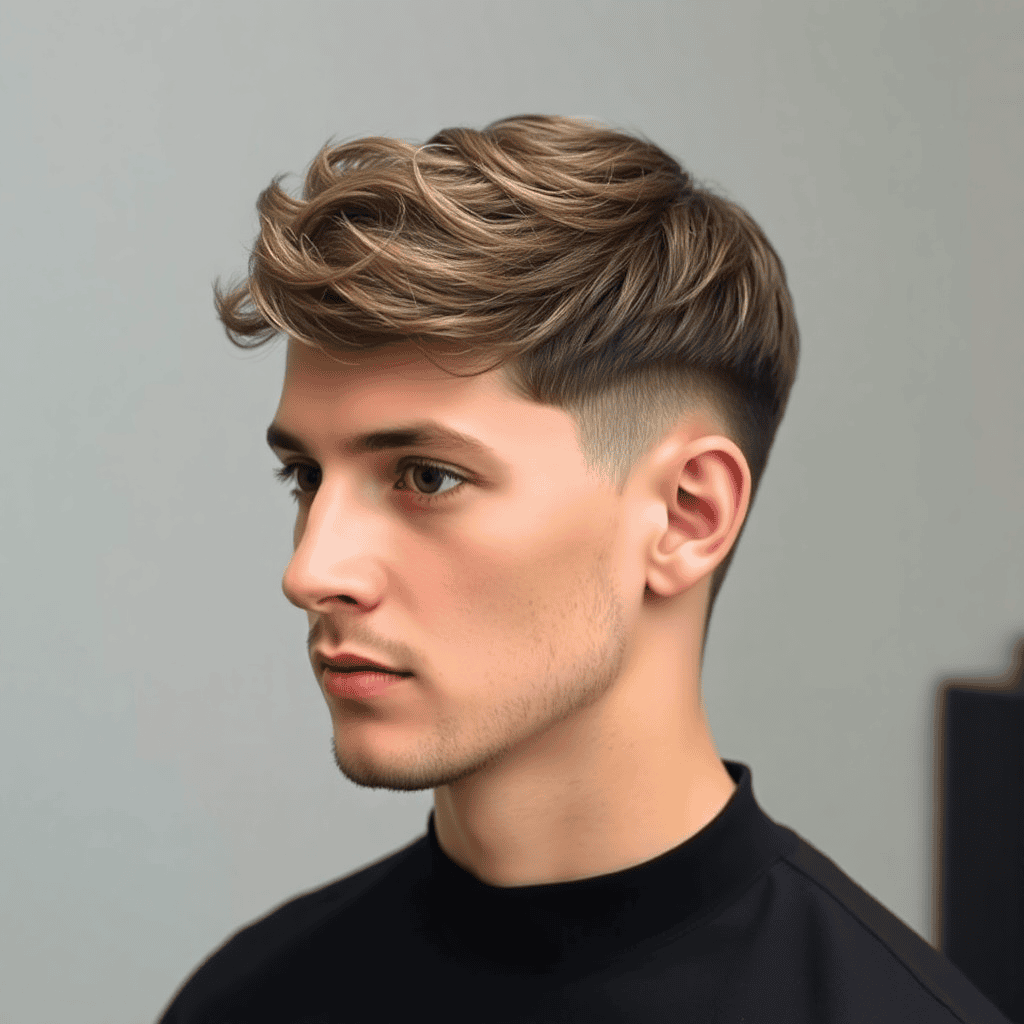
The back and sides are faded low to mid, while the top stays close to two inches long. Layers direct the hair forward, ending in a broken fringe made of several wavy sections. The hairline remains visible between the separated pieces, giving the front a lighter finish.
This modern crop is well suited to busy men who want texture without a long styling routine. It works with loose waves and moderate density, though coarse hair may need extra weight removal. Ask the barber to point-cut the fringe and keep it irregular. Scrunch in matte clay, then let the front settle naturally.
8. Drop Fade With Rounded Wavy Top
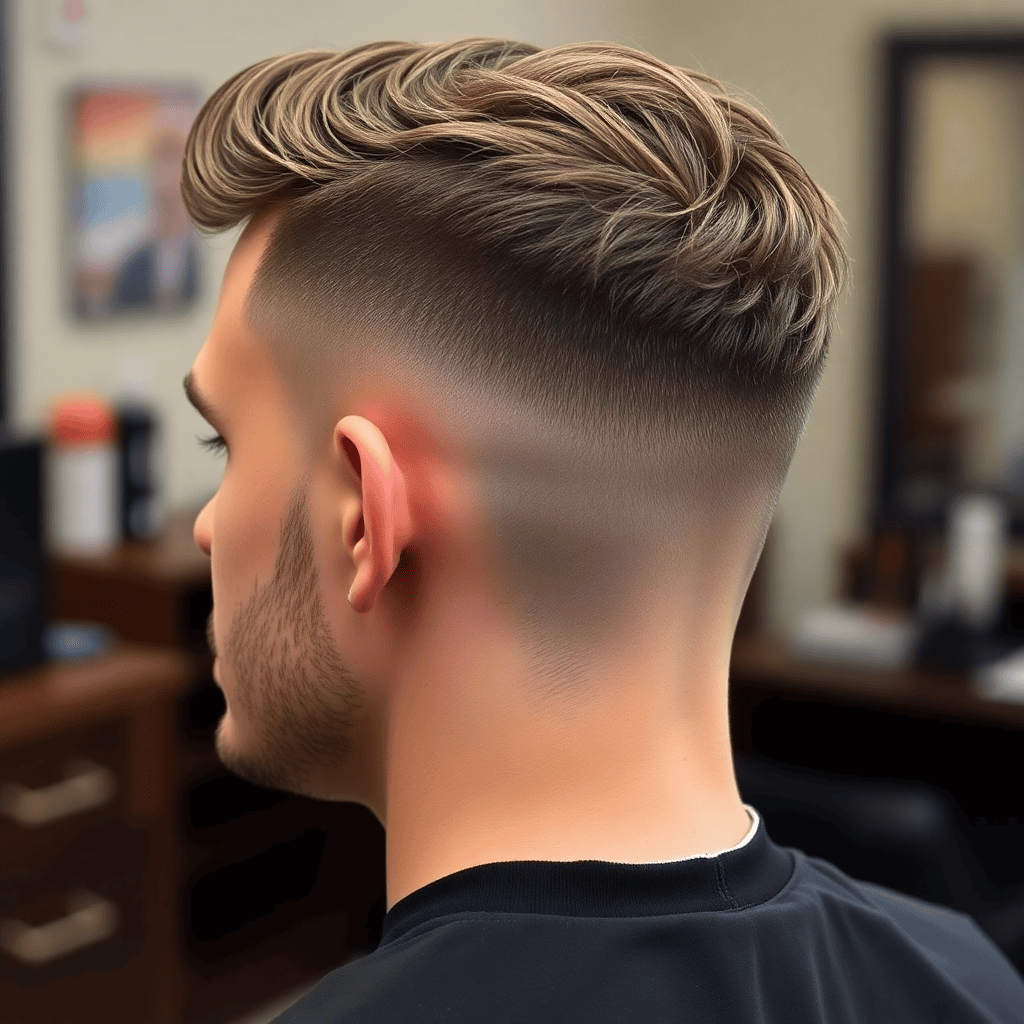
The fade curves downward behind each ear, following the shape of the skull instead of running straight across the back. The top remains around two to three inches long, with rounded layers that preserve full waves over the crown. The front is lifted slightly and allowed to fall to one side.
A drop fade gives the rear profile more shape and can make dense hair appear less boxy. It suits men who like fresh haircuts for men but want something different from a standard fade. Ask for a low drop that stays dark near the parietal ridge. Avoid removing too much crown length, since waves often spring upward when dry.
9. Burst Fade With Wavy Faux Hawk
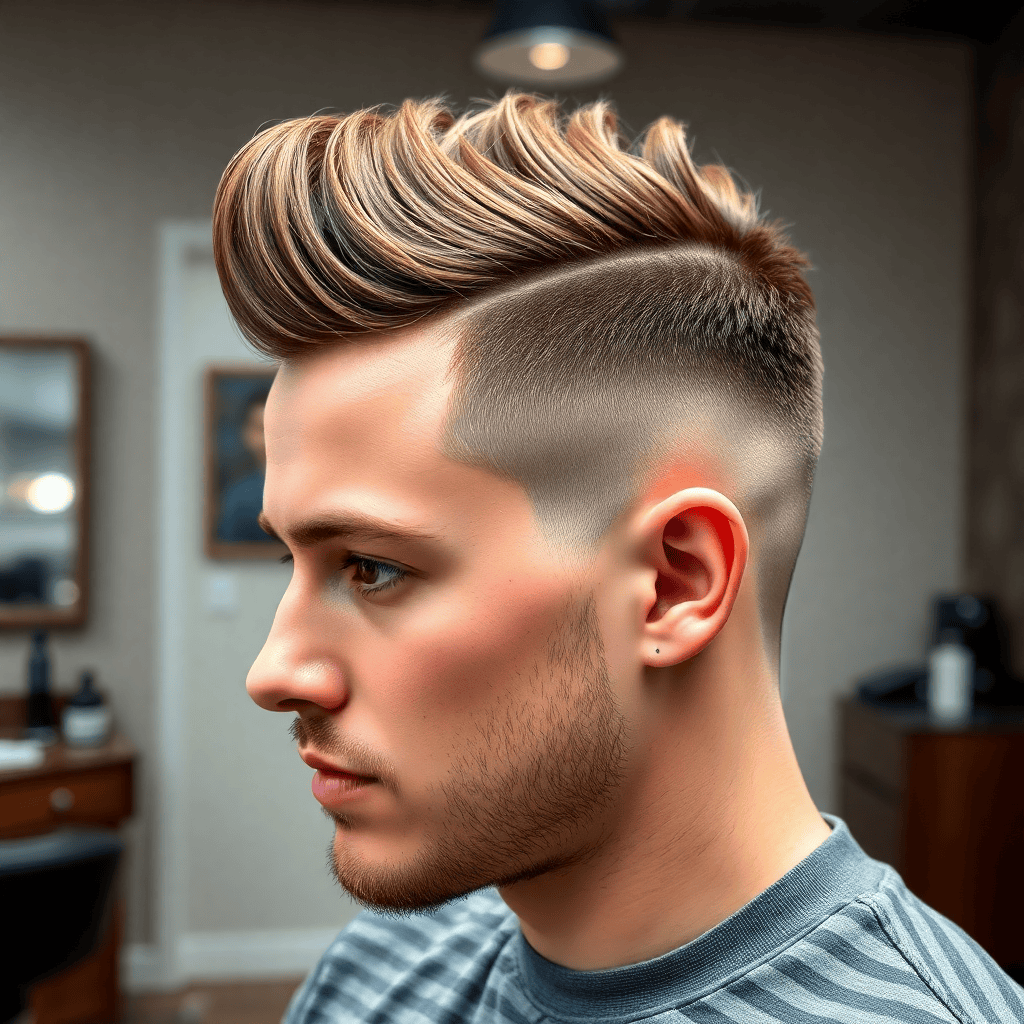
Hair around the ears is faded in a semicircular burst, while more length remains at the back of the head. A strip of wavy hair runs from the forehead through the crown, measuring about three inches at the front and gradually shortening behind. The center is styled upward without forming stiff spikes.
This shape creates a controlled faux hawk and works well for men who want an expressive weekend style. It can suit square faces because the rounded fade softens the sides. Tell your barber to keep the center wide enough to show the wave pattern. Use flexible paste and pinch only a few sections for definition.
10. Temple Fade With Full Short Waves
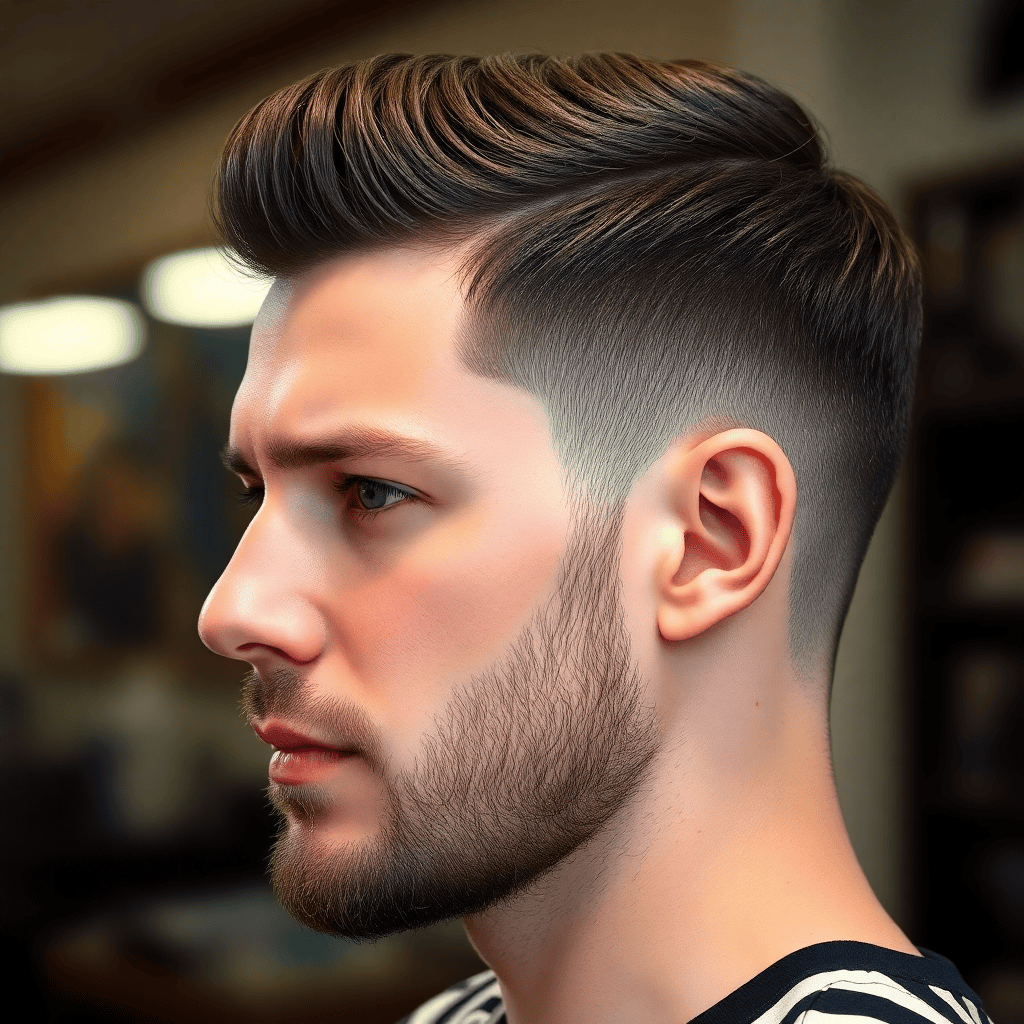
The hair stays full across the sides and top, while only the temples and lower sideburns are faded close. Short waves measuring two to three inches cover the upper head, and the neckline receives a light taper. The front edge can remain natural or receive a clean line depending on preference.
A temple fade keeps more density than a full fade, making it a strong option among haircuts for thick hair men often consider. It also grows out more softly. Ask the barber to avoid taking the fade behind the ear. Apply curl cream or light styling lotion to damp hair and shape the waves by hand.
11. Short Wavy Side Part With Classic Taper
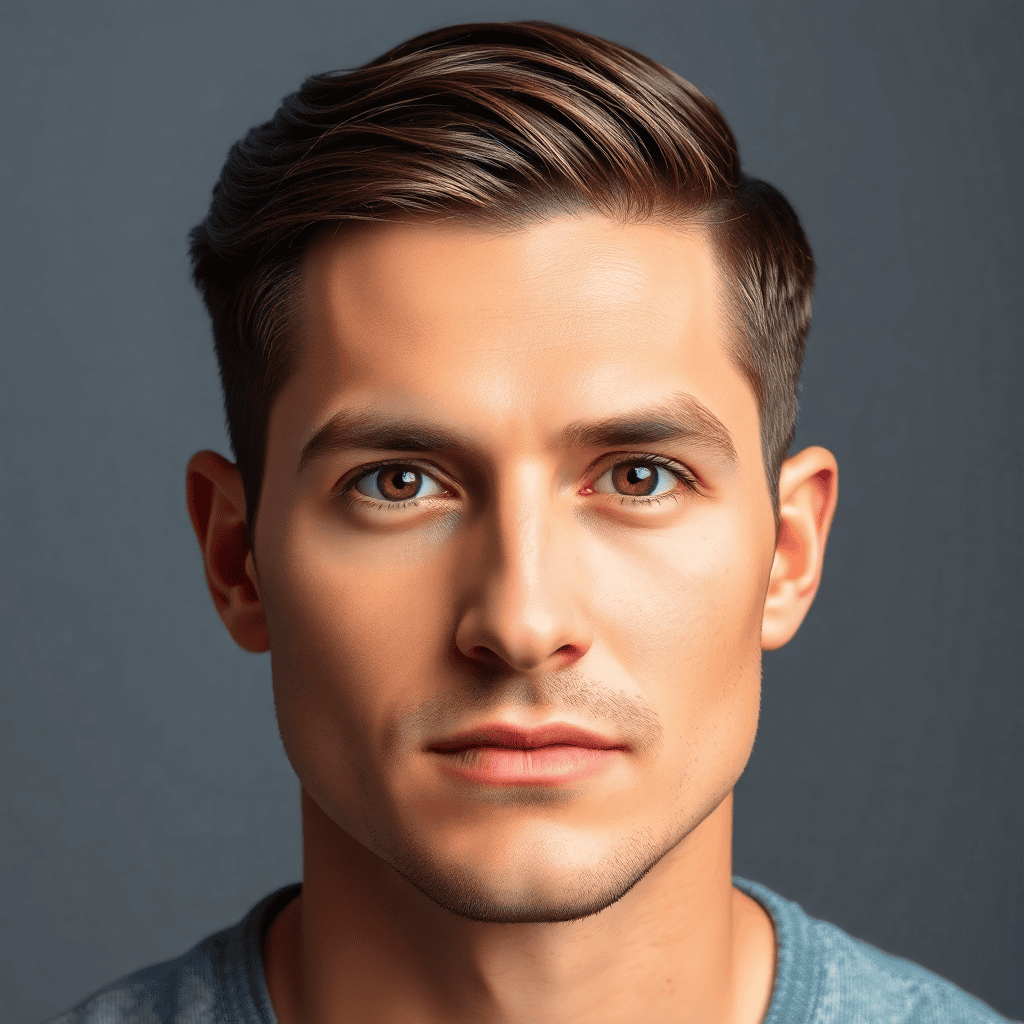
The top is cut between two and three inches, with extra length left above the parting line. Waves sweep diagonally across the head and curve back near the temple. Scissor-cut sides taper gradually toward the ears and neckline, creating a softer outline than a clipper fade.
Among classic haircuts for men, this shape works well in offices, formal settings, and daily routines. It flatters oval and square faces and pairs easily with glasses. Ask for a natural side part rather than a shaved line. Comb the hair while damp, then separate the surface with your fingers so the waves do not look pressed flat.
12. Wavy Ivy League With Neat Side Sweep
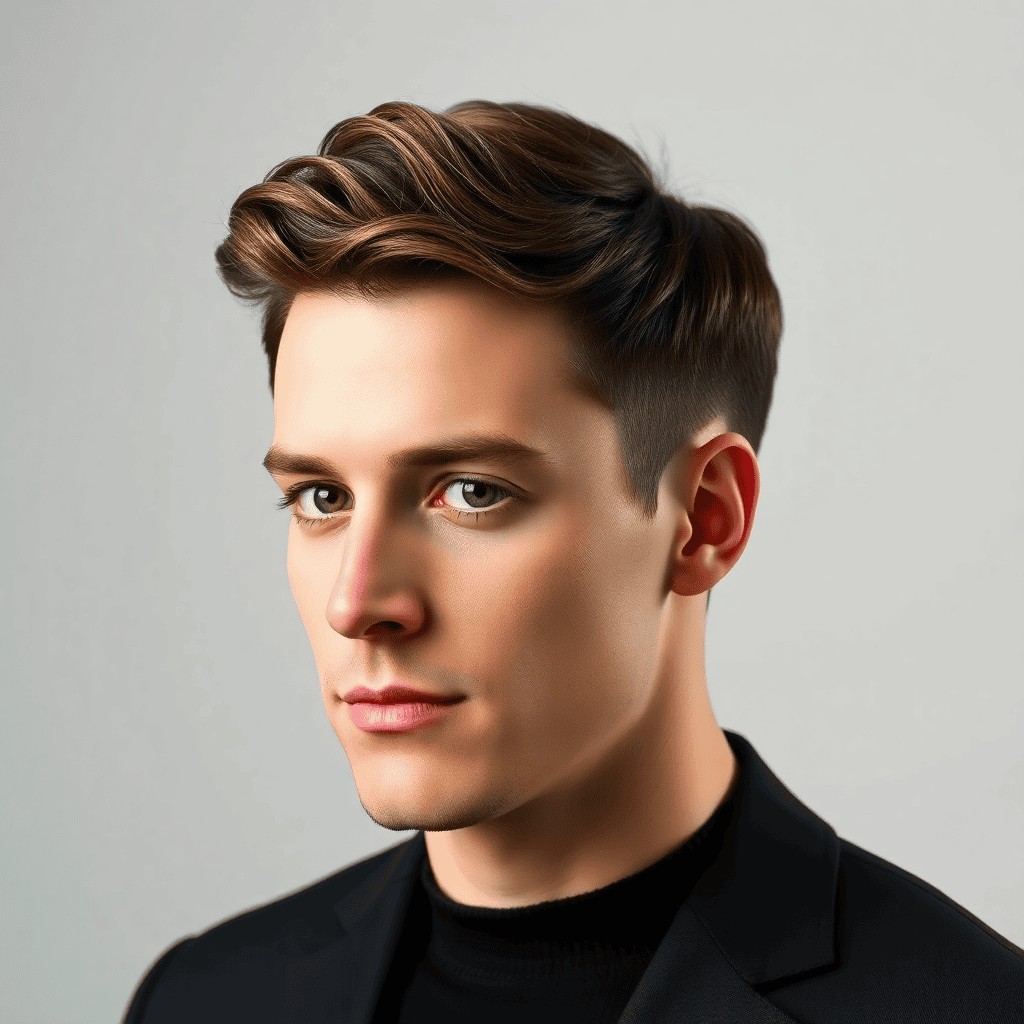
The front measures close to three inches and gradually shortens toward the crown. It is swept to one side with enough lift to reveal the wavy texture, while the sides are tapered close but not faded to skin. The hairline is clean, and the finish remains tidy without looking glossy or rigid.
This is one of the more dependable professional haircuts for men with mild to moderate waves. It can work across several age groups because the shape is controlled and familiar. Ask for an Ivy League cut with extra front length and scissor texture. Use a light cream or low-shine paste, especially if the hair becomes puffy when dry.
13. Wavy Quiff With Low Fade
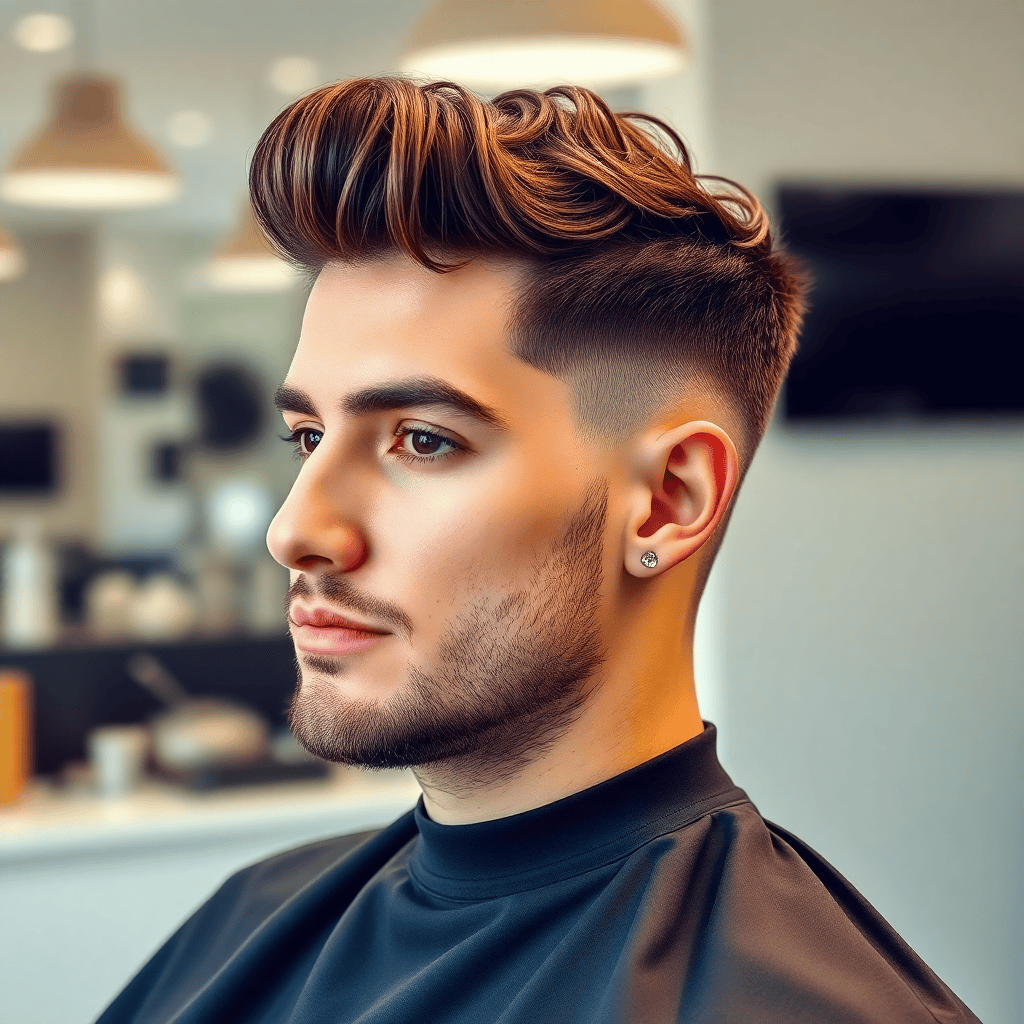
The top remains three to four inches long, giving the front enough length to rise and curl backward. A low fade cleans the area around the ears while leaving darker sides above. The quiff has an open, airy surface, with separate waves visible rather than one smooth wall of hair.
This style suits men with dense waves and enough time for blow-drying. It adds height to round faces but may need a lower front on narrow or long faces. Ask your barber to keep graduated length from the fringe to the crown. Dry the hair upward first, then guide it backward using your hands rather than a tight brush.
14. Wavy Pompadour With Scissor Taper
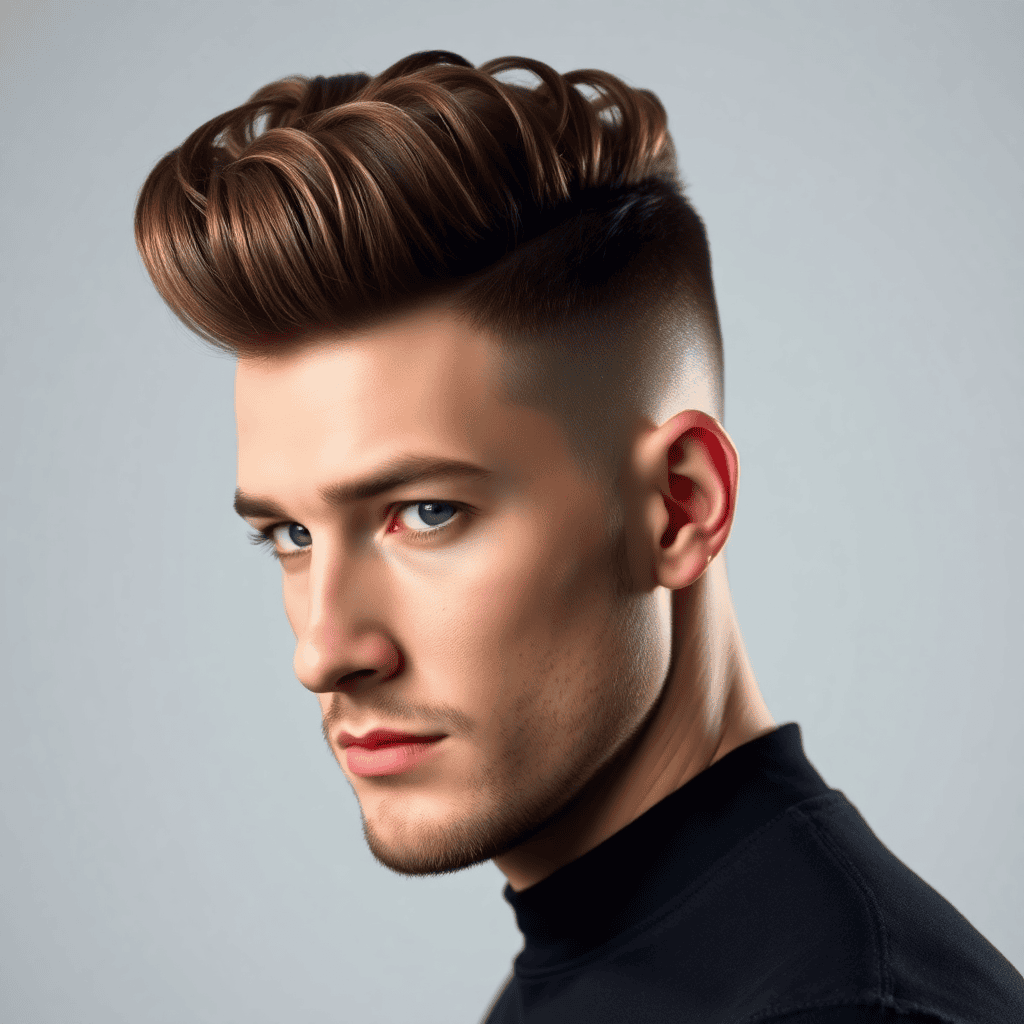
Four inches of hair at the front are lifted upward and rolled back into a broad wave. The top gradually becomes shorter near the crown, while the sides are scissor-cut and tapered closely around the edges. Unlike a rigid vintage pompadour, the surface retains soft bends and a touchable finish.
The fuller sides make this cut suitable for men who want stylish haircuts for men without exposing the scalp. It works best on medium-to-thick hair and requires steady styling. Ask for internal layering so the front can lift without becoming heavy. Blow-dry backward with a vent brush, then shape the final curve with your fingers.
15. Disconnected Undercut With Long Wavy Top
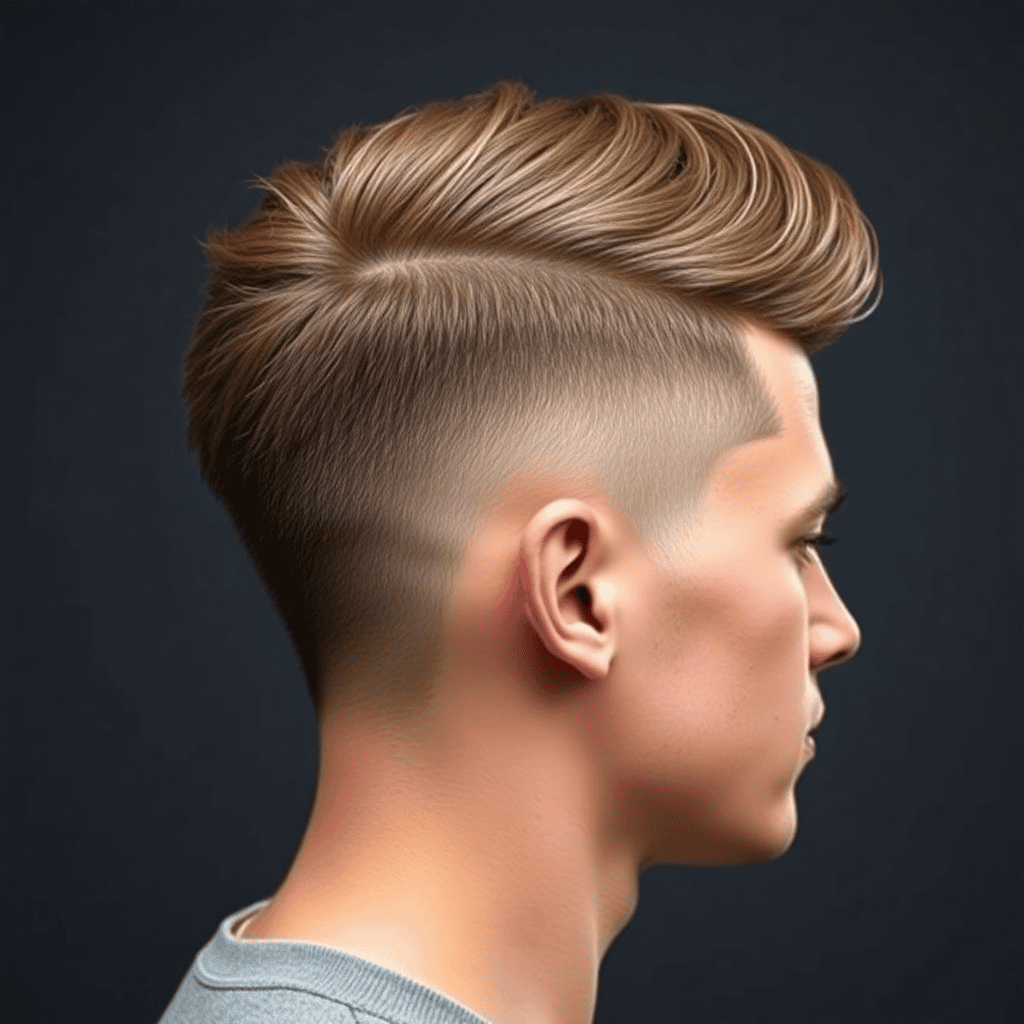
The sides and back are clipped short to one even length, creating a clear separation beneath a four-to-five-inch wavy top. The longer hair falls from one side across the head, with the ends bending near the eyebrow or temple. No gradual blend connects the upper and lower sections.
The strong contrast makes this one of the bolder modern haircuts for men. It suits thick waves but can become top-heavy as it grows. Tell the barber exactly how far down you want the disconnection to sit, and request enough crown length to prevent sections from standing up. Style with light cream so the waves remain flexible.
16. Medium Wavy Hair With Tapered Sideburns
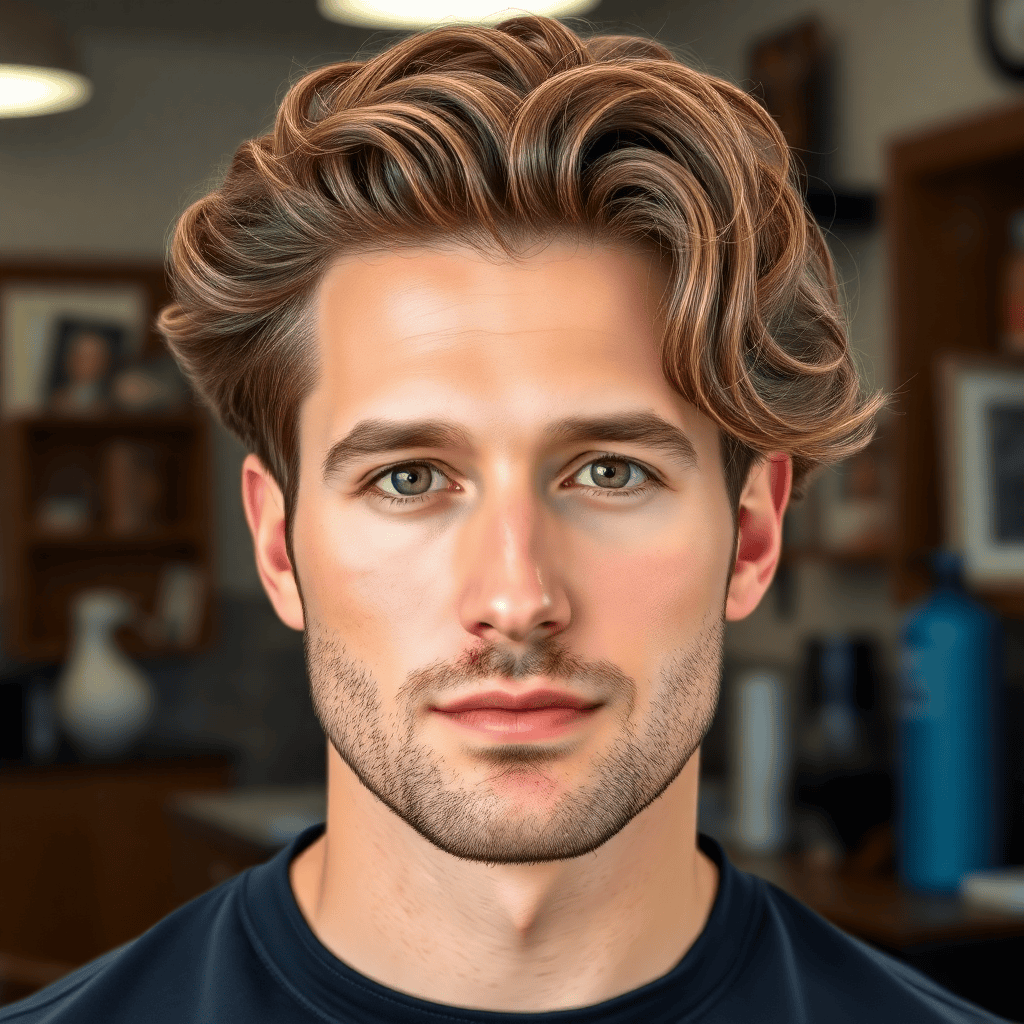
The entire top and upper sides remain three to five inches long, creating a full, rounded shape. Only the sideburns, area around the ears, and neckline are tapered. Layers remove heaviness from the interior while allowing broad waves to travel from the crown toward the forehead and sides.
This cut offers a natural bridge between short and medium length hairstyles men can wear. It suits thick hair, balanced facial proportions, and anyone who dislikes sharp fades. Ask for a scissor cut with long layers and controlled weight around the ears. Apply leave-in cream, scrunch lightly, and let the hair air-dry whenever possible.
17. Tousled Wavy Fringe With Layered Sides
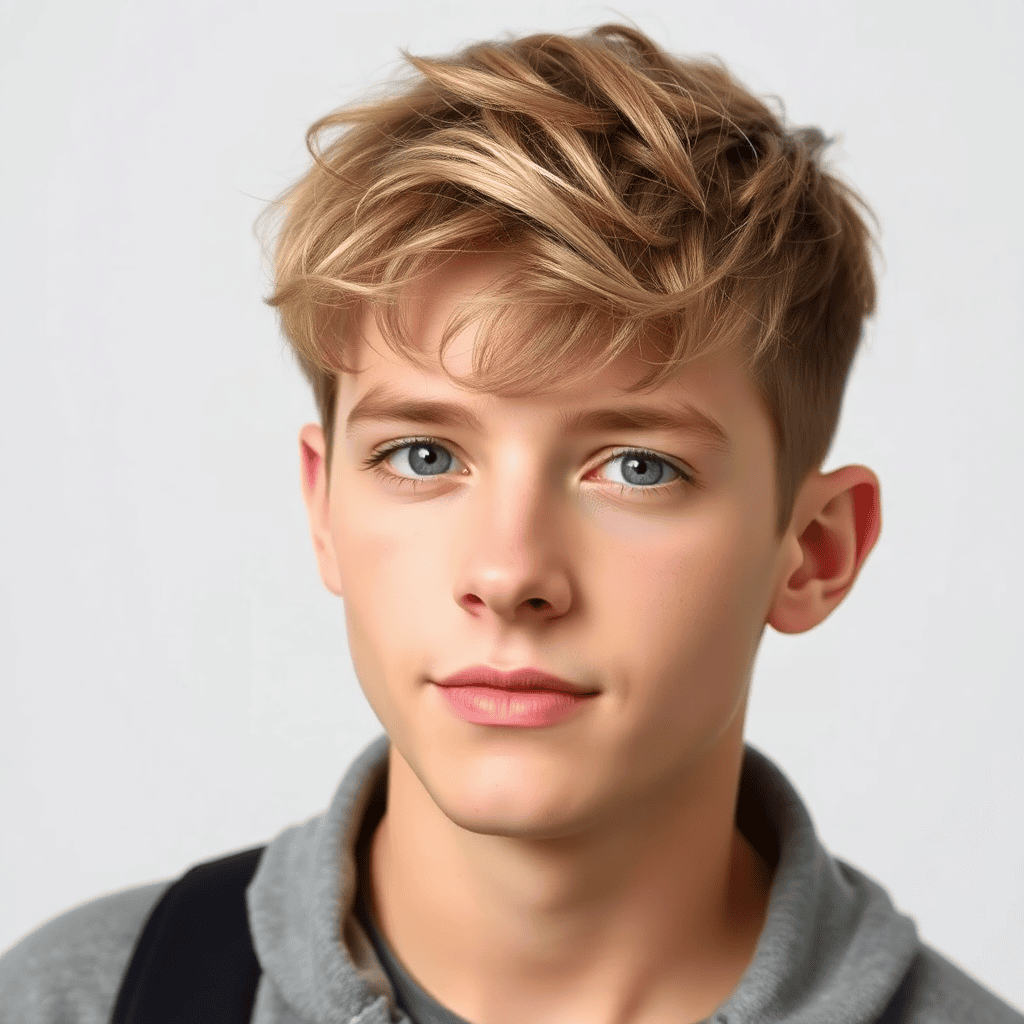
The fringe reaches the eyebrows and breaks into loose bends across the forehead. Hair on top measures four to five inches, while the sides are trimmed with scissors to sit over the upper ears. Soft layers connect every section, creating a messy yet balanced shape with no visible fade.
This works well for haircuts for teenage guys and young adults who prefer relaxed texture. It can soften square facial angles, though a heavy fringe may shorten a round face. Ask for face-framing layers and a light, uneven perimeter. Use sea-salt spray sparingly, then twist a few damp sections to strengthen the wave pattern.
18. Middle-Parted Curtain Waves
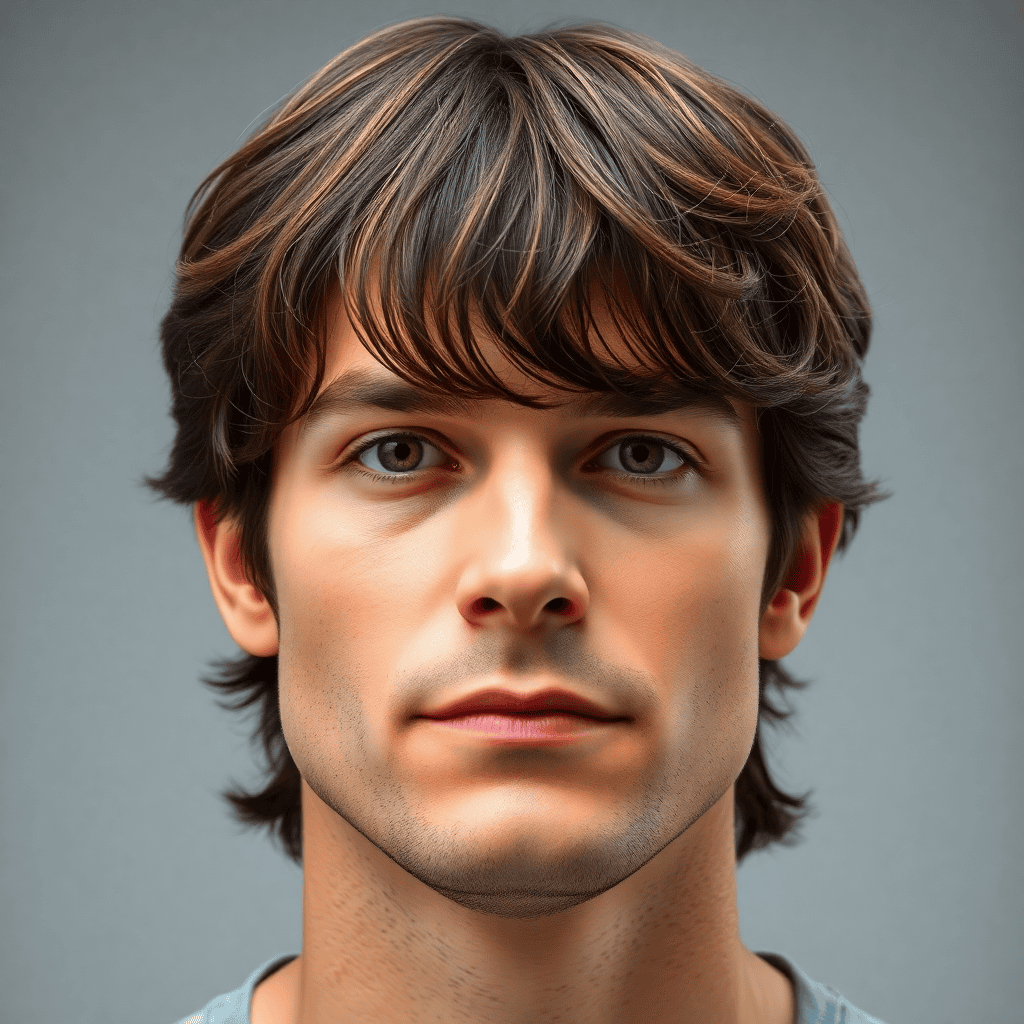
Hair is cut around four to six inches long, with a center part that opens above the forehead. The front pieces bend away from the face and fall near the cheekbones, while layered sides cover part of the ears. The back remains slightly shorter to prevent the shape from becoming flat or triangular.
Curtain waves frame oval, heart-shaped, and longer faces with a soft outline. This cut needs enough front length to separate cleanly, so short regrowth may require patience. Ask for long face-framing layers and a natural center split. Blow-dry the roots away from the part, then allow the curved ends to settle without heavy wax.
19. Wavy Bro Flow With Brushed-Back Front
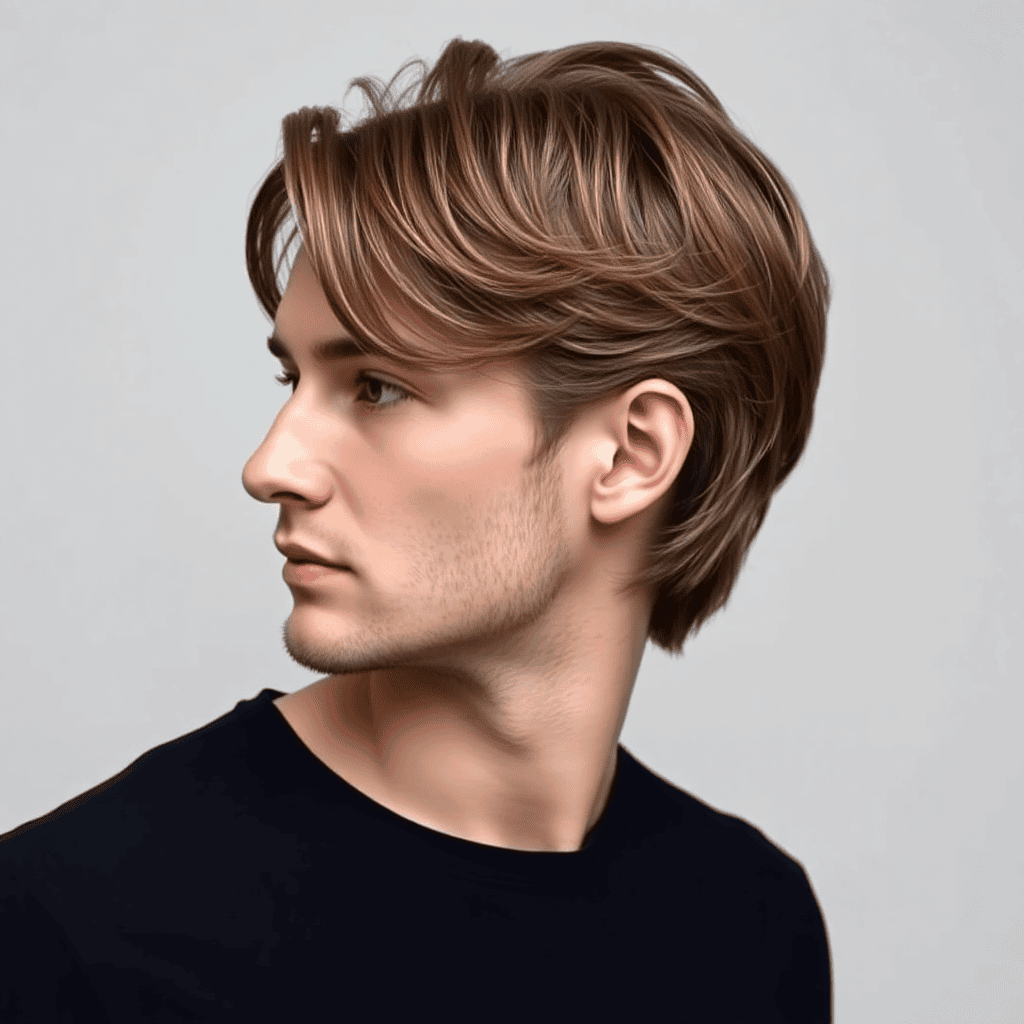
Medium-length hair flows from the forehead toward the crown and curves behind the ears. The front measures about five to seven inches, while long layers reduce bulk through the sides and back. The outline reaches the upper neck, and the waves create a relaxed swept-back shape without a hard part.
The bro flow suits men whose hair naturally bends away from the face. It is also one of the easier long-term haircut ideas for men growing beyond a short cut. Ask for invisible layers and a cleanup around the ears without shortening the top. Push damp hair backward with your hands and allow it to dry in place.
20. Layered Wavy Shag With Long Fringe
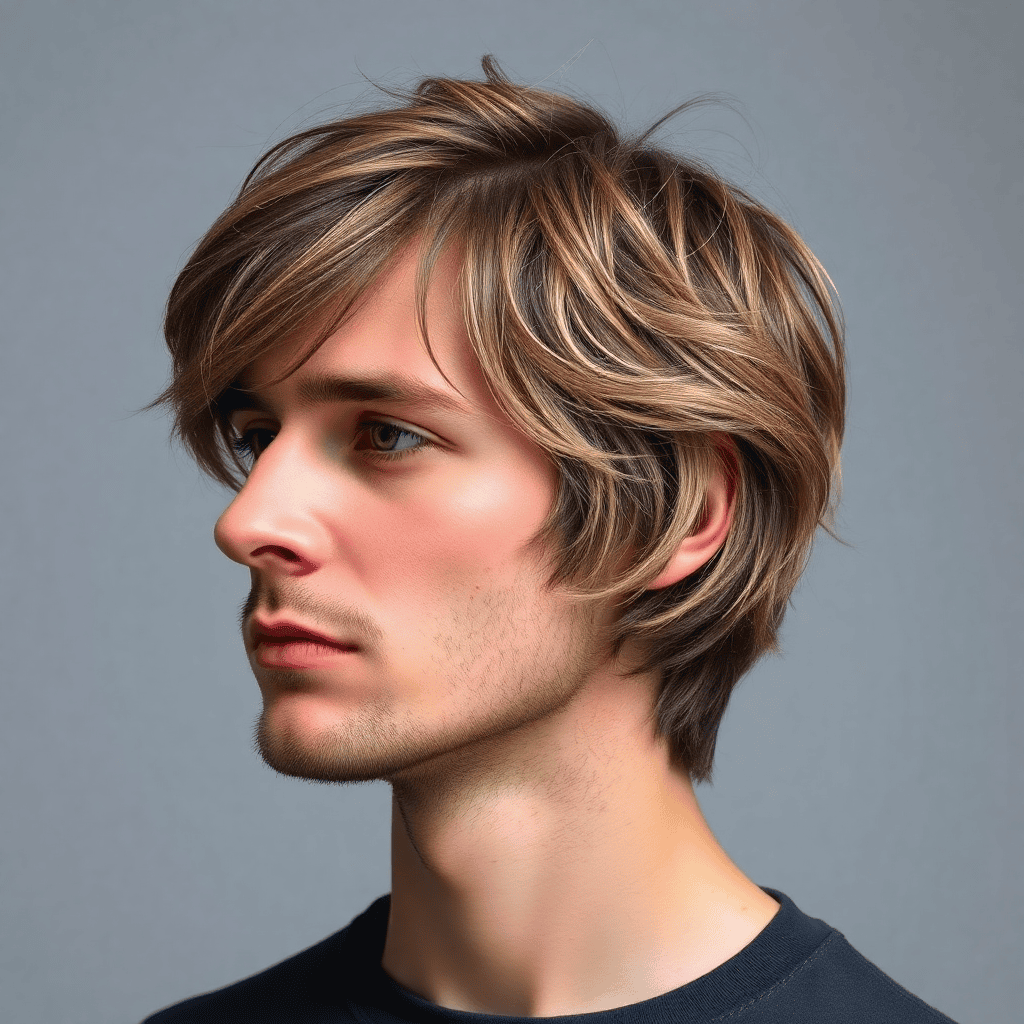
The fringe falls around the eyebrows, while uneven layers create movement from the crown through the sides. Hair covers the ears and reaches the upper neck, with wispy ends that flick outward. The top holds moderate volume, but the perimeter looks light rather than thick and blunt.
A shag can give fine or medium-density waves more visible motion. It also suits men who prefer new hairstyles for men that do not depend on faded sides. Ask for short crown layers, longer face-framing pieces, and textured ends. Styling should stay loose; use a small amount of mousse and scrunch instead of brushing the hair smooth.
21. Soft Wavy Wolf Cut
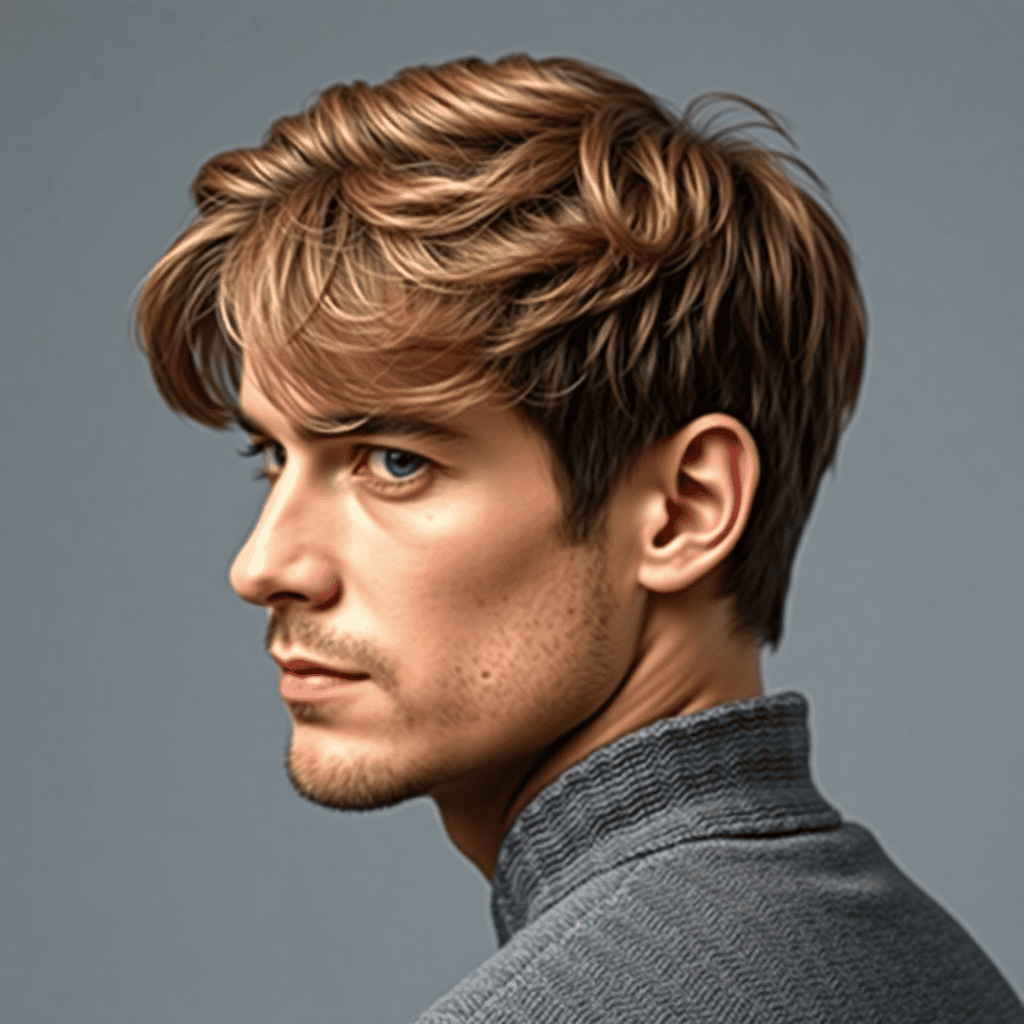
The crown is cut into short, rounded layers that create height, while the sides and back gradually extend toward the neck. A loose wavy fringe frames the forehead, and the back reaches the collar with soft, broken ends. The transition between short and long areas remains blended rather than sharply disconnected.
This shape falls between a shag and a mullet. It works best on medium or thick waves that can support layered volume. Ask the stylist to keep the sides full enough to avoid a narrow strip through the center. Use lightweight texture spray at the roots, then shape the ends with a small amount of cream.
22. Modern Soft Mullet With Wavy Texture
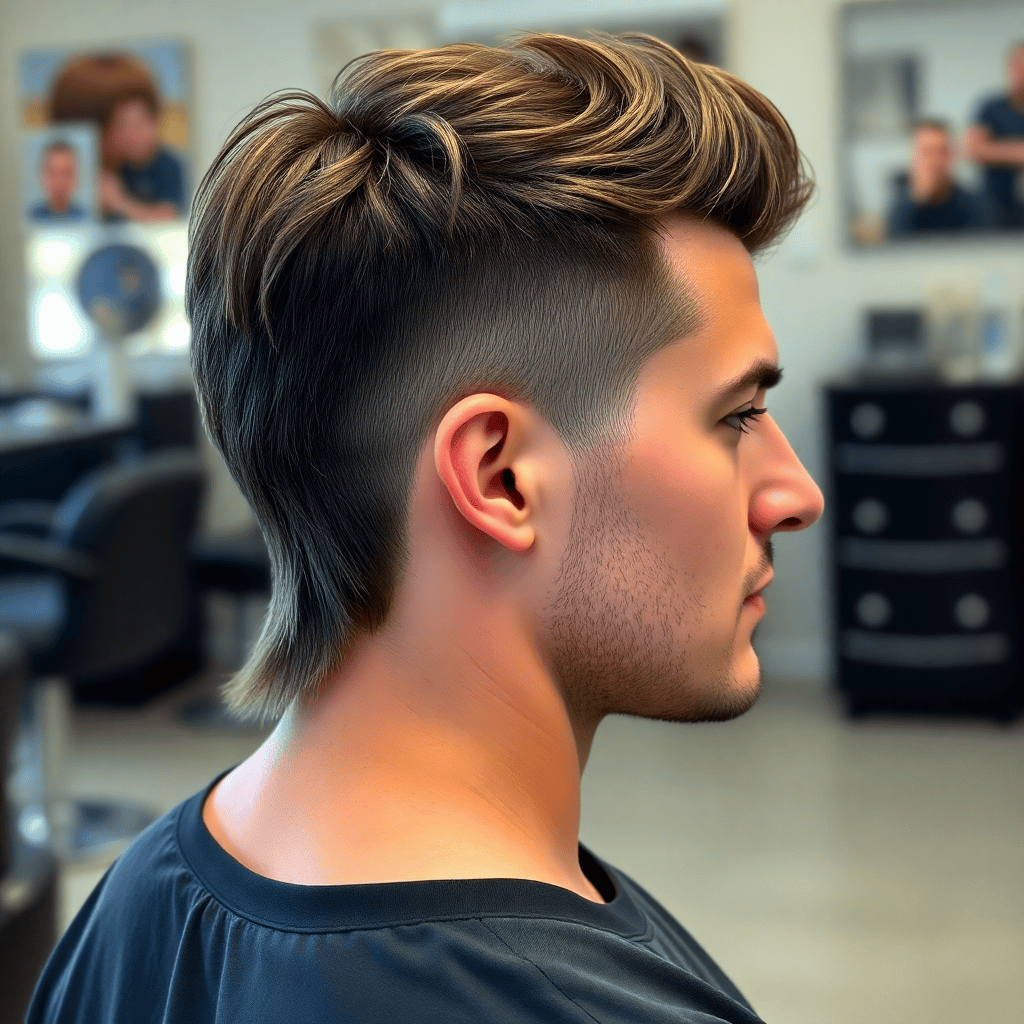
The front and upper sides remain three to four inches long, while the back extends to the base of the neck. The temple area is lightly tapered instead of shaved, and the layers flow gradually from the crown into the longer rear section. Natural waves produce soft outward flicks around the ears and neckline.
The restrained shape is easier to wear than a sharply disconnected mullet. It reflects the current interest in manageable, less rigid mullet variations. Ask for a blended soft mullet with no bare side panels. Trim the neckline before it becomes stringy, and use cream to keep the rear waves grouped.
23. Slicked-Back Medium Waves With Low Taper
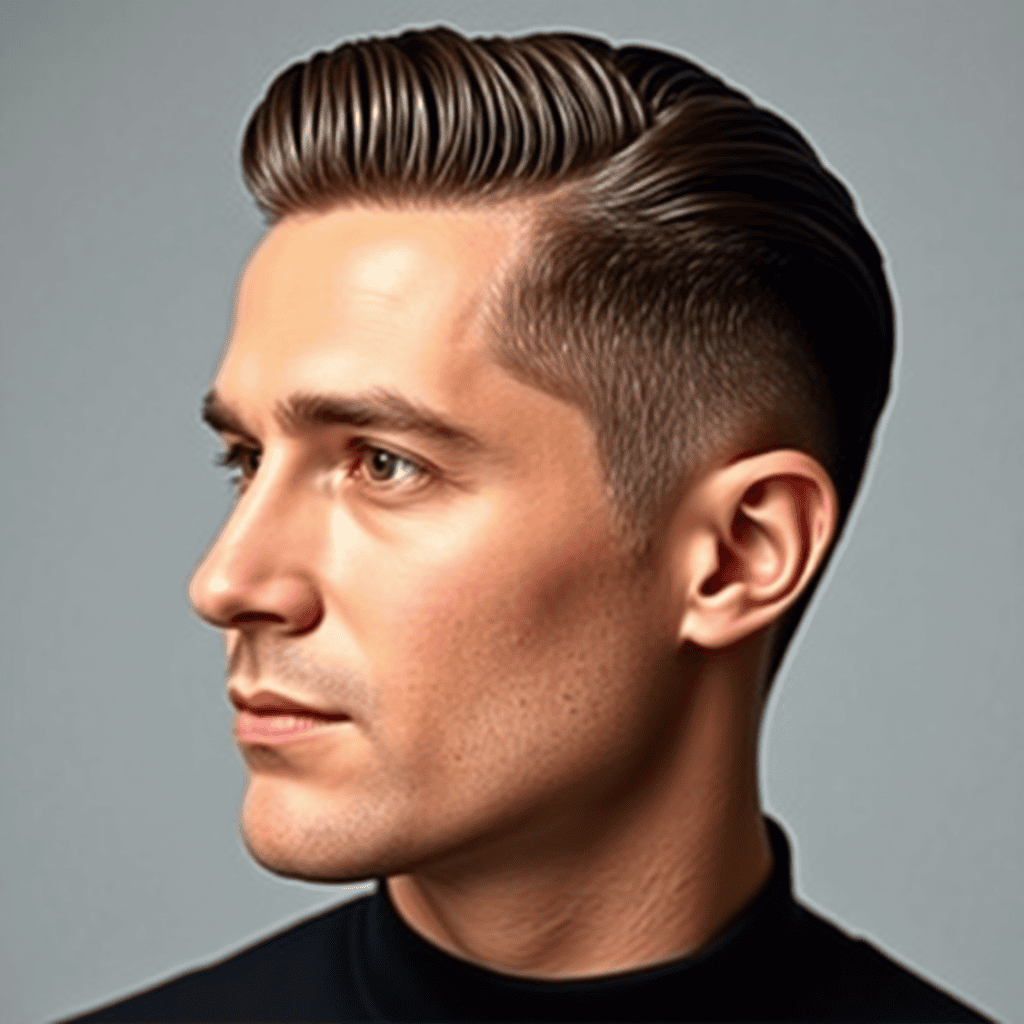
Hair measures five to seven inches from the front through the crown and is directed backward, showing broad ridges rather than a flat combed surface. The sides remain long enough to tuck behind the ears. A low taper cleans the sideburns and neckline while preserving the full medium-length outline.
This is a practical option for business haircuts for men who want more length. It pairs well with facial hair and can be restyled loosely after work. Ask for long layers that flow backward without separating at the crown. Apply cream pomade to towel-dried hair, comb once for direction, then loosen the surface with your fingers.
24. Shoulder-Length Waves With Face-Framing Layers
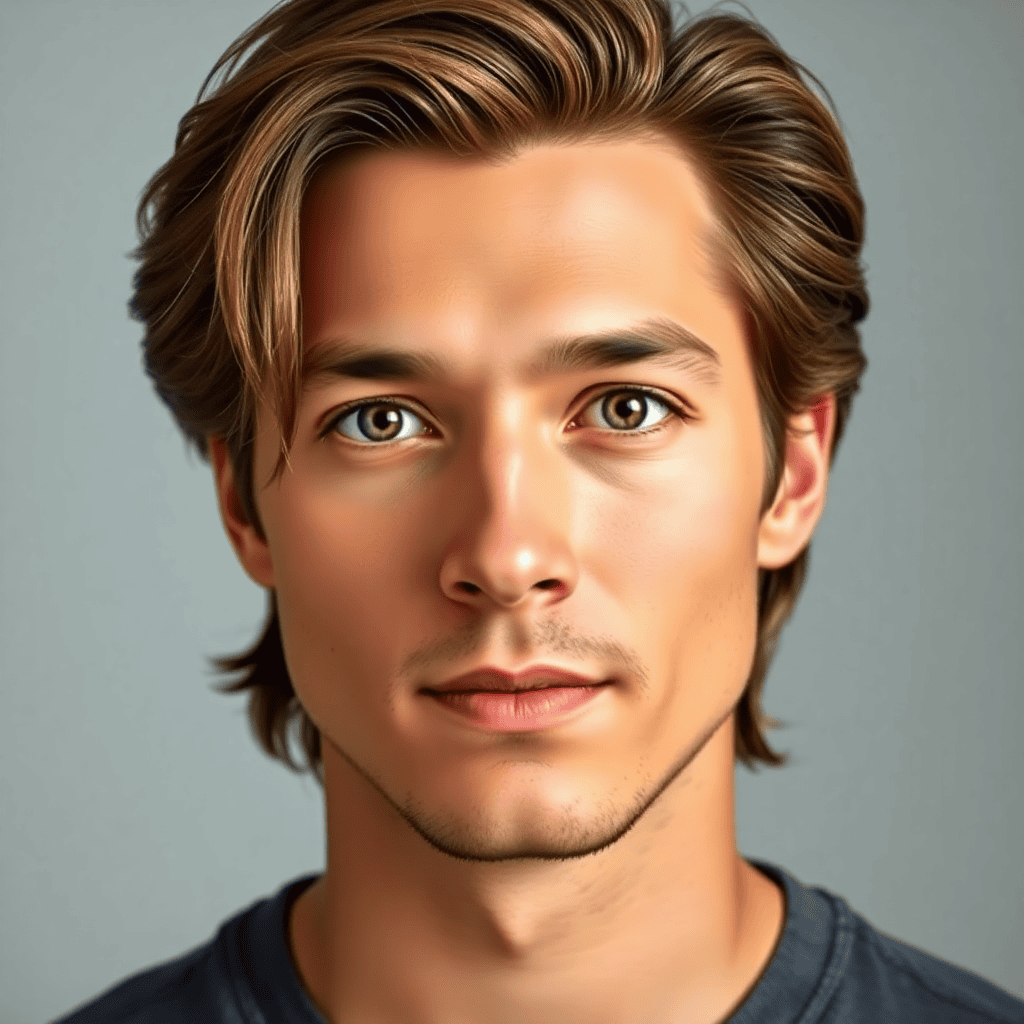
The hair reaches the shoulders with long layers beginning around the cheekbones and jaw. A center or slightly off-center part separates the front, while the lower sections form broad S-shaped waves. The ends are softly textured so the outline does not appear heavy or square.
Among long hairstyles for men, this cut displays the full wave pattern without requiring a shaped fade. It suits medium-to-thick hair, though dense ends may need weight removed. Ask for long layers that preserve the outer length and avoid short layers around the crown. Detangle gently and use a wide-tooth comb while the hair is damp.
25. Long Wavy Layers With Half-Up Tie
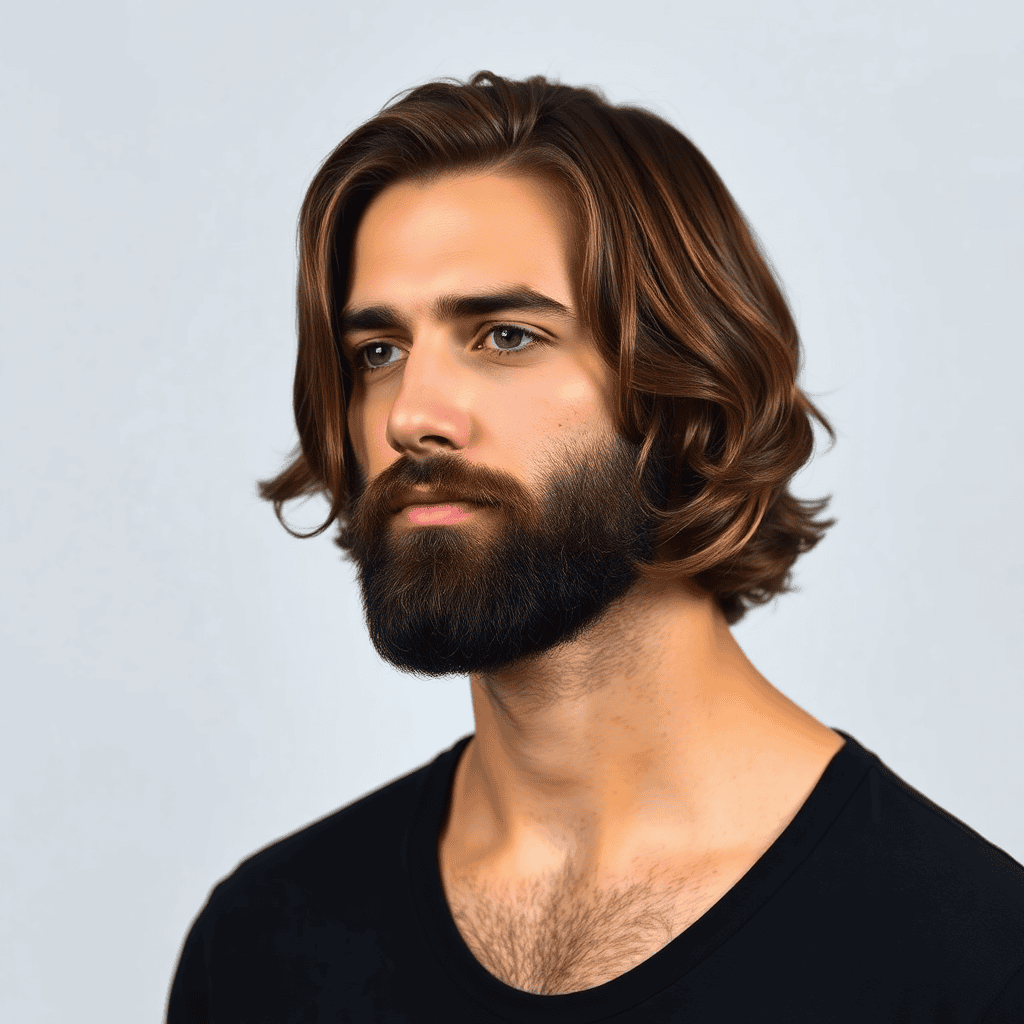
The hair extends several inches below the shoulders, with long graduated layers that prevent the bottom from forming a solid block. The upper section is drawn into a small half-up tie at the back of the crown, while the remaining waves fall freely over the shoulders. Shorter pieces remain around the face.
This variation keeps long hair controlled while preserving movement and length. It is useful for thick hair and men who want haircuts for men with beards that create a balanced, rugged outline. Ask for minimal length removal and long internal layers. Keep the tie loose enough that it does not pull the front hairline tightly.
Conclusion
Choosing among these 25 cuts starts with an honest look at how your hair behaves without much product. Loose waves can support clean crops, side parts, and flowing medium styles. Stronger waves often benefit from layered cuts that remove inner weight while preserving length. Face shape matters too: height can lengthen a round face, a fringe can reduce forehead height, and fuller sides can balance a narrow face.
Maintenance should narrow the list further. Skin fades may need frequent edge cleanup, while tapers and scissor cuts grow out with softer transitions. Long layers require less frequent reshaping, but they demand more care during washing, drying, and detangling.
Before choosing between haircuts for wavy hair men, save two or three reference images showing a texture close to your own. Bring a front view and a side view, then explain how much time you spend styling each morning. A skilled barber can adjust the outline, weight, and length without erasing your natural pattern. The best result often comes from cutting less hair in the right places, not cutting more everywhere.
Frequently Asked Questions
1. What is the best hairstyle for a round face man with wavy hair?
Choose a cut with moderate height on top and tighter sides, such as a wavy quiff with a low or mid fade. Avoid excessive width near the temples. A loose side sweep can also create a longer visual line without making the hairstyle look tall or stiff.
2. Which wavy haircut suits an oval face?
Most short, medium, and long shapes work with an oval face because the proportions are balanced. A side-parted taper, curtain cut, textured crop, or bro flow can all fit. Keep the final choice tied to hair density, wave strength, and daily maintenance.
3. What haircut works for square face men with wavy hair?
Soft layers, rounded fades, and loose fringes can balance a broad jaw. A drop fade with a full wavy top or medium layered cut often works well. Avoid an extremely boxy top if it repeats the same sharp width as the lower face.
4. Which wavy haircut is best for a long face?
Keep some fullness through the sides and avoid building excessive height above the forehead. Curtain waves, a scissor-cut side part, or a layered fringe can shorten the face visually. A high fade with a tall brush-up may make the face appear longer.
5. Can wavy hair hide a big forehead?
A broken fringe, Caesar cut, French crop, or layered curtain shape can cover part of the forehead. The fringe should remain soft and irregular so it follows the wave pattern. A dense, straight horizontal fringe may appear heavy and require more daily control.
6. How do I choose the best hairstyle for face shape?
Look at the relationship between forehead width, cheekbones, jaw width, and face length. Then choose a haircut that adds balance rather than repeating the strongest feature. A barber can also adjust fade height, fringe depth, and side volume for more suitable proportions.
7. Can men with chubby faces wear medium wavy hair?
Medium waves can work well when the sides are controlled and the front has gentle lift. A side-swept bro flow or layered style creates diagonal lines that reduce visual width. Avoid a rounded shape that expands equally around both cheeks.
8. Are wavy haircuts suitable for thick hair?
Thick waves can support crops, quiffs, shags, and longer layered cuts. The main challenge is controlling internal bulk. Ask for selective weight removal and layering rather than aggressive thinning, which can cause short pieces to expand or create unwanted frizz.
9. What haircut works for thin wavy hair?
A textured crop, short taper, or soft side part can make the hair appear fuller by keeping the ends compact. Long, heavily layered cuts may separate too much. Matte products usually give a denser appearance than wet products that group strands together.
10. Are wavy styles good for fine hair?
Fine wavy hair often gains visible body from short or medium layers. Keep enough weight along the perimeter so the ends do not look sparse. A light mousse or texture spray can support the natural bend without coating the hair with heavy wax.
11. Can straight hair become wavy with the right haircut?
A haircut can reveal slight natural bends, but it cannot permanently change straight hair into a wavy texture. Layering, blow-drying, braiding, or styling products may create temporary movement. Men with pin-straight hair may need heat tools or a professional texture service for stronger waves.
12. What is the difference between wavy and curly hair?
Wavy hair usually forms loose S-shaped bends, while curly hair creates more complete loops or spirals. The boundary is not always clear, and one head can contain several patterns. Hair length, humidity, and styling methods can also change how the texture appears.
13. Can coily hair wear the same cuts as wavy hair?
Many outlines can be adapted, including fades, crops, mullets, and layered tops. The cutting method and final shape must account for tighter shrinkage and a different growth pattern. Bring a reference image featuring a texture close to your own for a more accurate consultation.
14. Should wavy hair be cut wet or dry?
Many barbers and stylists combine both methods. Wet cutting helps establish the basic length and shape, while dry detailing shows how the waves spring and separate naturally. Strong or inconsistent patterns often benefit from a final check after the hair has dried.
15. How should I ask my barber for a wavy haircut?
Name the haircut, show clear reference images, and explain how your hair behaves after washing. State how much length you want left on top and how short the sides should be. Mention cowlicks, uneven wave areas, and the amount of styling you are willing to do.
16. What clipper guard should I request on the sides?
A number 1 guard leaves a close finish, while larger guard numbers leave progressively more length. Wahl’s guidance notes that smaller guide-comb numbers cut shorter and larger numbers cut longer. Ask your barber to show the likely result before the cut begins.
17. What does a number 2 haircut mean?
A number 2 guard commonly leaves about one-quarter inch of hair. It creates a short, dark finish that still shows some coverage. It may be used across the sides or as one stage within a fade rather than as the final length everywhere.
18. What should I tell the barber if I want to keep my waves?
Ask the barber to preserve enough top length for the hair to bend. Request point cutting or controlled layering instead of cutting every strand to one short length. Explain where your waves form best so those areas are not shortened beyond their natural turning point.
19. What does debulking mean in a haircut?
Debulking removes excess weight from dense sections without always changing the outside length. A barber may use scissors, texturizing shears, or sectioned cutting methods. Too much removal can make wavy hair expand, so ask for conservative weight reduction and a dry check.
20. Should I ask for a natural or sharp hairline?
A natural hairline grows out softly and tends to require less frequent cleanup. A sharp line creates a cleaner barbershop finish but may show regrowth sooner. Men with uneven or receding edges should discuss how much reshaping can be done without pushing the line backward.
21. Is showing a photo better than naming the haircut?
A photo reduces confusion because haircut names can describe different shapes in different shops. Bring images showing the front, sides, and back. Choose models with a similar hair texture and density, since the same cut may look different on straight, fine, or tightly curled hair.
22. What product works best for short wavy hair?
A matte cream, light clay, or flexible paste can separate short waves without creating a wet finish. Begin with a small amount and add more only where needed. Product should be spread between the palms before being worked through the hair from roots toward the ends.
23. Should I use mousse on men’s wavy hair?
Mousse can add light support and root volume, especially on fine or medium-density hair. Apply it to damp hair, scrunch gently, and allow the waves to dry with minimal handling. Using too much may leave the hair stiff or coated.
24. Is pomade good for wavy hair?
Pomade works for controlled side parts, swept-back waves, and polished styles. Cream pomades provide softer movement, while firmer formulas create stronger control. American Crew’s general styling guidance recommends distributing pomade through damp or dry hair from roots to ends.
25. Should wavy hair use matte or shiny products?
Matte products suit crops, messy fringes, and casual texture because they reduce visible shine. Low-shine creams work well for longer waves and professional styles. High-shine pomades are better for defined side parts or retro shapes but may make fine hair appear separated.
26. Is sea-salt spray good for wavy hair?
Sea-salt spray can add grip and make loose bends easier to see. It should be used in small amounts, especially if the hair already feels dry. Pairing it with a light leave-in product may produce a softer finish than using several layers of salt spray.
27. Should I use a comb or fingers to style waves?
Fingers preserve separation and create a relaxed finish. A wide-tooth comb helps with detangling or setting a clean part. Fine-tooth combs can stretch the wave pattern and make the surface appear flat, so use them mainly for controlled formal styles.
28. How should I blow-dry wavy men’s hair?
Use low or medium airflow and guide the hair in its intended direction. A diffuser can support longer or stronger waves, while a vent brush can lift a quiff or side sweep. Stop before the hair becomes bone-dry if you want a softer, less expanded finish.
29. How often should a short wavy haircut be trimmed?
A fade or sharp crop often looks cleanest with trims every three to five weeks. A taper may grow comfortably for a little longer. The correct schedule depends on how quickly your sides grow and how polished you want the outline to remain.
30. How often should medium wavy hair be reshaped?
Medium styles often benefit from reshaping every six to ten weeks. The goal is to remove split or bulky ends while restoring the layers. Men growing their hair longer can request a light cleanup rather than losing several months of progress.
31. How often should long wavy hair be trimmed?
Long waves may need a trim every eight to twelve weeks, depending on dryness, tangling, and shape. A small perimeter cleanup can keep the ends from appearing thin. Tell the stylist you are preserving length before the first section is cut.
32. How can I grow out a fade without looking untidy?
Allow the sides to gain length while keeping the neckline and area around the ears clean. A low taper can soften the transition during the growing stage. Once the upper sides become long enough, a barber can blend them into a scissor-cut medium shape.
33. Why does my wavy haircut look shorter after drying?
Waves contract as moisture leaves the hair, so the dry length can sit higher than the wet length. Stronger bends create more visible shrinkage. Ask the barber to account for this movement and check the outline after drying before removing additional length.
34. How can I stop medium wavy hair from becoming triangular?
The triangle shape appears when weight collects at the lower sides while the top stays flat. Long internal layers and slight crown lift can redistribute that volume. Avoid cutting the entire perimeter to one heavy length, especially on dense hair.
35. What is an easy hairstyle for men growing long hair?
A loose bro flow, ear-tucked side sweep, or half-up tie can control awkward lengths. Regular neckline and sideburn cleanups make the growth look intentional. Avoid cutting the top shorter each time, since that repeatedly resets the process.
36. Which wavy cut works for thinning hair men?
Short textured crops, compact side parts, and lightly layered tops can reduce the contrast between thicker and thinner areas. Avoid heavy wet products that expose separation. A barber can shape the hair for visual balance, but a haircut does not change the underlying growth pattern.
37. Can wavy hair help cover a receding hairline?
A loose forward fringe or side sweep can soften the appearance of the corners. Keep the front textured rather than forming a thin comb-over. Shorter sides may also reduce contrast, though the hairline should not be carved farther back for a sharper shape.
38. What is a good short haircut for a receding hairline?
A textured Caesar, French crop, or short natural crop can work because the hair moves forward instead of exposing the corners. Keep the fringe irregular and reasonably short. A low taper is often softer than a high skin fade beside a mature hairline.
39. Are wavy haircuts suitable for men over 40?
Wavy texture works at any age. Side-parted tapers, Ivy League cuts, medium swept-back styles, and layered crops can look polished without appearing severe. Choose the length based on density, workplace needs, and the amount of time available for styling.
40. What are good haircuts for men over 50 with waves?
A short scissor taper, controlled side sweep, layered crop, or medium brushed-back cut can preserve natural movement. Softer edges often grow out more gracefully than an extremely sharp fade. Avoid choosing a cut based only on age; density and face shape matter more.
41. Can older men wear long wavy hairstyles?
Long hair can suit older men when the ends remain healthy-looking and the overall shape is maintained. Long layers prevent excess bulk and create movement. A shoulder-length cut may also pair well with gray hair, glasses, or a neatly shaped beard.
42. What is the difference between a low fade and a mid fade?
A low fade begins close to the ears and neckline, preserving more darkness on the sides. A mid fade starts higher, near the middle of the head, and creates stronger contrast. The lower option usually grows out more softly and keeps the face from appearing narrow.
43. How is a high fade different from a low fade?
A high fade removes more side volume and begins near or above the temples. A low fade keeps most of the upper side intact. High fades draw attention to the top, while low fades create a more balanced transition between the top and sides.
44. What is the difference between a taper and a fade?
A taper shortens mainly around the sideburns, ears, and neckline. A fade removes more hair across a larger section of the sides and may blend down to bare skin. Tapers offer softer growth, while fades create a sharper and more visible contrast.
45. How is a French crop different from a Caesar cut?
Both styles direct short hair forward, but a French crop often combines a longer textured top with faded sides and a broken fringe. A Caesar is usually shorter and more even across the top, with a compact fringe and less dramatic contrast.
46. What is the difference between a shag and a wolf cut?
A shag uses layers throughout the head to create an airy, irregular outline. A wolf cut places more volume around the crown and leaves greater length toward the back. The wolf shape can resemble a softened mullet, while the shag stays more evenly layered.
47. Which men’s hairstyles 2026 trends suit wavy hair?
Soft mullets, textured crops, curtain shapes, flowing medium lengths, and looser layered cuts all work naturally with waves. Current trend coverage has highlighted both manageable short cuts and longer, more expressive hair. Choose a trend only when it fits your natural density and routine.
48. Can wavy hair look professional in the workplace?
A clean outline matters more than making every wave flat. Side parts, Ivy League cuts, low tapers, and brushed-back medium styles can all appear workplace-ready. Keep the fringe away from the eyes and choose products that control flyaways without creating a greasy surface.
49. Which wavy haircuts look good with beards?
A low taper, textured crop, bro flow, or swept-back medium cut can connect well with facial hair. Ask the barber to blend or separate the sideburn area based on your beard shape. Fuller beards often look balanced with some height or movement on top.
50. How do I choose between trendy haircuts for men and classic styles?
Start with your hair pattern, face shape, work setting, and maintenance limit. A trend can inspire the shape, while a classic taper or layered base keeps it wearable. Choose reference images that still appeal after the novelty is removed.
Modern Haircuts and Hairstyles for Men
Explore flattering cuts for different hair types, face shapes, lengths, textures, and personal styles.