
A round face usually has softer angles, fuller cheeks, and similar measurements across its width and length. The right haircut does not need to hide those features. It can create height above the forehead, reduce visual width at the sides, and introduce sharper lines around the temples. Grooming guides commonly suggest leaner sides and added height for men who want their faces to appear longer or more defined.
Choosing a haircut for round face men depends on more than facial structure. Hair density, curl pattern, daily styling time, beard shape, glasses, and workplace rules all matter. This collection covers straight, wavy, curly, and coily textures, with options ranging from short barbershop cuts to longer layered styles.
The 25 ideas below focus on clear proportions rather than strict rules. Some create strong vertical height, while others use asymmetry, texture, or controlled length to change how the face is framed. Save the examples that match your natural hair before discussing length, fade height, and maintenance with your barber.
1. High and Tight With a Textured Top
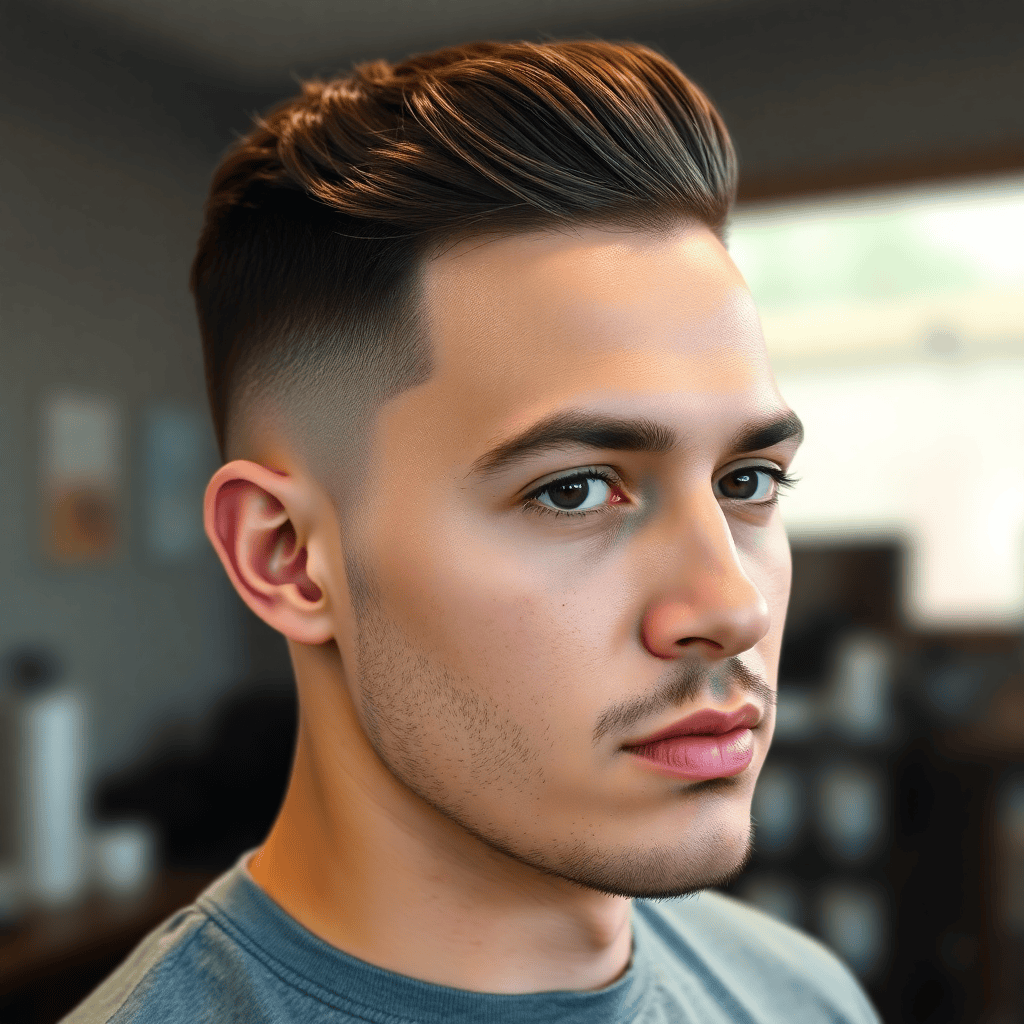
The sides and back are clipped close with a high fade that begins near the upper temples. About one to one and a half inches of hair remains on top, cut into short, uneven layers and styled upward with a dry, separated finish. The hairline can stay natural or receive a light edge-up for cleaner angles.
This is one of the shortest haircut ideas for men who want less width around the cheeks. It works well on straight, coarse, or slightly wavy hair, though fine hair may need a lightweight texture powder for lift. Ask the barber to avoid rounding the top silhouette. A squared shape with visible height gives the face more structure. The exposed fade also means the cut will look softer as it grows, so frequent cleanups may be needed.
2. Crew Cut With a High Taper
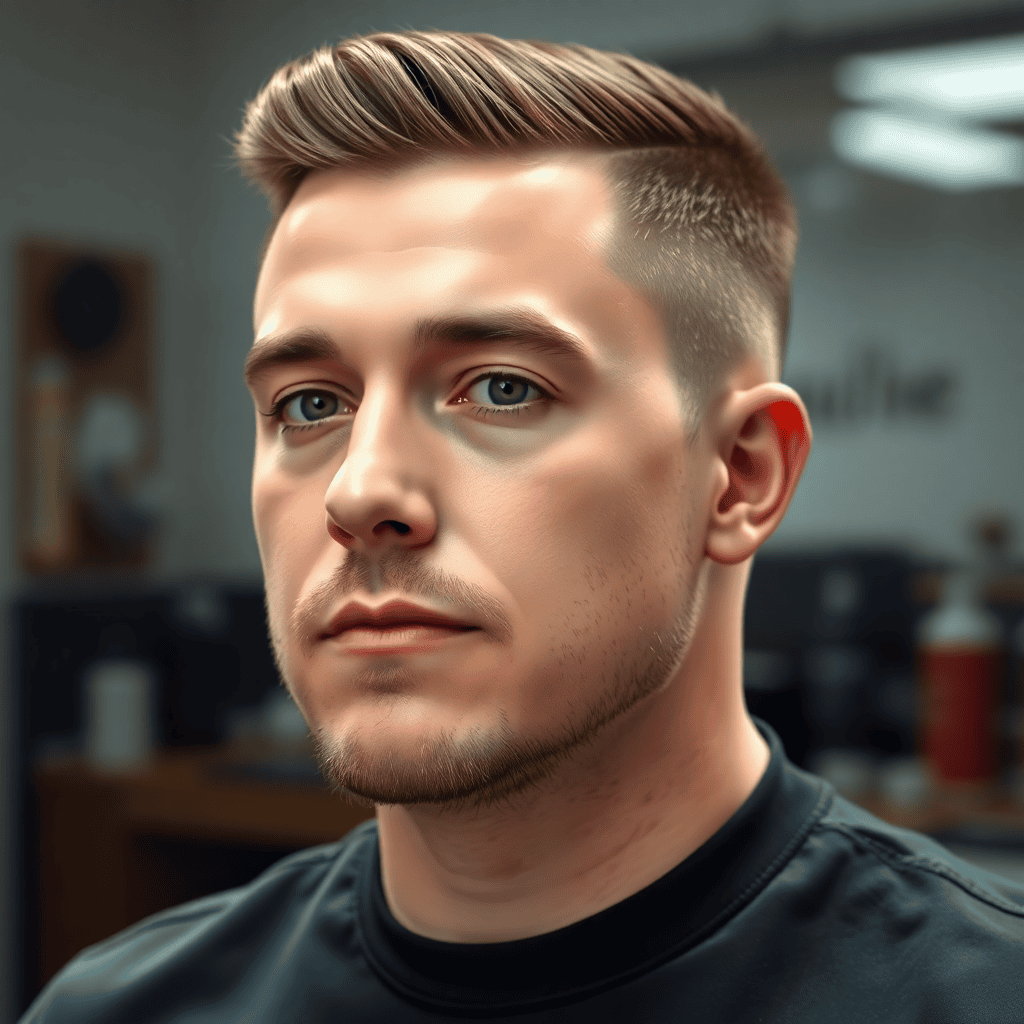
A crew cut leaves roughly three-quarters of an inch near the front and gradually shortens toward the crown. The sides are tapered closely above the ears and neckline, while the front is brushed slightly upward instead of lying flat. A clean temple line adds a subtle geometric detail without making the haircut look severe.
The extra height at the front makes this a useful low maintenance men’s haircut for active schedules. It suits straight, thick, and mildly wavy hair, especially when the hair naturally stands away from the scalp. Tell the barber you want a crew cut with a squared profile rather than a rounded shape. Styling can be limited to a small amount of matte paste worked through the front. Men with cowlicks should keep enough length to guide the hair instead of forcing it into place.
3. Short Ivy League With a Defined Side Part
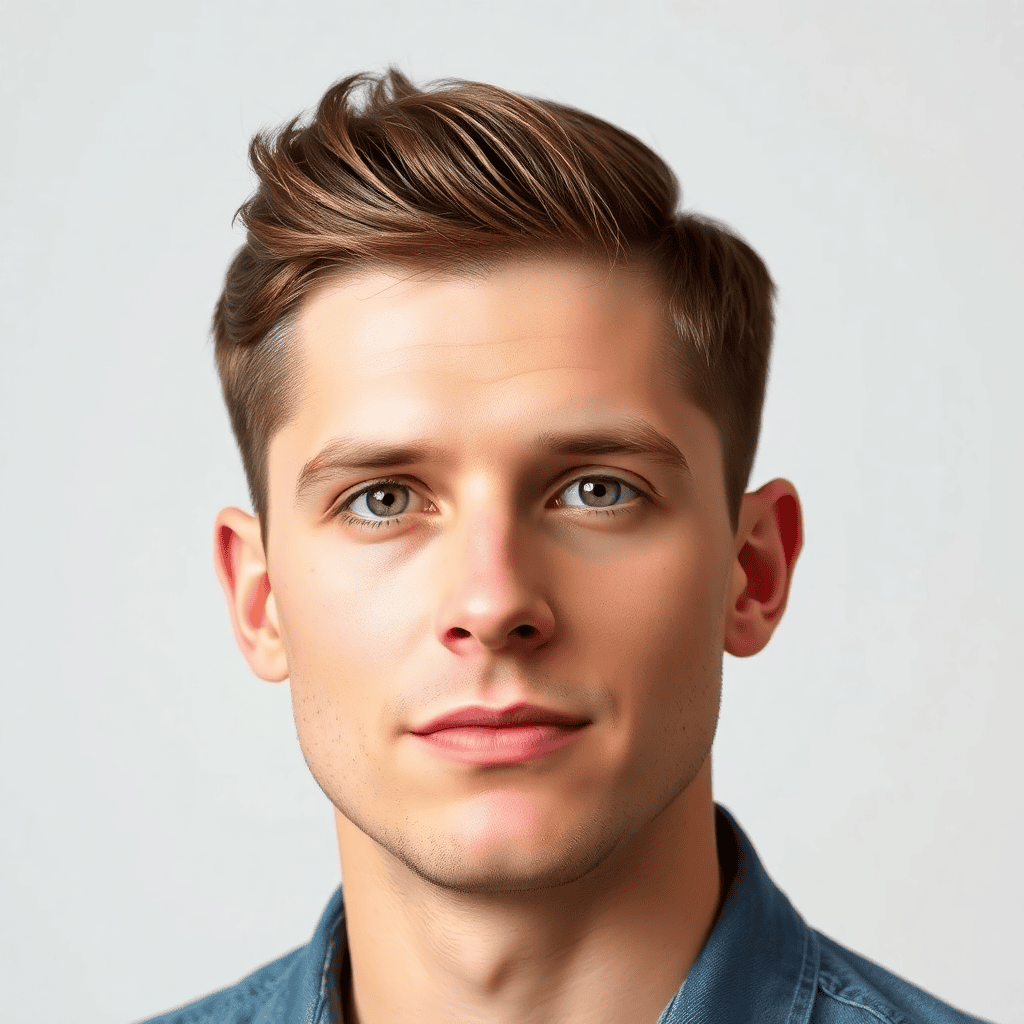
The Ivy League keeps the sides neat while leaving about one and a half to two inches across the top. The front section is combed diagonally upward and across, creating an angled side part rather than a flat horizontal line. A low taper around the ears and neckline maintains enough side length for a classic finish.
Among professional haircuts for men, this option balances office polish with useful facial structure. It works best on straight or slightly wavy hair that follows a side direction without heavy product. Ask for scissor-cut length through the upper sides and a part placed slightly off-center. A soft pomade or grooming cream can control flyaways, but avoid pressing the top tightly against the scalp. A little height near the part helps lengthen the appearance of the face.
4. Choppy Caesar With Tapered Temples
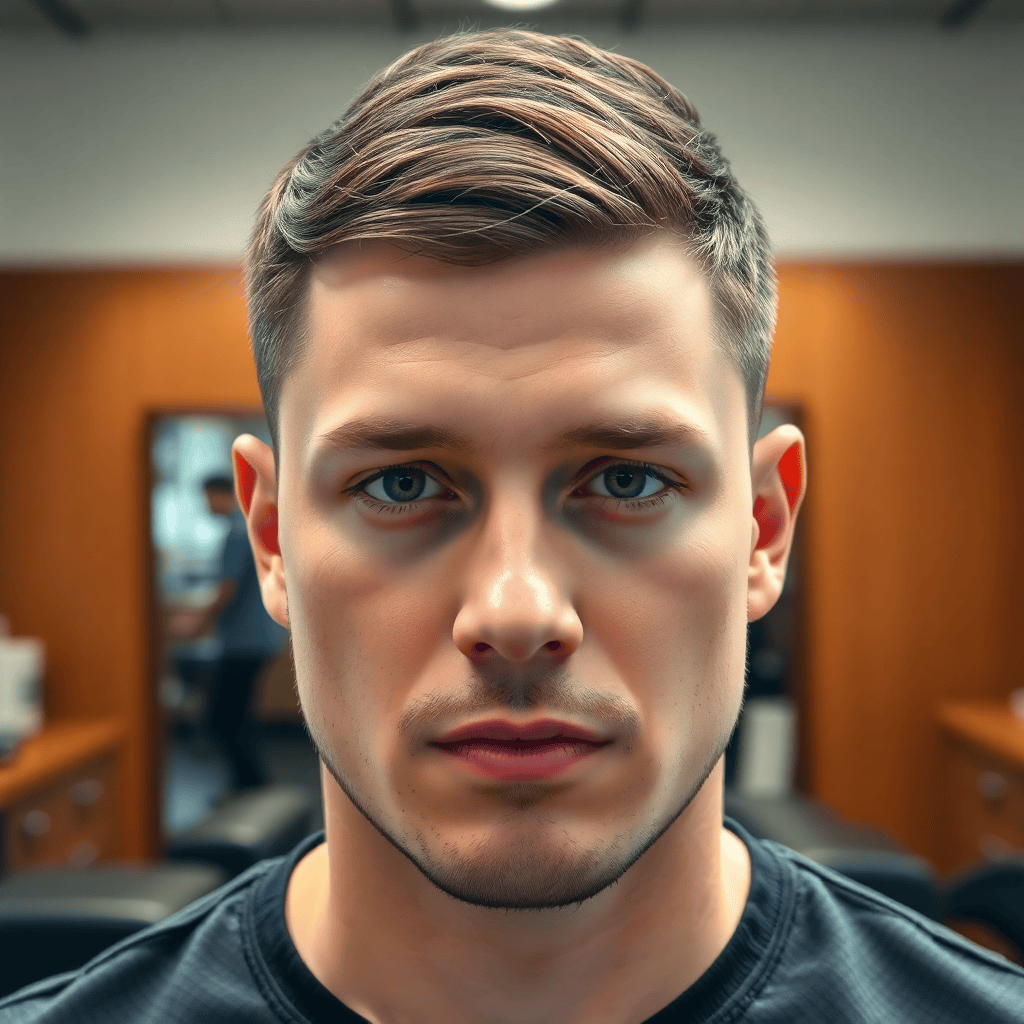
The top is cut to about one and a half inches with broken, choppy layers running toward the forehead. Instead of a heavy straight fringe, the front edge is irregular and slightly diagonal, exposing small areas of the forehead. The temples and neckline receive a short taper, while the sides remain compact and close to the head.
A traditional blunt Caesar can emphasize facial width, so this modified version relies on uneven texture and reduced side bulk. It suits thick, straight, or coarse hair that can hold separation through the fringe. Ask your barber to point-cut the front rather than creating one solid line. Style it with a small amount of matte clay, pushing a few pieces upward or sideways. It is practical for men who want short hair without committing to a skin fade.
5. French Crop With a High Fade and Diagonal Fringe
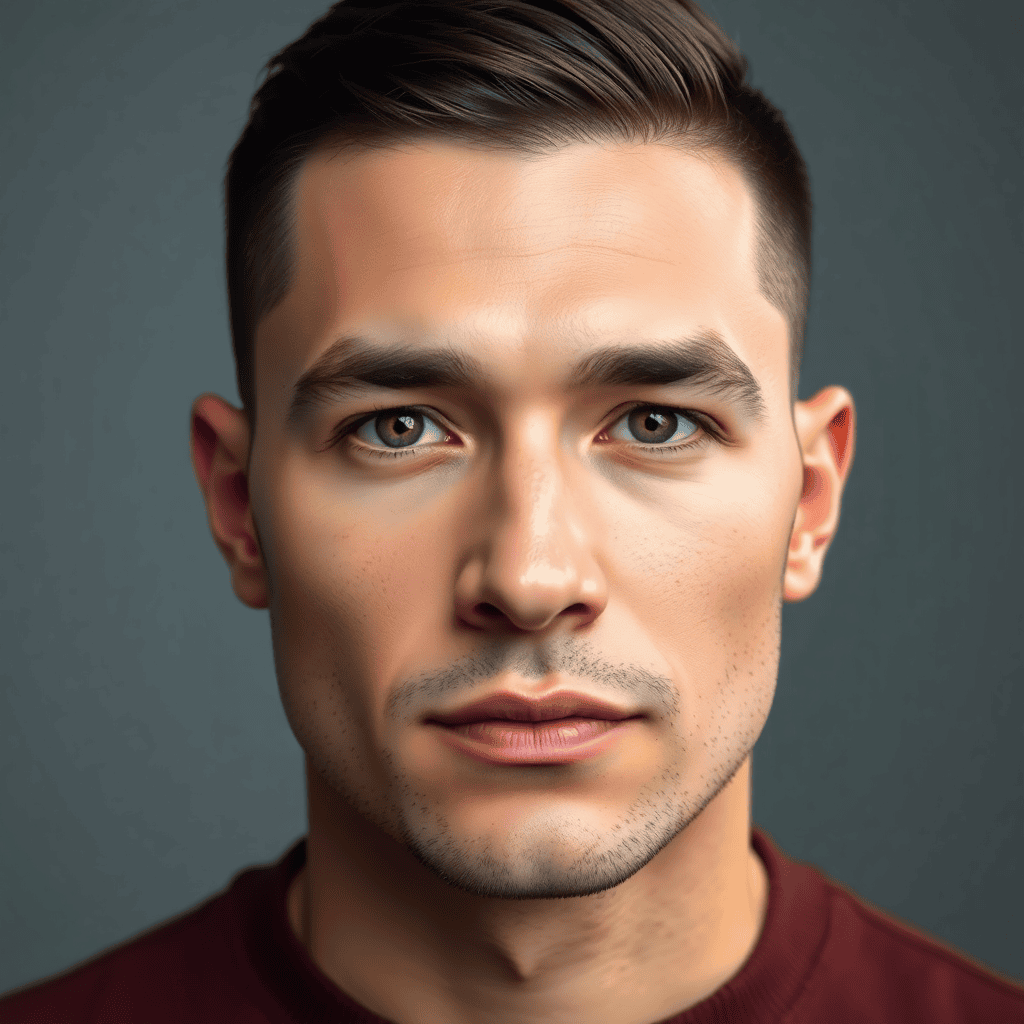
The sides fade from bare skin near the ears into short hair above the temples. On top, two inches of textured hair are directed forward, ending in a broken fringe that slopes slightly from one side to the other. The crown remains controlled, while the front carries enough lift to avoid a flat bowl-like outline.
This variation is stronger than a classic crop because the high fade removes visual weight beside the cheeks. It is a practical choice among short haircuts for men with dense straight or wavy hair. Ask for heavy texture through the top and a fringe that looks irregular, not blunt. Rub matte paste between your fingers and pinch small sections into place. The fade requires regular attention, but the top remains forgiving when it grows by half an inch.
6. Buzz Cut With a Sharp Line-Up and Short Beard
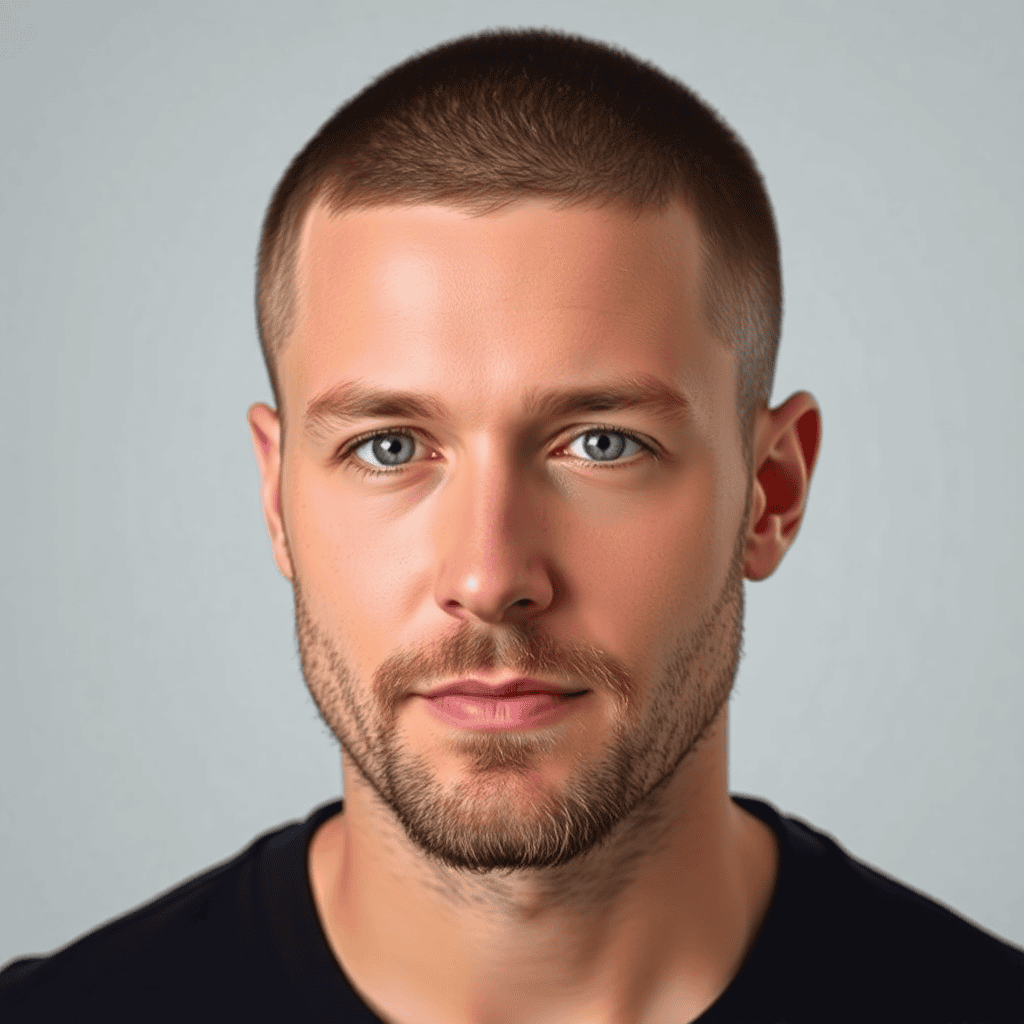
The hair is clipped evenly to a short guard length, usually leaving enough coverage to show the natural direction of growth. The forehead and temples receive a straight, controlled line-up, while the sideburns connect into a short beard with slightly more length at the chin. The beard is kept narrower along the cheeks to introduce vertical balance.
A buzz cut does not add height, so it places the full face shape on display. That can still work when the hairline is defined and the facial hair creates stronger angles. This combination is especially suitable for thick, even growth and men who prefer fresh haircuts for men without morning styling. Ask the barber to keep the edge-up natural enough to avoid pushing the hairline backward. The beard should be shaped downward rather than allowed to spread outward.
7. Spiky Brush-Up With a Skin Fade
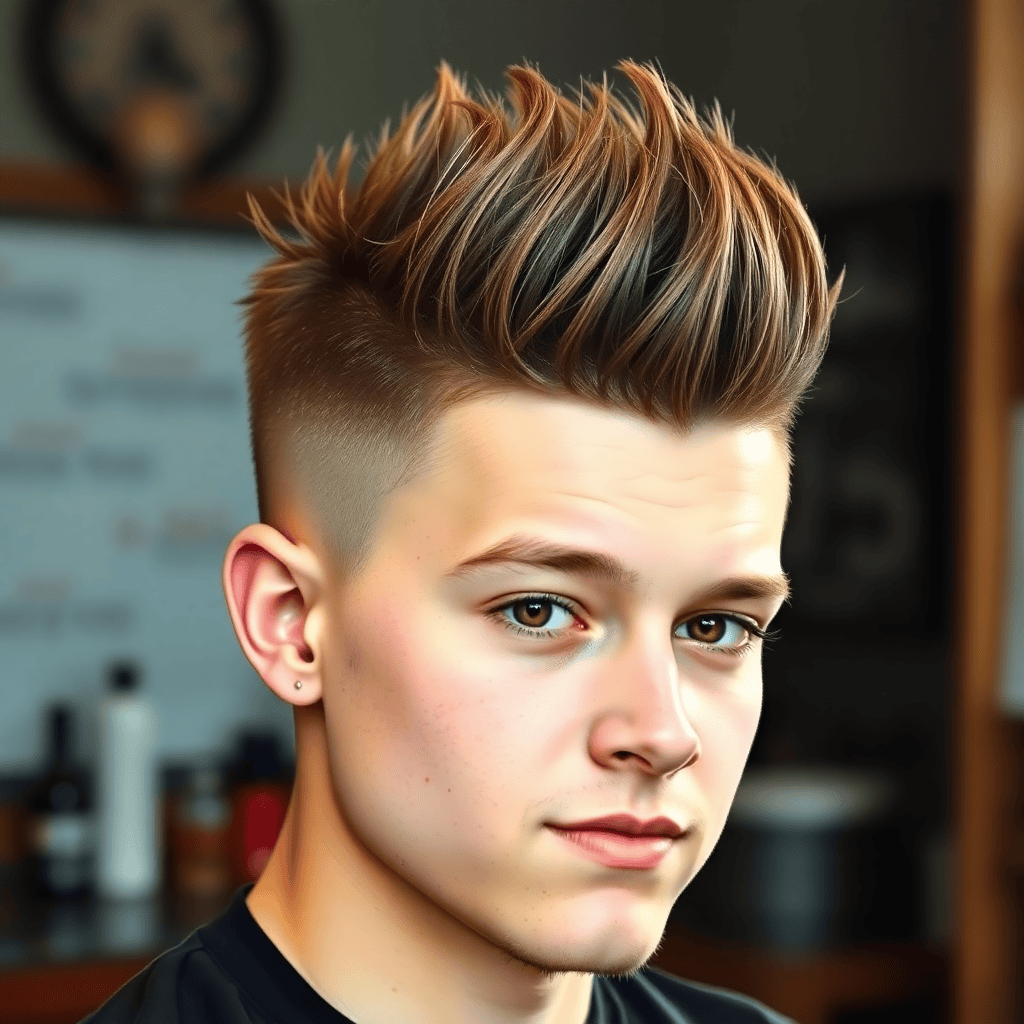
The sides are taken down to skin and blended high enough to expose the temples. Two to three inches remain on top, cut into separated layers and directed upward in loose spikes. The front stands tallest, while the crown is slightly shorter so the profile rises vertically rather than forming a rounded dome.
This is one of the more energetic haircuts for young men who want noticeable definition. Straight and thick hair responds best, though fine hair can hold the shape with texture powder and a light hairspray. Ask your barber to remove excess weight from the top while preserving enough length for visible separation. Use a blow-dryer from front to back, lifting at the roots with your fingers. Heavy gel may join the sections into thick spikes and make the finish look dated.
8. Angular Textured Crop With a Temple Fade
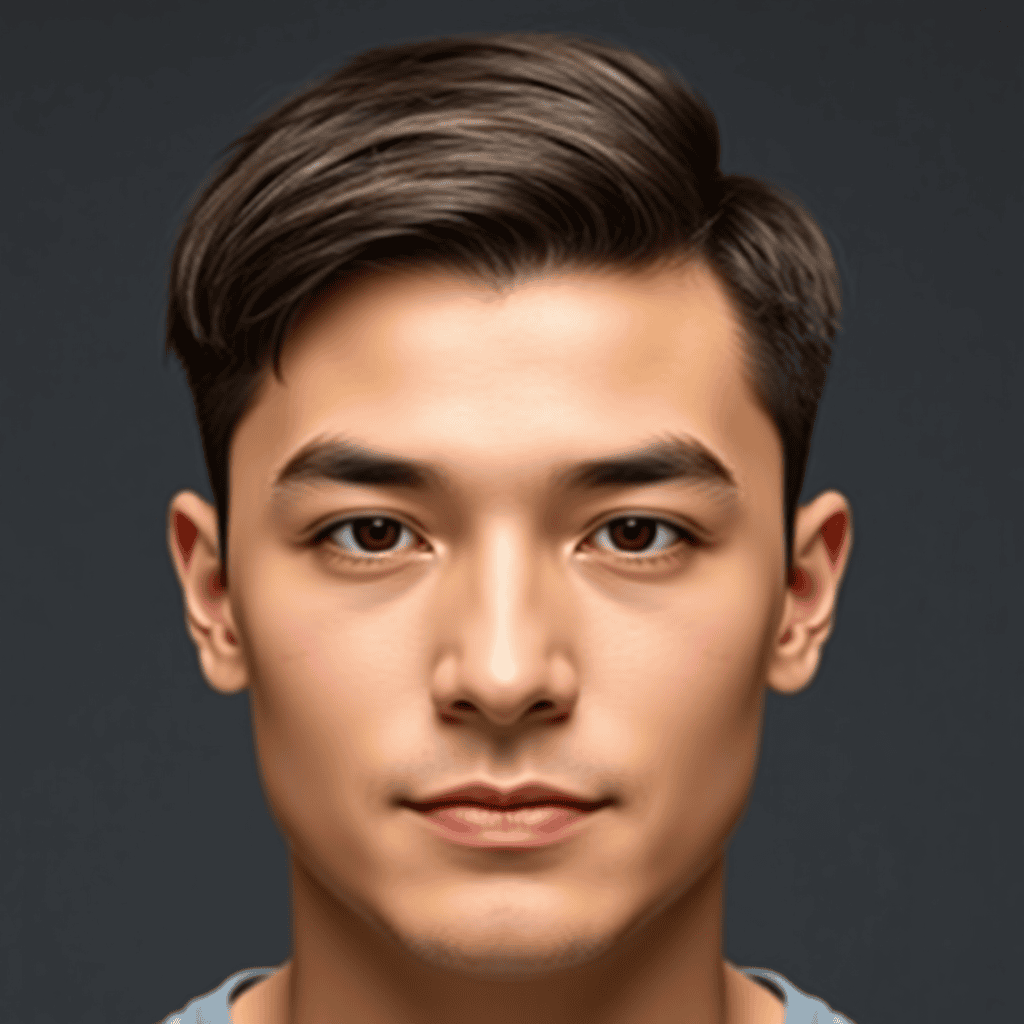
About two inches of hair are left across the top and cut into irregular, directional layers. The front is styled forward and slightly upward at one corner, producing an angular fringe rather than a straight edge. Only the temples and neckline are faded, leaving some controlled density above the ears.
The limited fade makes this option less stark than a full skin fade while still tightening the widest part of the head. It works well for haircuts for thick hair men because internal texture removes bulk without making the scalp visible. Ask for a temple fade with a natural blend into scissor-cut sides. A pea-sized amount of clay is enough for most hair. Push the front toward one side, then lift two or three sections to break the outline and create a sharper visual direction.
9. Short Faux Hawk With a Burst Fade
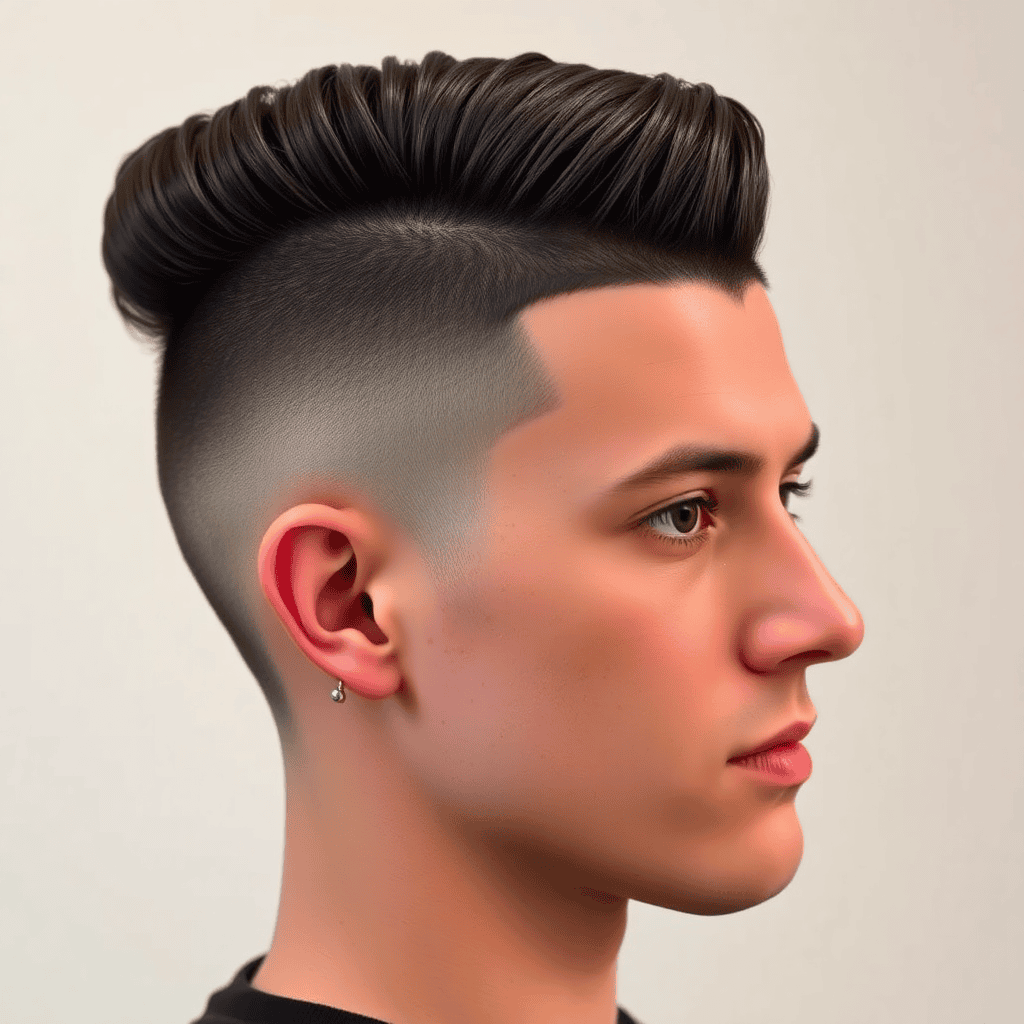
The center strip runs from the forehead toward the crown at roughly two and a half inches long. Hair on both sides of the strip is cut shorter and directed inward, while a burst fade curves closely around each ear. The top is styled into a soft ridge rather than a narrow, stiff point.
The vertical center line can make a round face appear longer, while the curved fade removes bulk near the cheeks. This style suits straight, wavy, and loose curly hair that can form a defined central shape. Tell the barber you want a wearable faux hawk with a broad ridge and a clean burst fade. Blow-dry the hair inward from both sides, then apply a flexible paste. The cut loses its intended shape if the upper sides grow too heavy.
10. Modern Flat Top With Faded Sides
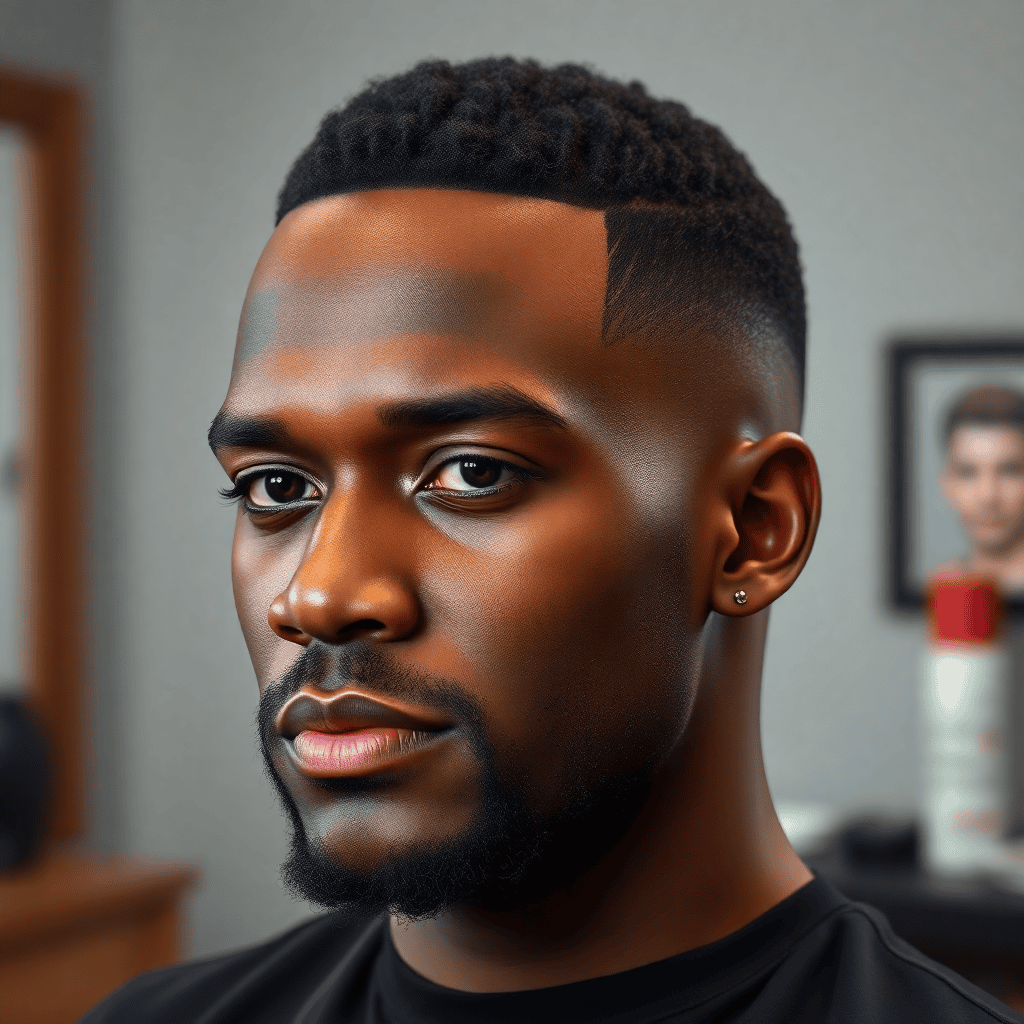
The sides rise through a mid-to-high fade, while the top forms a level or slightly sloping platform. Hair at the front stands around two inches high and becomes marginally shorter toward the crown. The corners are shaped carefully so the upper silhouette looks squared instead of soft or circular.
A flat top creates some of the strongest angles in this list and works especially well on dense coarse or coily hair. It can suit haircuts for black men because the natural structure of tightly curled hair supports the upright form. Ask for a modern flat top with softened corners if you do not want a rigid military finish. Regular shaping matters because uneven growth quickly affects the top line. A sponge or light pick can restore texture between barber visits without flattening the surface.
11. Side-Swept Undercut With a Hard Part
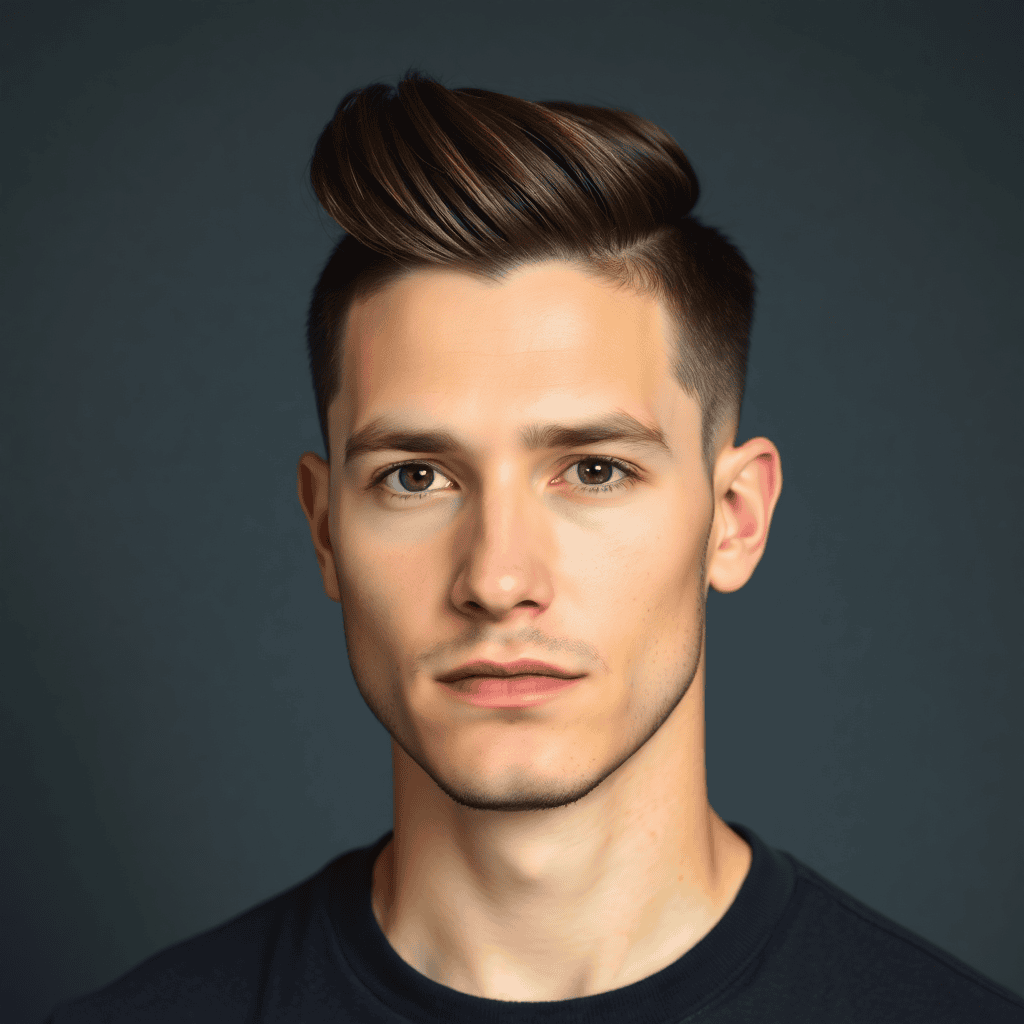
The sides and back are clipped short with little gradual blending, creating a clear separation beneath a three-to-four-inch top. A narrow hard part is placed above one temple, and the longer hair is swept diagonally across the head with the front lifted away from the forehead. The finish can be smooth or lightly textured.
The strong part and directional top break up facial symmetry, making this one of the sharper modern haircuts for men with round features. Straight or thick wavy hair provides the cleanest sweep. Ask the barber to place the part where your hair naturally changes direction, then keep the undercut below that line. Blow-dry the front upward before guiding it sideways. This cut needs deliberate styling, and the disconnected sides can appear bulky once they begin growing out.
12. Classic Side Part With a Low Fade

The top remains around three inches long, with a traditional side part and a smooth diagonal sweep. A low fade starts close to the ears and follows the lower hairline, preserving darker weight through the upper sides. The front is raised slightly before moving across, keeping the style from appearing flat.
A low fade can blend naturally into medium-length top hair while giving a leaner appearance around the lower sides. This version works for business haircuts for men because the contrast stays controlled. Ask for a low fade, scissor-cut upper sides, and enough front length to create lift. A light pomade gives definition without making the hair look rigid. Men with fine hair should choose a matte cream so the strands do not separate and reveal too much scalp.
13. Textured Brush-Up With a Mid Fade
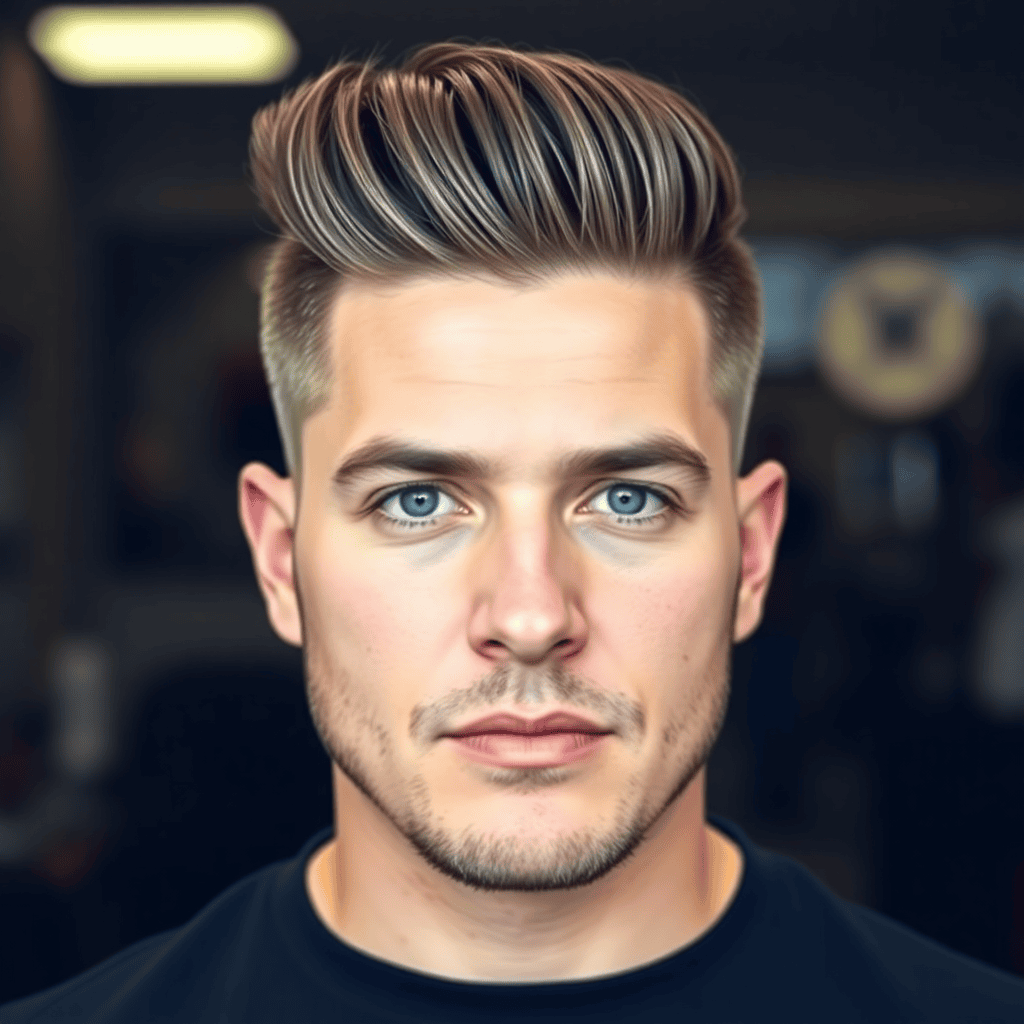
Three to four inches of layered hair are pushed upward and slightly backward from the forehead. The top has an airy, separated texture rather than a smooth combed surface. A mid fade begins around the temple area and blends into the upper sides, producing balanced contrast without removing every trace of side weight.
This brush-up adds visible height and belongs among stylish haircuts for men who want a modern shape without a formal part. It suits straight, thick, and wavy hair, though coarse growth may need more weight removed from the interior. Ask the barber to keep the front longest and avoid cutting the crown equally tall. Apply a pre-styling spray, blow-dry upward, and finish with matte paste at the ends. The style should look lifted, not molded into one solid block.
14. Voluminous Quiff With a Taper Fade
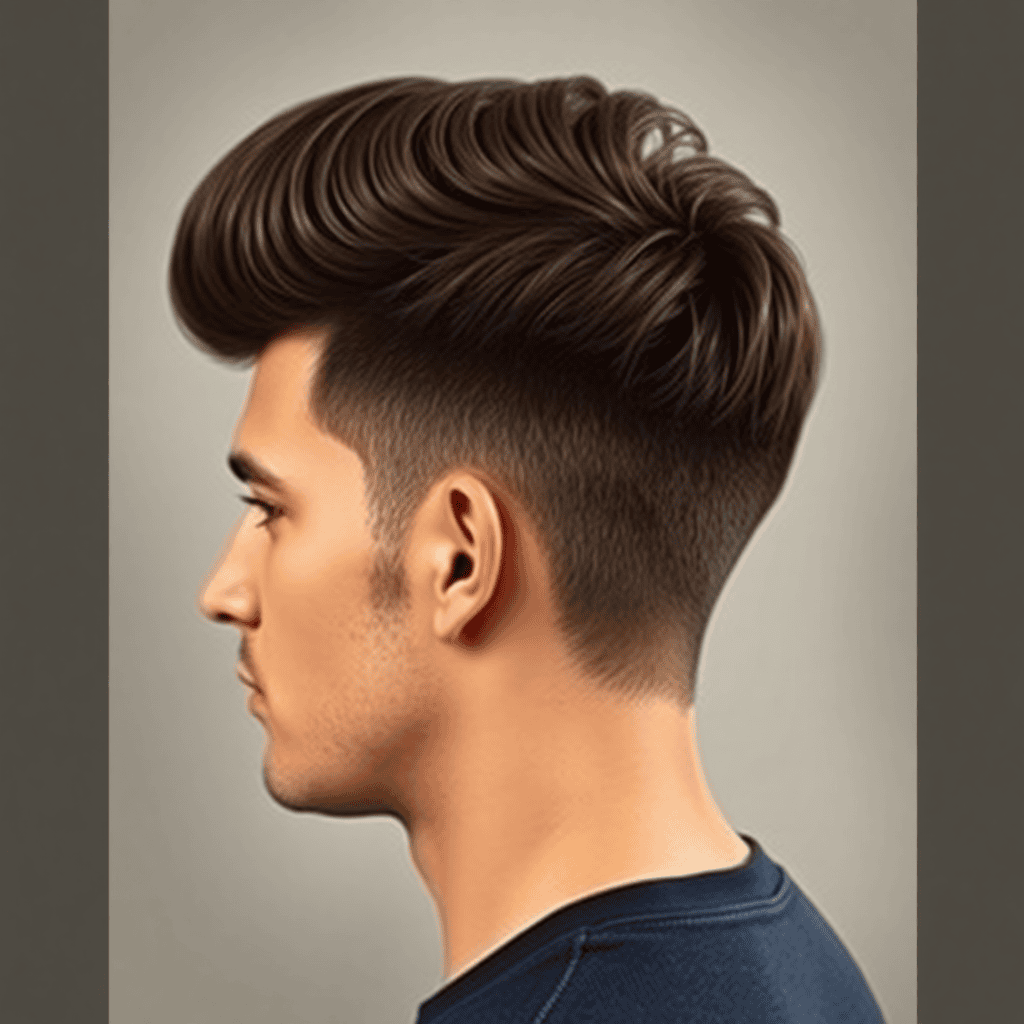
The top measures three to five inches, with the longest hair concentrated above the forehead. It rises upward, curves backward, and gradually settles toward the crown. A taper fade cleans the sideburns and neckline while leaving moderate length through the sides, giving the haircut a softer transition than a high fade.
The quiff is a useful best hairstyle for face shape balancing because the height draws attention away from cheek width. It can work on straight, thick, or wavy hair, but limp fine hair may struggle to hold a tall front all day. Ask for internal layers that remove weight without thinning the perimeter. Blow-dry the front over a vent brush, then shape it with a pliable paste. Avoid spreading the quiff too widely across the forehead.
15. Tall Pompadour With a Mid Skin Fade
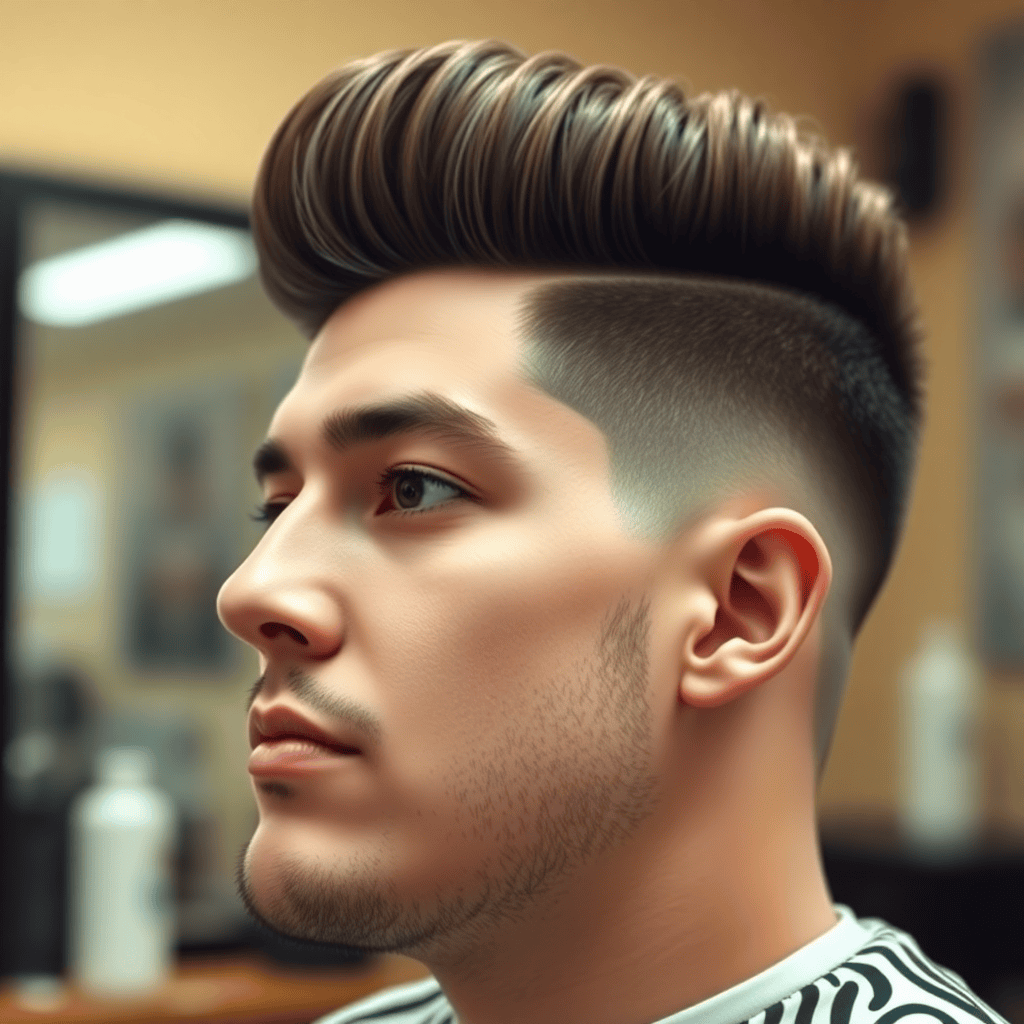
The front is left four to five inches long and shaped into a tall, smooth roll that moves backward. Length decreases toward the crown, preventing the rear from becoming bulky. A mid skin fade exposes the lower sides, then blends into enough upper-side hair to support the pompadour without widening the silhouette.
This is a bold option among popular men’s haircuts and requires both time and density. Straight or wavy hair with medium-to-thick strands usually gives the strongest shape. Tell the barber you want vertical height at the front and tight control above the ears. Apply a heat protectant, blow-dry the roots upward, and guide the ends back with a round brush. High-shine pomade creates a classic finish, while matte paste makes the haircut feel more current.
16. Disconnected Undercut With a Brushed-Back Top
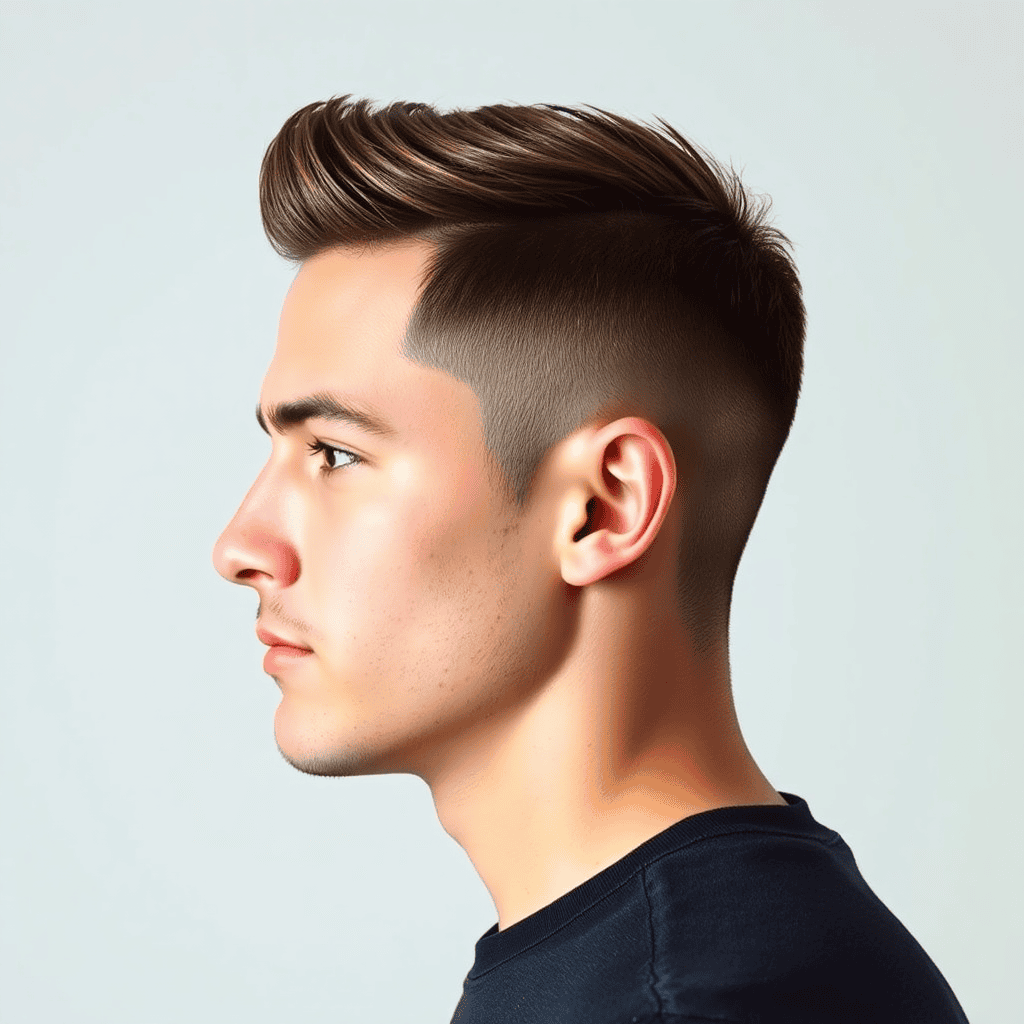
The sides are clipped to one short length with a distinct ledge beneath the longer top. Four to five inches of hair are brushed backward with visible finger lines and moderate volume above the forehead. The top is not pressed tightly against the scalp, and the perimeter remains narrow rather than spreading over the sides.
The disconnected contrast creates a clear vertical panel that can sharpen soft facial proportions. This cut suits thick straight hair and controlled waves, but it may be difficult on strong curls unless additional length is kept. Ask the barber to leave the top disconnected while removing enough internal weight for movement. Use a blow-dryer before applying cream or paste. The style demands regular side cleanups because the undercut can lose its definition once the shorter section becomes fluffy.
17. Wavy Quiff With a Low Taper
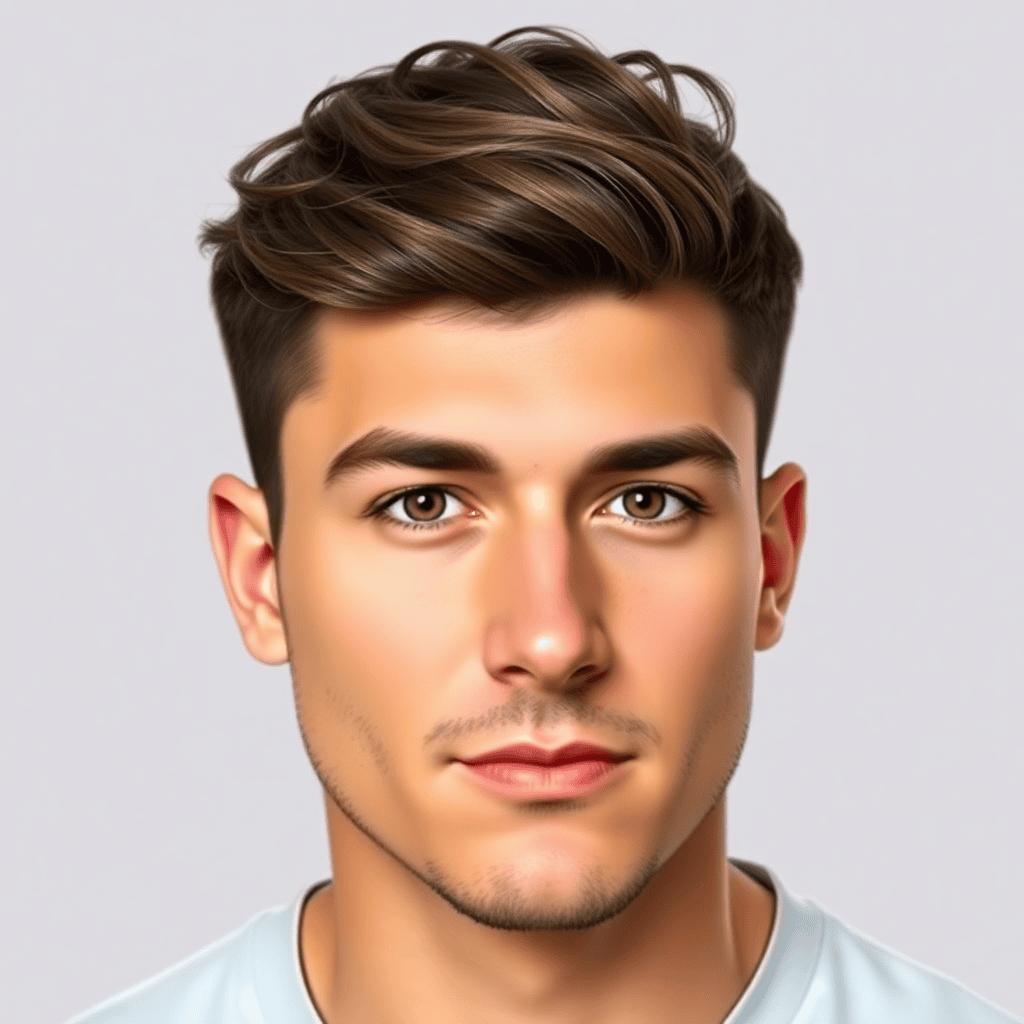
Natural waves are preserved at three to four inches across the top. The front is lifted into a loose quiff, with several wave bends visible instead of being straightened into a smooth curve. The sides are scissor-cut and controlled, while a low taper cleans only the sideburns and lower neckline.
This softer option suits haircuts for wavy hair men who want height without fighting their natural pattern. It also works for haircuts for men over 30 because it looks polished without appearing overly sharp. Ask the barber to layer the top according to the wave pattern and avoid aggressive thinning shears. Work a light curl cream through damp hair, then diffuse the front upward. Touching the hair repeatedly while it dries may create frizz and weaken the shape.
18. Curly High Top With a Drop Fade
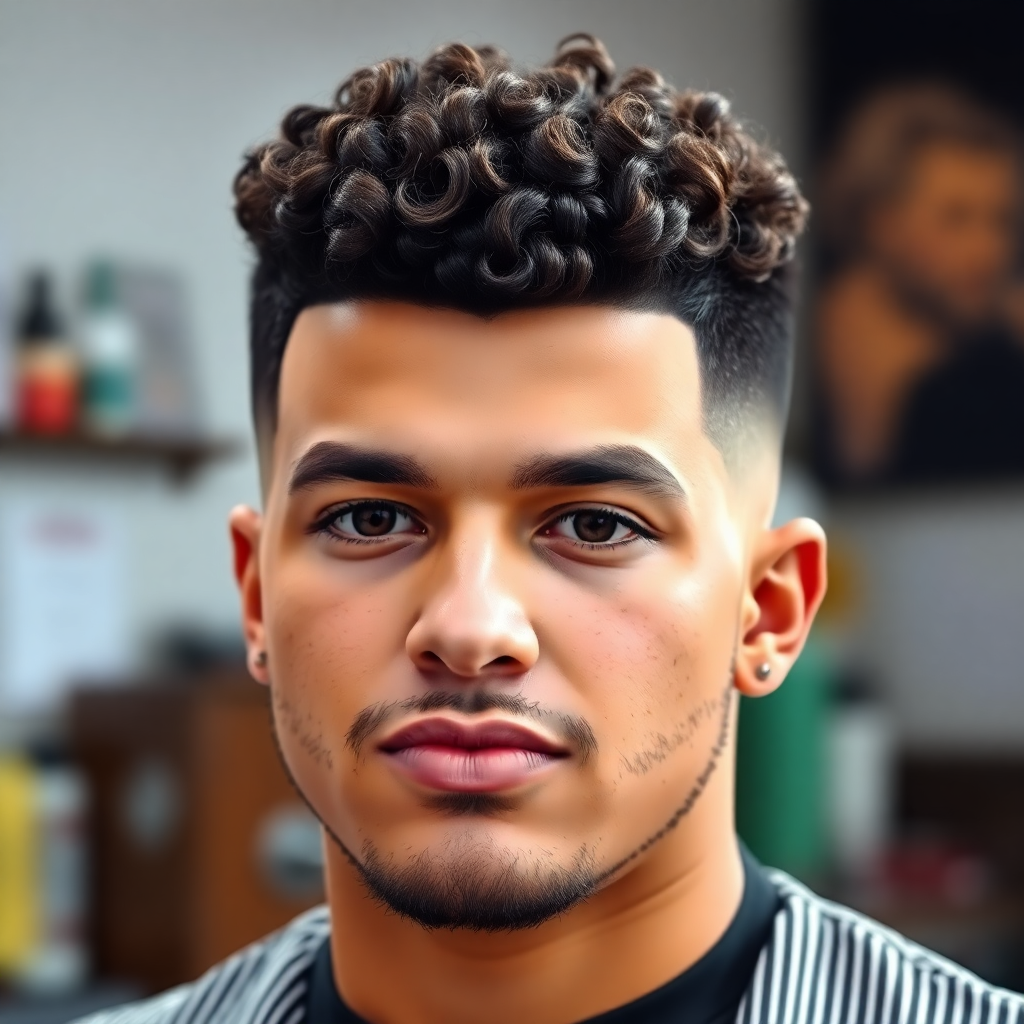
The curls remain three to five inches long above the forehead and crown, forming an upright shape with controlled width. A drop fade begins near the temples and curves lower behind the ears, following the head rather than creating a straight horizontal band. The front hairline can be softly edged while the curl pattern stays natural.
The height makes this a strong choice among haircuts for curly hair men with springy, medium-density curls. It narrows the lower profile without forcing every curl into the same position. Ask the barber to shape the top vertically and remove outward bulk near the widest part of the head. Apply curl cream or light gel to wet hair, then use a diffuser. Shrinkage should be considered before cutting, so discuss the desired dry length first.
19. Coily High Top With a Temple Fade
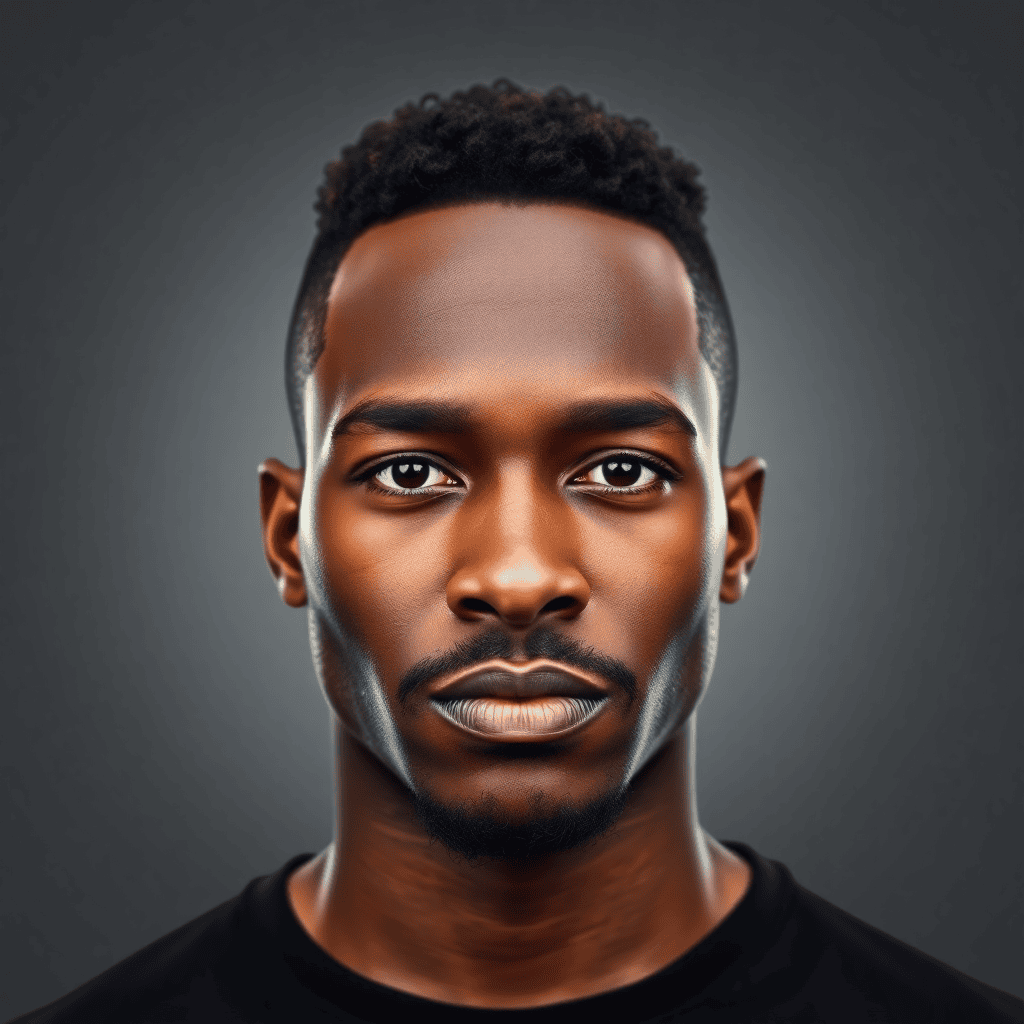
Tightly coiled hair is shaped into a compact high top that rises three to four inches above the scalp. The upper outline is slightly rounded but remains taller than it is wide. A temple fade clears the area in front of the ears, and the neckline is tapered while the remaining sides keep a dense, natural texture.
This is a less exposed alternative to a full fade and works well for men who want to preserve more coily hair. It can also connect cleanly with a short beard without creating excessive width around the jaw. Ask the barber for a vertical silhouette, defined temples, and a natural rather than heavily carved front line. Moisturize and pick the hair gently from the roots. Frequent freehand shaping helps the top retain its planned outline.
20. Slick Back With a High Undercut
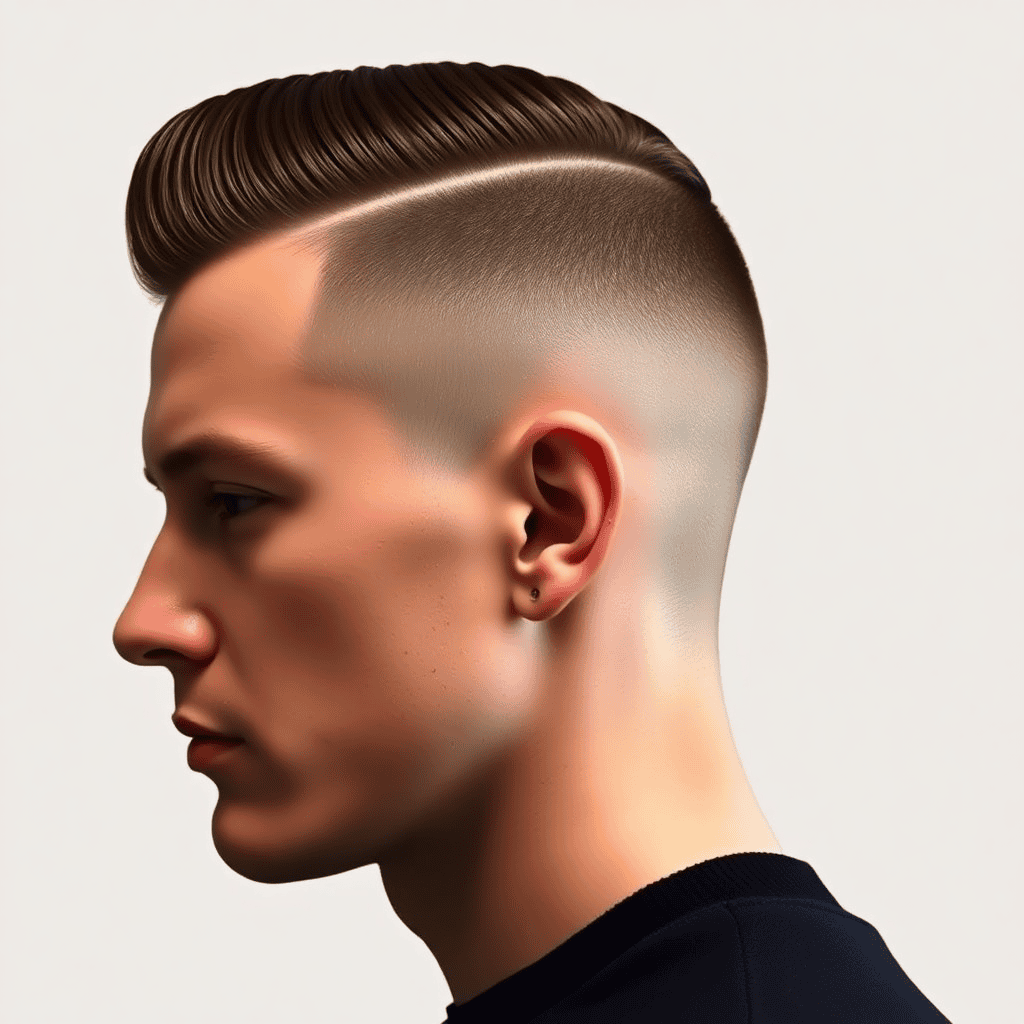
The sides are clipped high and short beneath a five-inch top. The longer hair is combed backward from the forehead with moderate root lift, then narrows toward the crown. Rather than spreading outward, the slicked section follows a controlled path through the center of the head with clean separation above both temples.
This style creates a long, uninterrupted line from the forehead to the back. It suits dense straight or wavy hair and pairs well with structured facial hair. Ask the barber to preserve enough top length for the ends to lie backward without standing up. Apply grooming cream before blow-drying, then add pomade for hold. Men with strong recession at the temples may prefer a looser brushed-back finish because a wet slick can expose the hairline more clearly.
21. Medium Layered Side Sweep With Tapered Sides
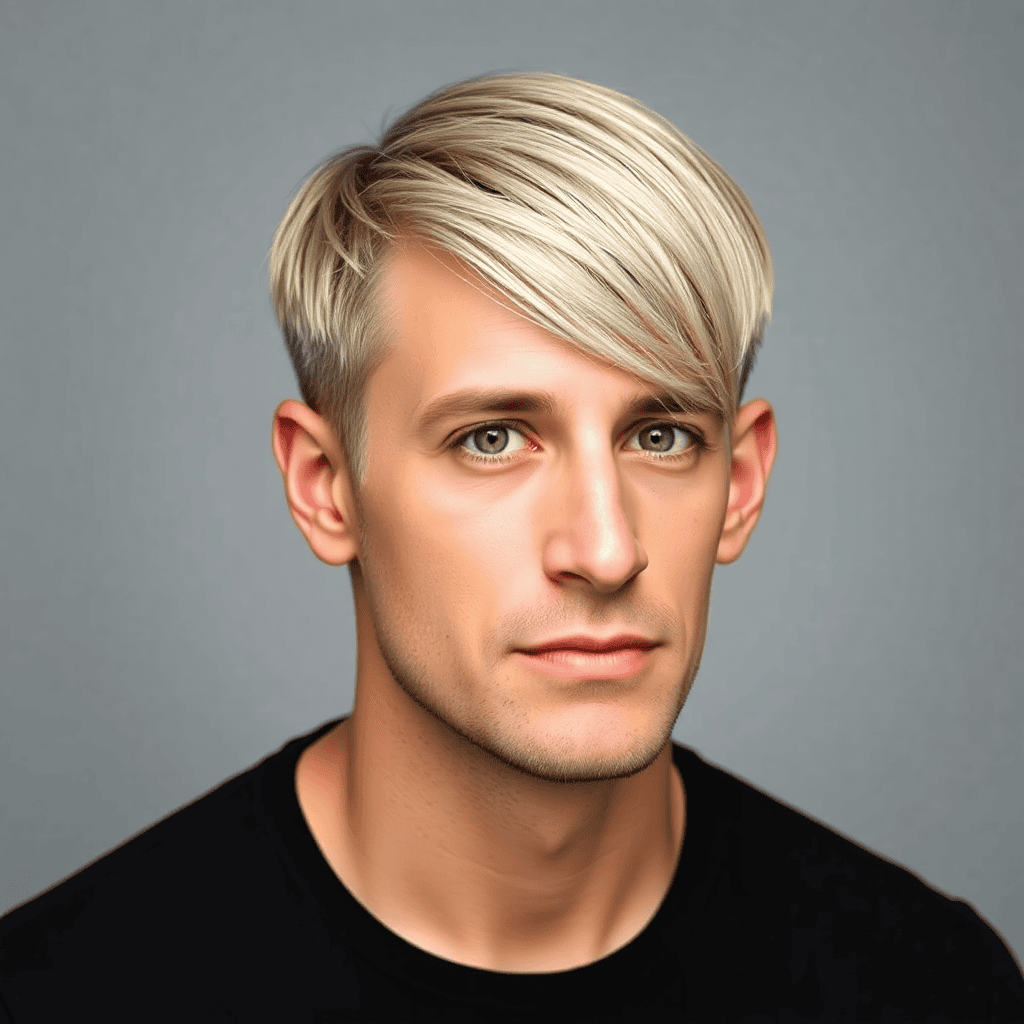
The top and fringe measure five to six inches, with soft layers that flow diagonally across the forehead and finish near one temple. The sides are left long enough to comb back but are tapered around the ears and neckline. Visible movement through the ends prevents the haircut from forming a wide, heavy cap.
This option fits medium length hairstyles men who dislike fades or exposed scalp. The asymmetrical direction can break up facial roundness, while the tapered edges keep the shape tidy. Straight and wavy hair work well, though thick hair may need internal weight removed. Ask for long layers, an off-center part, and narrow side volume. Blow-dry the fringe across with a brush, then separate the ends with cream. A center-heavy shape may make the face appear broader.
22. Wavy Bro Flow With an Off-Center Part
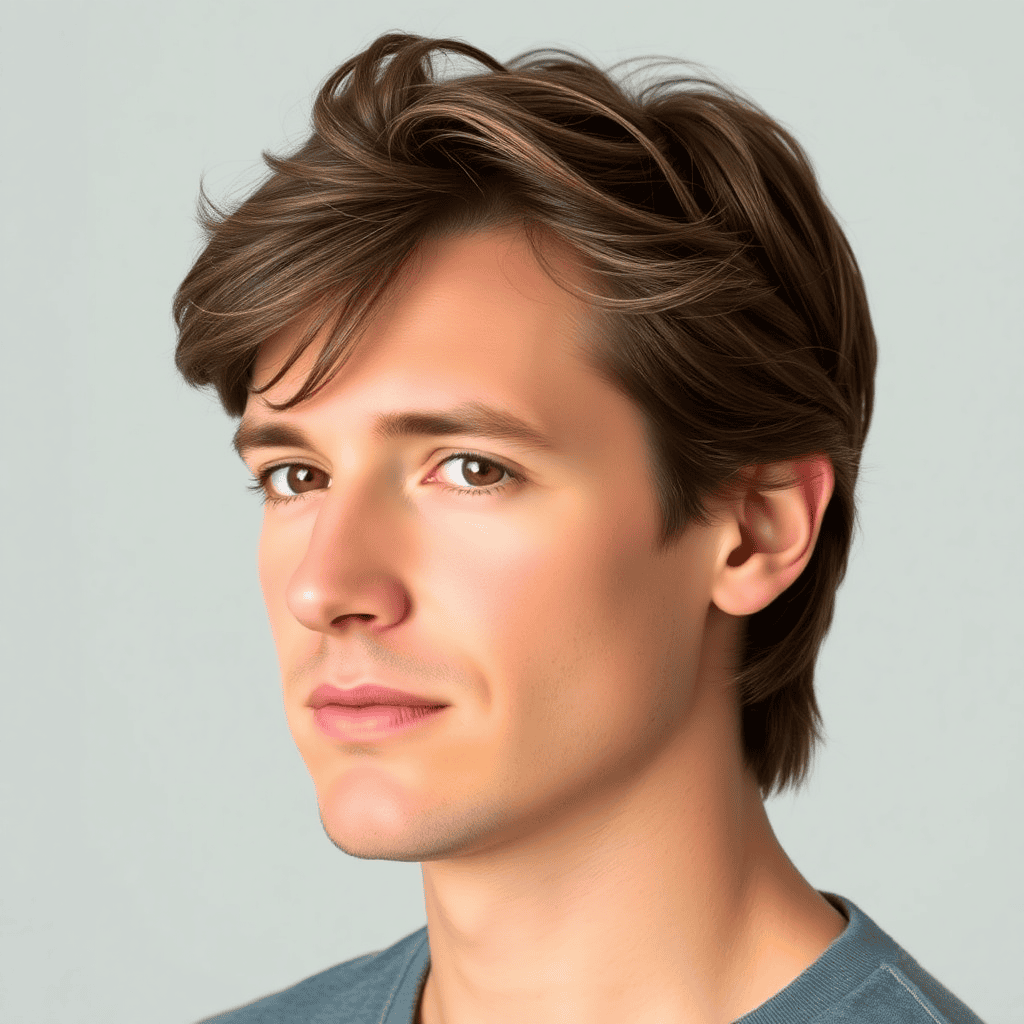
Medium-long waves sweep backward from an off-center part and curve behind the ears. The top reaches roughly six inches, while the sides and back are layered to sit close before flowing outward near the lower rear. The forehead remains partly exposed, creating two unequal sections rather than a symmetrical curtain.
This relaxed cut works for men with natural wave movement and enough density to maintain shape. It is one of the easier long-growing options for men who want to move beyond barbershop haircuts for men without entering shoulder-length territory. Ask for layers that reduce width near the cheekbones and keep movement behind the ears. Use a light cream and allow some natural texture. Heavy wax can collapse the flow and make the upper shape look flat.
23. Modern Mullet With Tight Temples and Textured Height
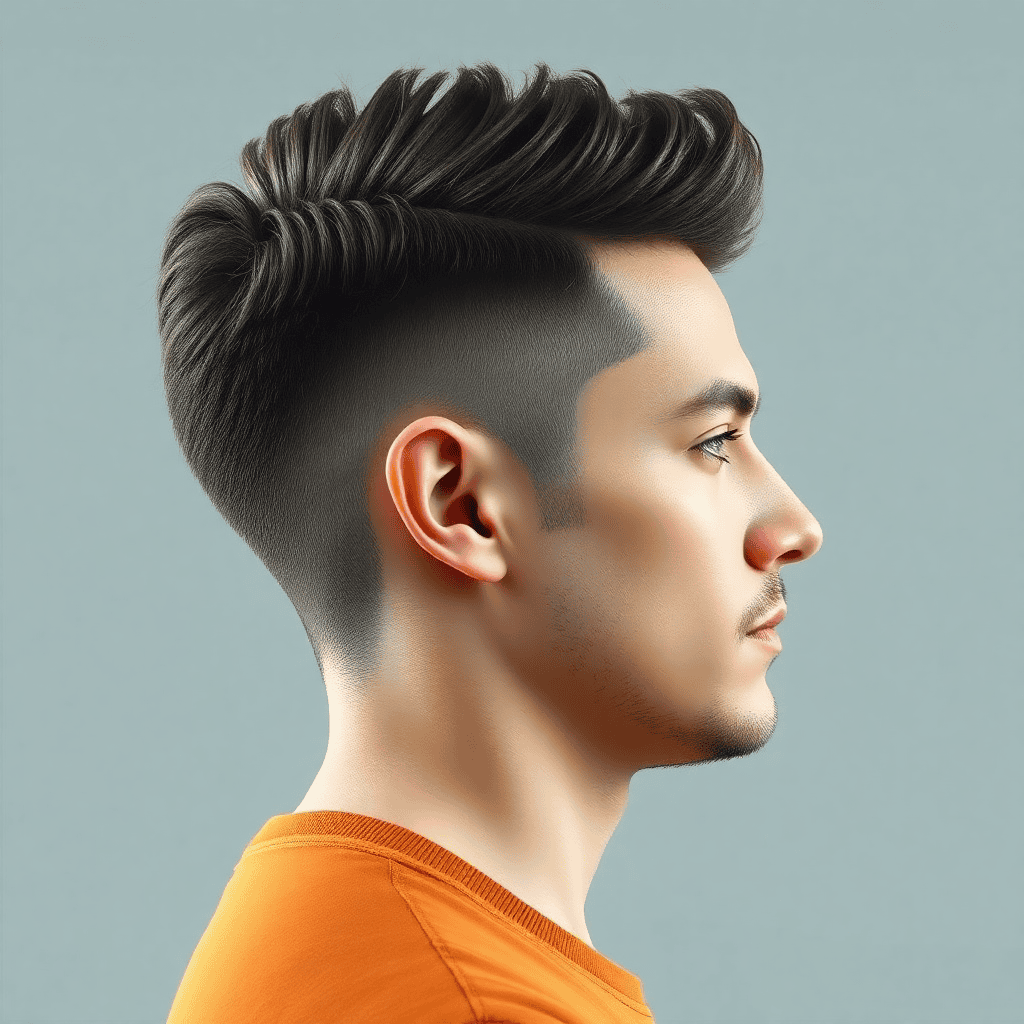
The front and crown are kept three to four inches long and styled upward with rough texture. The temples are faded or clipped close, while the back extends toward the collar in layered, slightly wavy sections. The transition is controlled, avoiding the wide side volume associated with older mullet shapes.
This is one of the more adventurous trending haircuts for men and may not suit conservative workplaces. Its value for a round face comes from the height at the crown and narrow temple area, not the back length alone. Ask the barber for a modern mullet with tight sides, a textured top, and a restrained tail. Use matte paste at the front and leave the back softer. Regular reshaping prevents the rear section from becoming heavy and disconnected.
24. Shoulder-Length Waves With a Deep Side Part
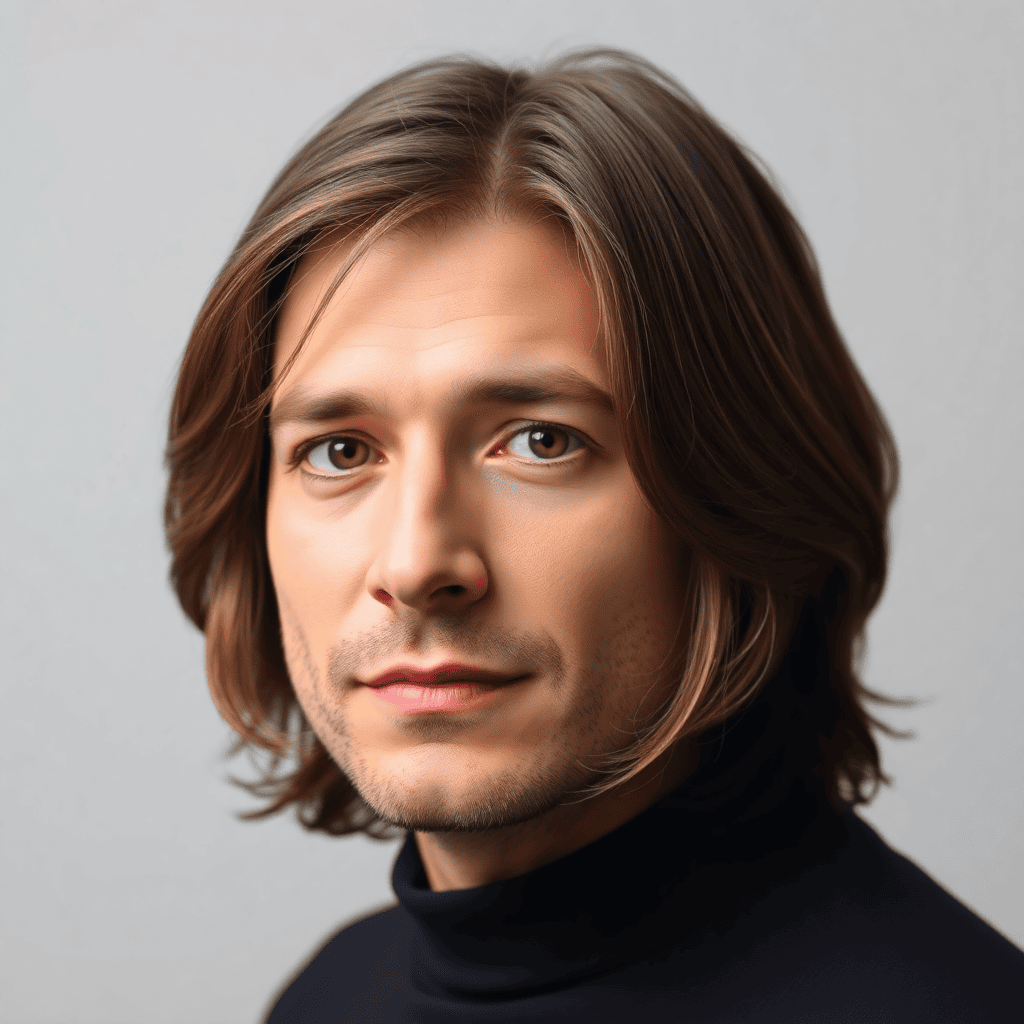
The hair falls to the shoulders in long, loose layers, with a deep side part exposing one side of the forehead. The heavier section sweeps diagonally across the top before flowing beside the face, while shorter layers begin below the cheekbones. The sides remain smooth near the temples and gain movement closer to the jaw and shoulders.
Among long hairstyles for men, this approach avoids equal volume on both sides of the face. It suits medium-to-thick wavy hair that can form natural bends without expanding outward at cheek level. Ask for long layers beginning below the widest facial area and a shape that removes excess side bulk. Dry the roots toward the chosen part, then apply a small amount of styling cream through the lower lengths. Regular conditioning keeps the ends from looking rough.
25. Long Layered Hair With Tucked Sides and Chin-Length Beard
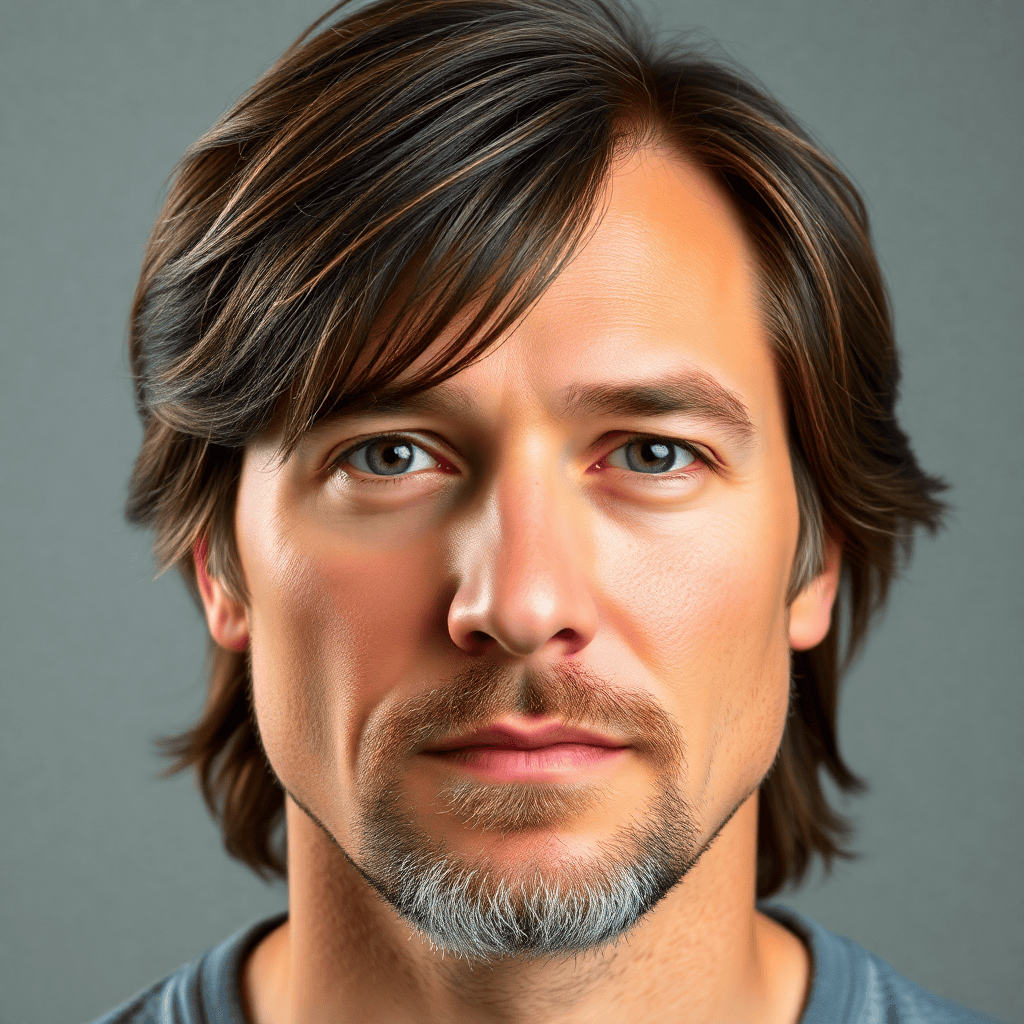
The hair extends below the shoulders with long layers that preserve movement through the ends. The top is parted slightly off-center, and both sides are tucked behind the ears to keep volume away from the cheeks. A beard is trimmed closer along the sides and left longer at the chin, creating a vertical finish below the face.
This combination suits men committed to long hair and consistent beard care. It works best with straight, wavy, or loose curly hair that can lie close near the temples. Ask the stylist for layers that begin below the jaw rather than around the cheekbones. The beard should look connected but not wide or rounded. Use a lightweight leave-in product through the hair ends, and brush the beard downward to preserve its narrower shape.
Conclusion
The strongest choice depends on the kind of balance you want. Short fades and upward texture create visible angles quickly, while quiffs and pompadours produce more height at the cost of added styling time. Wavy, curly, and coily cuts can achieve the same effect through natural volume, as long as the shape rises above the forehead without becoming too wide beside the cheeks.
Hair density should guide the final decision. Fine hair may respond better to a short brush-up or side part, while dense hair can support a flat top, high quiff, or disconnected undercut. Longer cuts need controlled layers, an off-center direction, or tucked sides to stop the silhouette from expanding horizontally.
Before choosing a haircut for round face men, save two or three reference images featuring hair similar to your own. Show the barber the preferred top length, side treatment, hairline finish, and styling direction. A useful reference explains more than a haircut name alone. Facial shape influences the design, but the daily behavior of your hair decides whether that design survives beyond the barber’s chair.
Frequently Asked Questions
1. How can a man tell whether he has a round face?
Measure the face from hairline to chin and compare that length with the width across the cheekbones. A round face often has similar measurements, a softer jawline, and less angular cheek definition. These are visual guidelines rather than fixed categories, since many faces combine features from several shapes.
2. What is the best hairstyle for face shape balancing on a round face?
Styles with height, controlled sides, asymmetry, or strong temple lines often create useful contrast. A quiff, brush-up, high top, side part, or textured faux hawk may work well. The best result still depends on hair density, growth direction, and how much styling the wearer accepts.
3. Should men with round faces avoid short hair?
Short hair can work well when the cut keeps the sides narrow or adds a little height at the front. Crew cuts, textured crops, and high-and-tight variations are common options. A completely even buzz cut will reveal the natural face shape more clearly rather than visually changing it.
4. Do longer sides make a round face look wider?
Fullness beside the cheekbones can add horizontal width, especially when the side hair curls or flares outward. Scissor-cut sides are still possible, but they should be shaped close to the head. Tapering around the ears can reduce bulk without requiring a dramatic skin fade.
5. Is a center part suitable for a round face?
A center part creates symmetry, which may draw attention to equal facial width. It can still work with longer hair that falls below the jaw and stays controlled near the cheeks. An off-center or deep side part often adds a stronger diagonal line and a less symmetrical frame.
6. Can bangs work on men with round faces?
Broken, diagonal, or side-swept bangs tend to create more angles than a thick horizontal fringe. The front should show movement or small areas of forehead. A dense, rounded fringe that sits at eyebrow level can shorten the visible face and add width across the upper half.
7. What haircut works for a round face with a big forehead?
A textured side fringe or choppy crop can soften the forehead without forming a solid horizontal block. Keep some lift at the roots and direct the fringe diagonally. Haircut for big forehead men choices should balance forehead coverage with enough height to avoid compressing the face.
8. What haircut works for a chubby face?
A narrow side profile, controlled cheek-level volume, and visible height can create a more structured outline. Quiffs, brush-ups, high tops, and side-swept styles are common choices. A haircut for chubby face men should still reflect the person’s hair texture and preferred maintenance level.
9. Which haircuts for straight hair men suit round faces?
Straight hair can hold clean side parts, brush-ups, quiffs, crops, and slicked-back styles. Layering is useful because one-length straight hair may lie flat. Ask the barber to preserve height near the front while removing enough weight for the hair to move without falling outward.
10. Which haircuts for wavy hair men add facial length?
A wavy quiff, layered side sweep, loose pompadour, or off-center bro flow can add vertical movement. The waves should rise or travel diagonally rather than collect beside the cheeks. Keeping the upper sides controlled helps the natural texture look intentional instead of overly wide.
11. Which haircuts for curly hair men suit round features?
Curly high tops, tapered curls, curly faux hawks, and longer curls with short temples can work well. The barber should shape the curls upward and control outward bulk near the cheekbones. Curl definition also matters because frizz can expand the outline beyond the planned silhouette.
12. Can coily hair be shaped to flatter a round face?
Coily hair can create strong vertical shapes such as compact high tops, flat tops, and tapered coils. Temple fades or close side shaping introduce cleaner angles. The top does not need to be rigid, but its visible height should be greater than its width for a lengthening effect.
13. What are suitable haircuts for thin hair men with round faces?
A short textured crop, lifted crew cut, loose side part, or modest brush-up can create fullness without exposing large gaps. Keeping the sides shorter often makes the top appear denser. Heavy products should be avoided because they can separate thin strands and reduce visible volume.
14. What are good haircuts for fine hair men with round faces?
Fine hair often benefits from short layers, a dry finish, and moderate front lift. An Ivy League, short quiff, or textured crop may provide shape without demanding heavy density. Lightweight mousse or texture powder can support the roots while preserving natural movement between the strands.
15. How should thick hair be cut for a round face?
Internal layering and controlled side weight are usually more useful than removing length everywhere. Haircuts for thick hair men can include pompadours, undercuts, crops, and wavy quiffs. The barber should reduce bulk where the head appears widest while preserving enough top density for height.
16. What should a man tell his barber about his face shape?
Explain that you want more height or angular direction and less bulk beside the cheeks. Point to the areas that tend to become wide as the haircut grows. A reference photo with similar hair texture will communicate the desired proportions more clearly than naming the face shape alone.
17. What does a number one guard mean?
A number one clipper guard generally leaves hair around one-eighth of an inch long, though equipment can vary slightly. It creates a close, visible stubble rather than bare skin. Ask the barber where that length will be used because the same guard can produce different results within a blend.
18. What does a number two guard look like?
A number two guard commonly leaves about one-quarter of an inch of hair. The scalp may show through on lighter or lower-density hair, while dense dark hair can look fuller. It is often used on short sides, buzz cuts, and the lower or middle part of a fade.
19. What is the difference between a taper and a fade?
A taper usually shortens the hair gradually around the sideburns and neckline while preserving more length through the sides. A fade creates a broader and more visible transition that may reach bare skin. The terms are sometimes mixed in casual conversation, so reference images help avoid confusion.
20. What is the difference between a low, mid, and high fade?
A low fade begins near the ears, a mid fade starts around the temple region, and a high fade begins farther up the sides. Placement changes the amount of visible contrast and side weight. Low is restrained, mid is balanced, and high creates the strongest exposed area.
21. What is a skin fade?
A skin fade takes the shortest part of the sides down to bare skin before blending into longer hair. It can be positioned low, mid, or high. The exposed scalp creates sharp contrast, but the clean appearance fades quickly as short stubble becomes visible during regrowth.
22. What is a drop fade?
A drop fade curves downward behind the ears instead of following a straight line around the head. The lower rear section can preserve more shape around the occipital area. It pairs well with curls, faux hawks, crops, and other cuts that need a more sculpted side profile.
23. What is a burst fade?
A burst fade forms a curved, semicircular blend around the ear while leaving more hair toward the back. It is commonly paired with faux hawks, mohawks, textured mullets, and curly cuts. The curved outline should be shown clearly in a side-view reference image.
24. How can a man ask for a textured top?
Specify the finished length, styling direction, and amount of separation you want. Ask whether point cutting, razor work, or internal layering suits your hair type. “Textured” alone can mean several things, so show whether you want soft movement, chunky pieces, or a rough matte finish.
25. Should a barber use thinning shears on thick hair?
Thinning shears can reduce internal weight, but excessive use may create frizz, weak ends, or short pieces that stick out. Ask the barber how your texture responds before agreeing. Point cutting or carefully placed layers may offer more control, especially on wavy, curly, or coarse hair.
26. What product gives a haircut a matte finish?
Matte clay, paste, texture powder, and some styling creams can reduce shine. The right choice depends on density and length. Clay often suits thick short hair, while powder can support fine roots. Start with a small amount because excess product can flatten the top and reveal scalp.
27. Is pomade suitable for a round-face hairstyle?
Pomade works well for side parts, slick backs, and pompadours that need controlled direction. Choose shine and hold according to the intended finish. A heavy wet product may flatten fine hair, so men seeking facial length should preserve some root lift before smoothing the outer surface.
28. How can a man add height without making hair stiff?
Apply a light pre-styler to damp hair and blow-dry the roots upward with fingers or a vent brush. Add a small amount of flexible paste after the shape is established. Building the structure with air means less finishing product is needed to keep the front raised.
29. Is a hair dryer necessary for a quiff?
A dryer makes it easier to lift the roots and establish backward direction, especially on thick or stubborn hair. A quiff can air-dry on naturally upright hair, but the result may be softer. Medium heat and steady movement reduce the chance of concentrating heat on one area.
30. Which styling product works for curly hair men?
Curl cream, lightweight gel, or mousse can provide definition depending on the curl pattern and desired hold. Apply the product while the hair is wet, then air-dry or use a diffuser. Thick waxes may coat the curls, reduce movement, and collect into heavy sections near the sides.
31. How often should a skin fade be trimmed?
A skin fade may need cleaning every two to three weeks if the wearer wants the transition to remain sharp. Some men wait longer and accept a softer grown-out appearance. Fade maintenance varies with growth speed, contrast, budget, and how polished the haircut needs to look.
32. How often should a longer scissor cut be reshaped?
Medium and longer layered cuts are often reshaped every six to twelve weeks, depending on growth and structure. Shorter layers lose their intended direction sooner than one-length hair. Book earlier when the sides begin widening, the fringe stops cooperating, or the ends become difficult to control.
33. Which low maintenance men’s haircut suits a round face?
A crew cut with a tapered side, short textured crop, or compact Ivy League can work with limited daily effort. The shape should keep some height or direction near the front. Cuts involving tall pompadours, hard parts, or disconnected sections generally demand more frequent styling and cleanup.
34. How can a man grow out a fade without awkward sides?
Ask the barber to soften the contrast and blend the upper sides during each trim while preserving top length. The area above the ears may need small scissor adjustments as it fills in. Styling the top diagonally can distract from temporary unevenness during the growing stage.
35. How should a man grow from short hair to medium length?
Maintain the neckline and around-ear areas while allowing the top and upper sides to gain length. Periodic shaping removes bulky corners without restarting the process. Decide early whether the goal is a side sweep, bro flow, slick back, or layered waves so the barber preserves useful sections.
36. Are summer haircuts for men always supposed to be short?
Short cuts can feel cooler and dry faster, but a summer haircut does not have to expose the scalp. Tapered sides, layered waves, and tied-back long hair can also be practical. Consider sun exposure, outdoor activity, styling habits, and how quickly the chosen cut loses its shape.
37. Which haircuts for thinning hair men suit a round face?
A short crop, crew cut, soft side part, or modest brush-up can reduce contrast between dense and sparse areas. Avoid building a tall style that the hair cannot support. Keeping the sides neat may make the top look fuller without requiring a heavy or artificial-looking finish.
38. Can hairstyles for balding men include a fade?
A fade can reduce the visual difference between sparse top hair and dense sides. The placement should match the remaining coverage and head shape. Some men choose a close buzz cut, while others keep short texture above. A barber can shape existing hair but cannot change the underlying density.
39. What short haircut works for a receding hairline?
A textured crop, crew cut, high-and-tight, or short brush-up may work depending on the recession pattern. Keeping the front natural often looks better than creating an unnaturally straight edge. A short haircut for receding hairline concerns should avoid long strands arranged to cover large areas.
40. Which haircuts for men with a widow’s peak work well?
Side parts, loose slick backs, textured crops, and short quiffs can follow the natural point instead of hiding it. The peak may add a useful angular feature to a round face. Ask the barber to preserve the natural hairline rather than cutting a wide artificial corner around it.
41. Which haircuts for men over 40 suit round faces?
An Ivy League, side part, wavy quiff, short brush-up, or layered sweep can look current without depending on extreme contrast. Haircuts for men over 40 should reflect density changes and daily routine. Controlled texture usually appears more natural than a rigid, heavily coated finish.
42. Which haircuts for men over 50 are easy to maintain?
A tapered crew cut, short side part, textured crop, or neat scissor cut can provide structure with limited styling. Haircuts for men over 50 often work best when the barber follows natural growth patterns. A softer hairline also avoids drawing attention to uneven density or recession.
43. What is the difference between a French crop and a Caesar cut?
Both direct hair toward the forehead. A Caesar is usually cut to a more even length with a shorter, straighter fringe, while a French crop often combines shorter sides with more texture and variation on top. Modern versions overlap, so the desired fringe shape should be described clearly.
44. What is the difference between a quiff and a pompadour?
A quiff usually concentrates loose height at the front and may show separated texture. A pompadour forms a smoother, larger shape that rolls upward and backward across more of the top. Quiffs often feel casual, while pompadours usually require stronger structure and more deliberate blow-drying.
45. What is the difference between an undercut and a fade?
An undercut creates a distinct separation between long top hair and short sides, often with little transition. A fade gradually changes from shorter hair into longer sections. Some styles combine both ideas by using a disconnected top above faded lower sides, so photographs are useful during consultation.
46. Are men’s hairstyles 2026 focused only on fades?
Fades remain common, but current grooming choices also include scissor cuts, textured crops, longer flow styles, modern mullets, soft tapers, and natural curls. Trends offer reference points rather than rules. A well-shaped cut that fits the wearer’s hair often ages better than a copied seasonal look.
47. Which professional haircuts for men suit a round face?
A low-fade side part, Ivy League, tapered crew cut, restrained quiff, or neatly layered side sweep can suit many workplaces. Keep the silhouette controlled and the finish clean. More conservative offices may prefer subtle tapers over exposed skin fades, hard parts, or dramatic disconnected sections.
48. Can haircuts for men with glasses balance a round face?
Angular or rectangular frames can add definition, while a haircut with height and narrow sides supports the same effect. Keep heavy side hair from crowding the arms of the glasses. The frames, temples, sideburns, and haircut should form one clean area rather than several competing horizontal lines.
49. Which haircuts for men with beards suit round faces?
Cuts with height pair well with beards kept shorter at the cheeks and longer toward the chin. Quiffs, brush-ups, high tops, side parts, and tapered crops are common choices. Avoid allowing both the side hair and beard to reach their fullest width at the same level.
50. Should a man choose a classic or modern haircut for a round face?
Choose according to lifestyle rather than age alone. Classic haircuts for men usually offer softer tapers, natural parts, and easier workplace acceptance. Modern options may use stronger fades, disconnection, or sharper texture. Both can balance a round face when the top, sides, and styling direction are planned together.
Modern Haircuts and Hairstyles for Men
Explore flattering cuts for different hair types, face shapes, lengths, textures, and personal styles.