
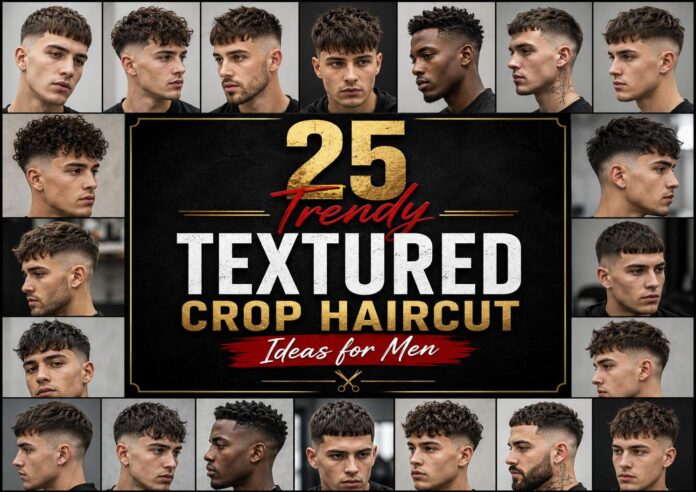
A strong textured crop does more than shorten the hair. It creates visible separation across the top, controls bulk around the sides, and gives the fringe a deliberate shape without making the finish look stiff. The best versions can appear tidy enough for work in the morning and more relaxed after a quick pass of the fingers.
This guide is for men who want a textured crop haircut that matches their hair density, face shape, styling habits, and preferred fade level. It covers straight, thick, fine, wavy, curly, and coily hair, along with options for receding hairlines and mature men. Recent grooming guides continue to place choppy crops, French-crop shapes, and low tapers among the trending haircuts for men in 2026.
The 25 ideas below range from tight micro crops to longer, messier versions with noticeable movement. Each one includes enough visual detail to help you compare the shape, explain it to a barber, and create a realistic reference image before your appointment.
1. Buzz-Length Textured Crop With Low Taper
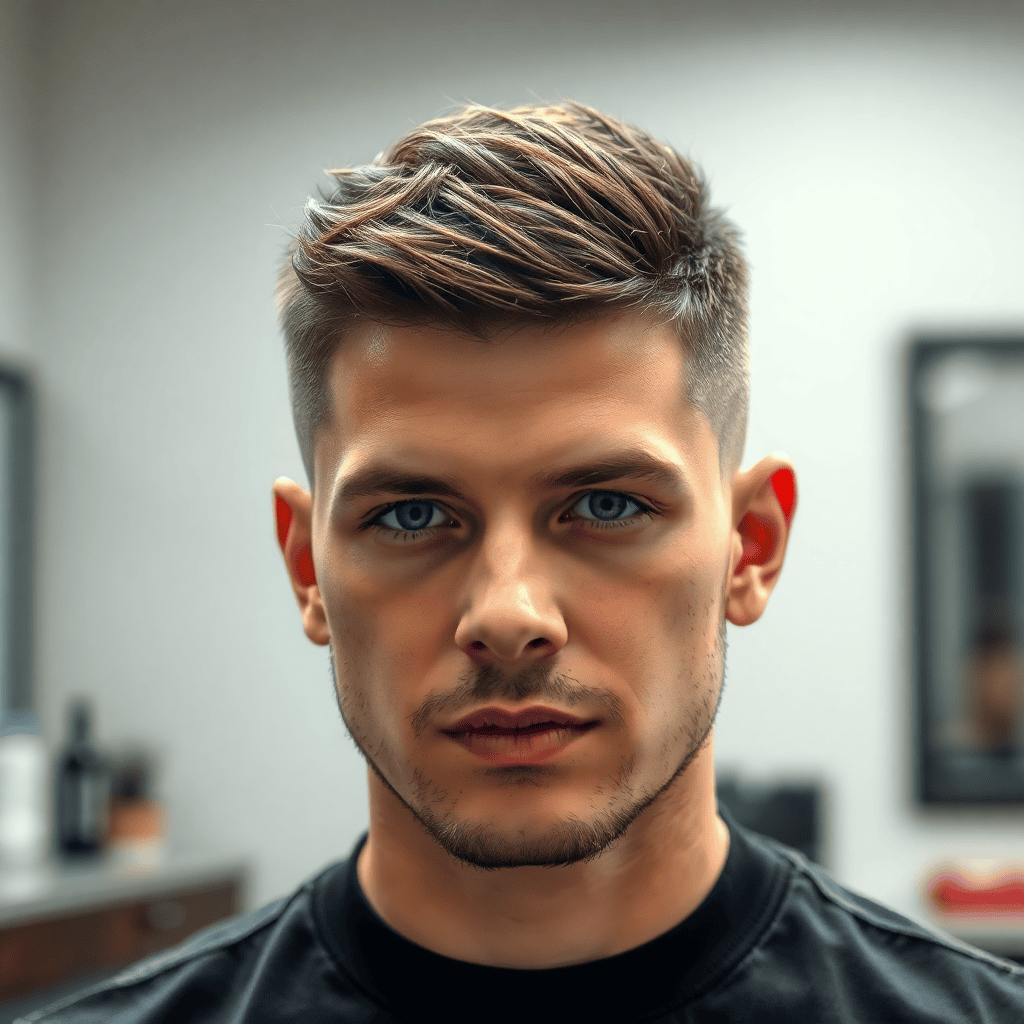
The top is clipped to roughly half an inch, then point-cut to create tiny broken sections instead of a flat buzzed surface. A low taper removes weight at the sideburns and neckline, while the temples remain softly edged rather than sharply boxed.
This is one of the easiest short haircuts for men with straight or dense hair. It works well for active lifestyles because the top needs little daily adjustment. Ask the barber to keep enough length for visible texture and avoid running one guard across the entire head. A small amount of matte paste can separate the front without making the scalp look oily.
2. Micro Textured Crop With High Skin Fade
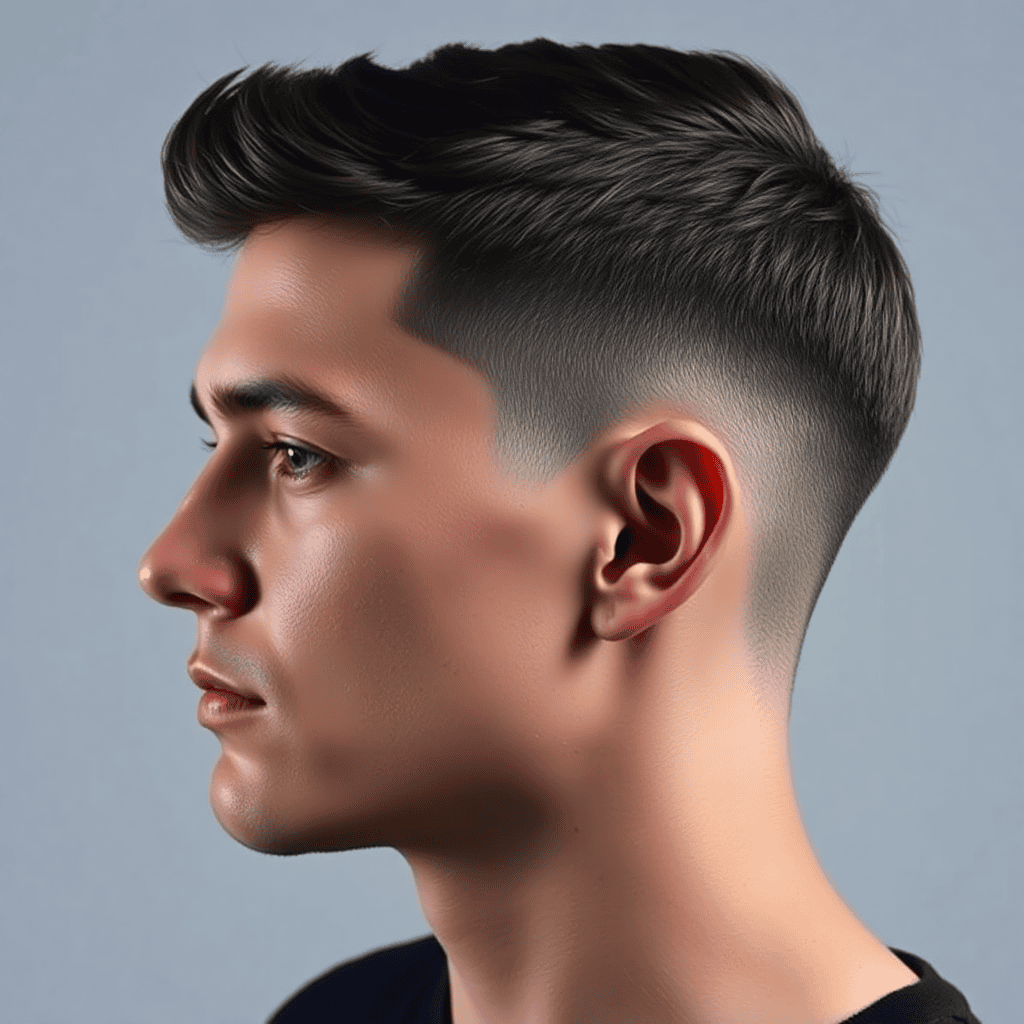
The top measures about three-quarters of an inch and sits forward in short, jagged sections. The sides fade quickly from bare skin above the temples into the cropped top, while the front hairline remains short and lightly uneven rather than ruler-straight.
A high skin fade creates strong contrast, so it tends to suit oval and square faces better than long, narrow faces. Men with thick hair gain a cleaner outline without losing texture on top. Ask for point cutting or light razor texturing instead of smooth clipper work across the crown. The exposed fade may begin looking softer after ten days, making this option more demanding than a low maintenance men’s haircut.
3. Low Skin Fade With Cropped Fringe
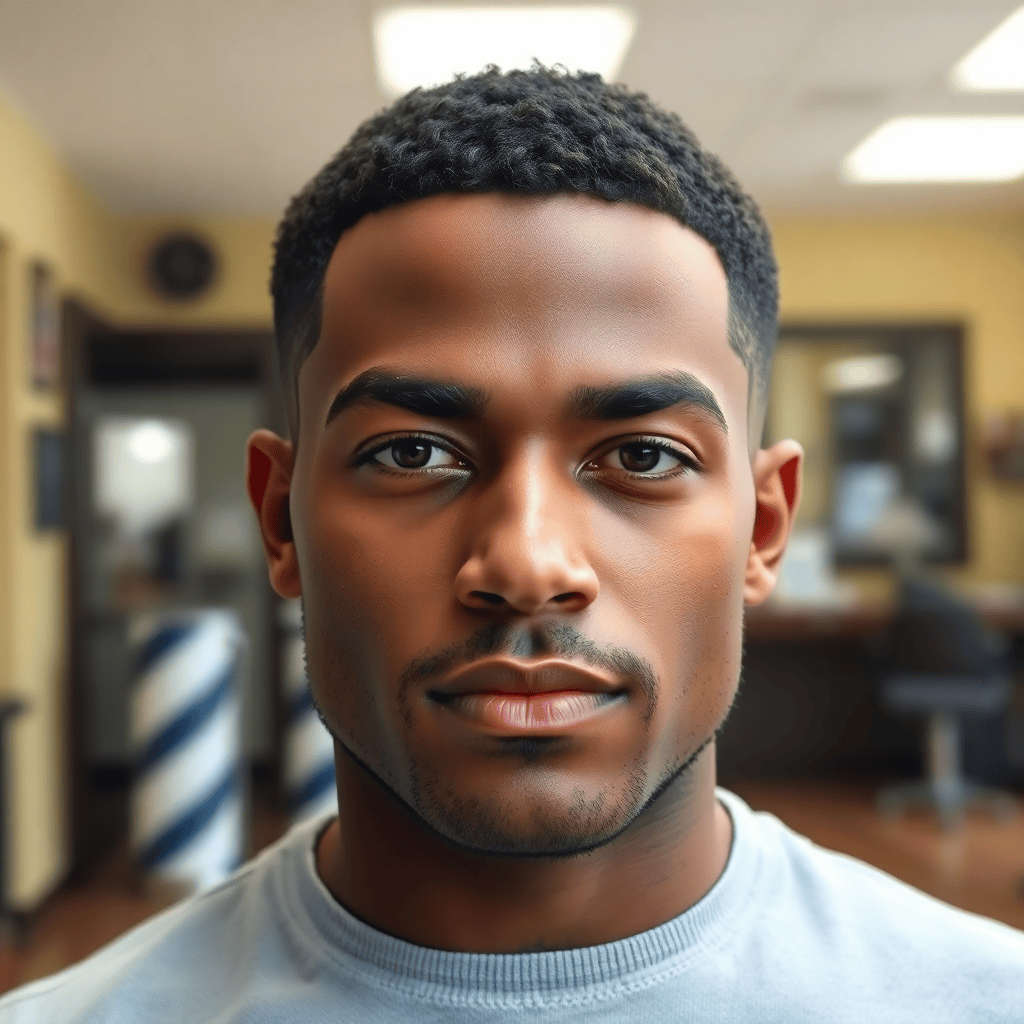
The top stays around one to one and a quarter inches, with choppy layers directed toward the forehead. A low skin fade begins beside the ears and curves around the back, while the short fringe falls in separated points across a natural front hairline.
This balanced shape is easy to wear because the contrast stays near the lower sides. It can soften a haircut for square face men while still showing the jawline. Tell the barber where you want the fade to begin, since “low” can mean different heights in different shops. Style by pressing matte clay forward from the crown, then pinch four or five small fringe sections rather than separating every strand.
4. Mid Fade With Short Choppy Crop
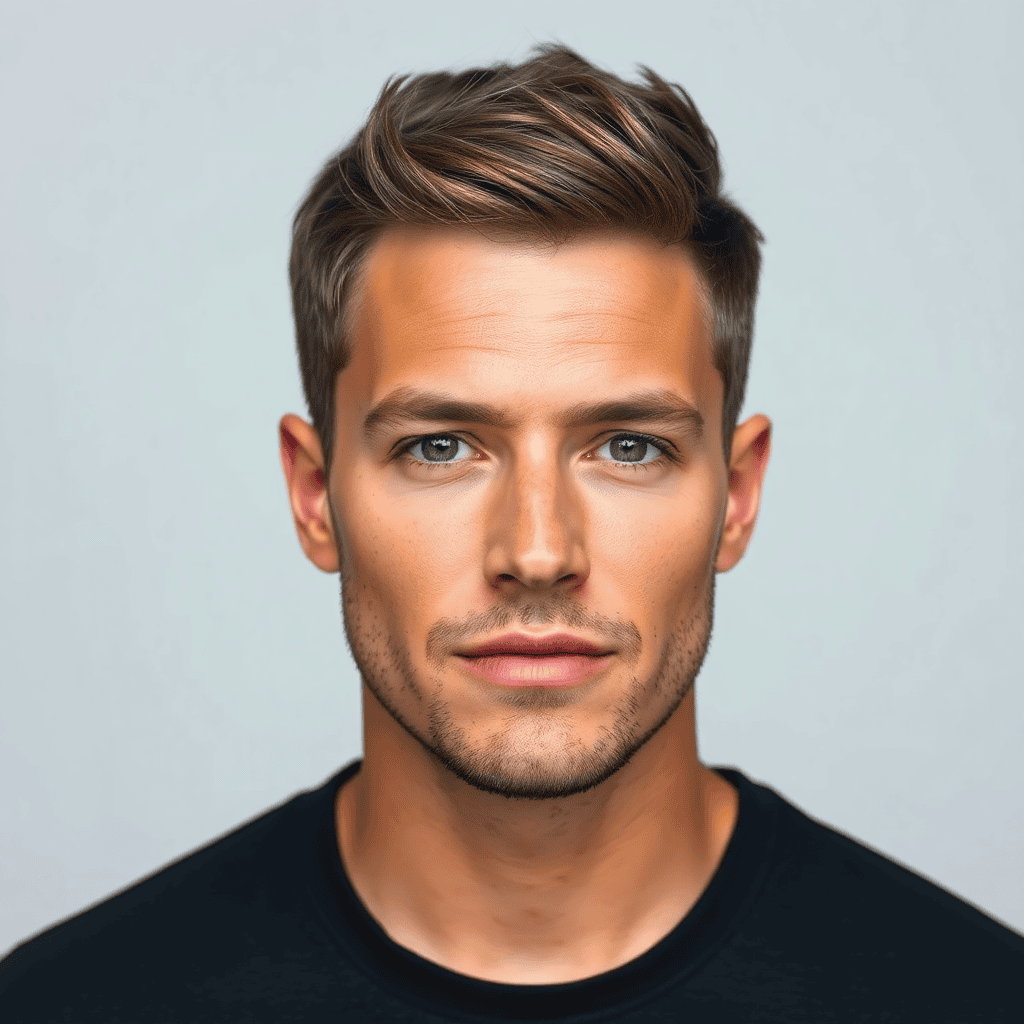
Short layers measuring one to one and a half inches cover the top, with the front pushed slightly forward and upward. A mid fade begins around the temple area, blends tightly through the sides, and leaves a clean transition beneath the textured crown.
The added height at the front can give round faces a longer appearance without forming a full quiff. It is also a practical choice among fresh haircuts for men who want clear contrast without exposing as much scalp as a high fade. Ask for irregular point-cut layers so the surface has depth from every angle. Dry the hair forward, then lift only the front quarter with your fingertips and a pea-sized amount of styling paste.
5. High Fade With Blunt Textured Fringe
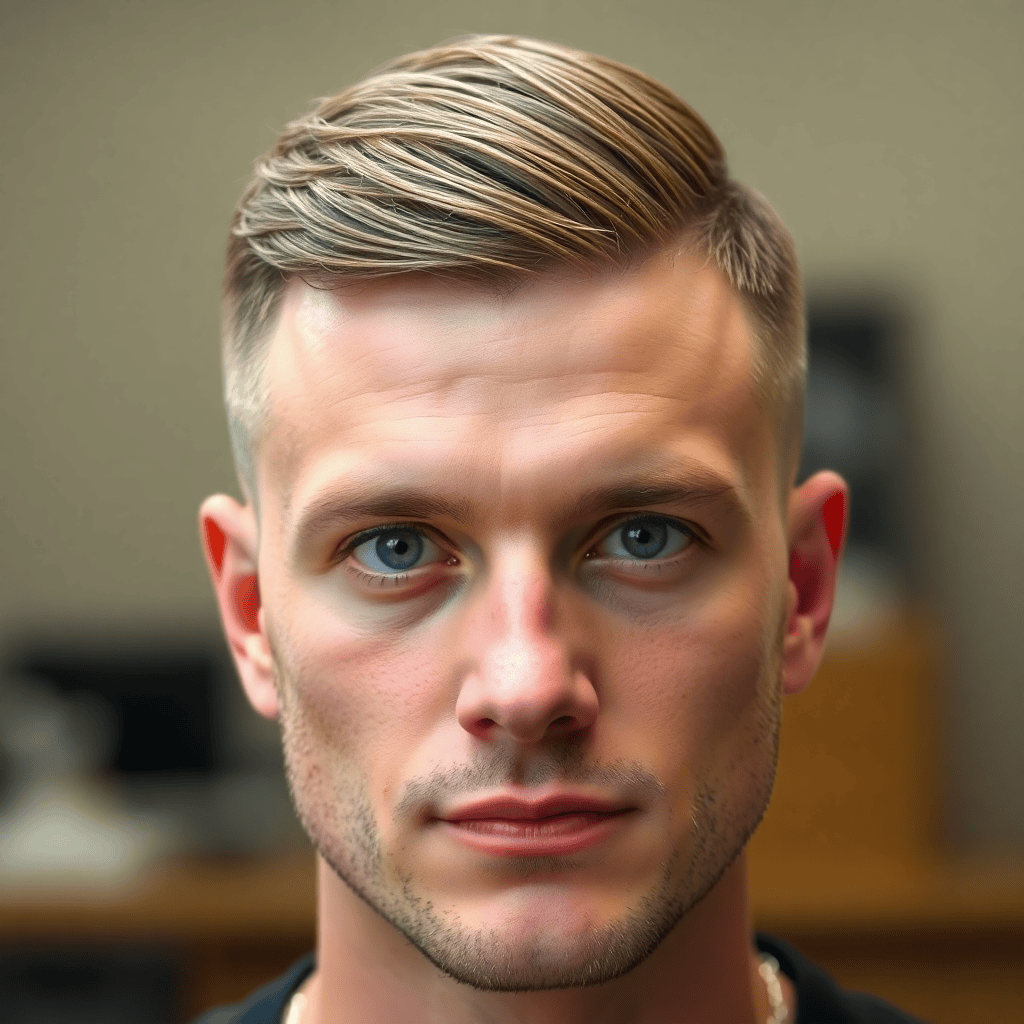
The crown and upper top remain about one and a half inches long, with rough layers pushed straight toward the face. A high fade removes the sides near the parietal ridge, while the fringe forms a short horizontal line broken by small textured gaps.
The blunt front gives this cut a strong graphic shape, especially on straight or slightly wavy hair. It can visually shorten a tall forehead, although men with a short round face may prefer a softer fringe. Show the barber exactly where the front should sit when dry, since wet hair appears longer. Use a hair dryer on low heat to set the forward direction, then rub matte product between the fingers before touching the top.
6. Textured Crop With Drop Skin Fade
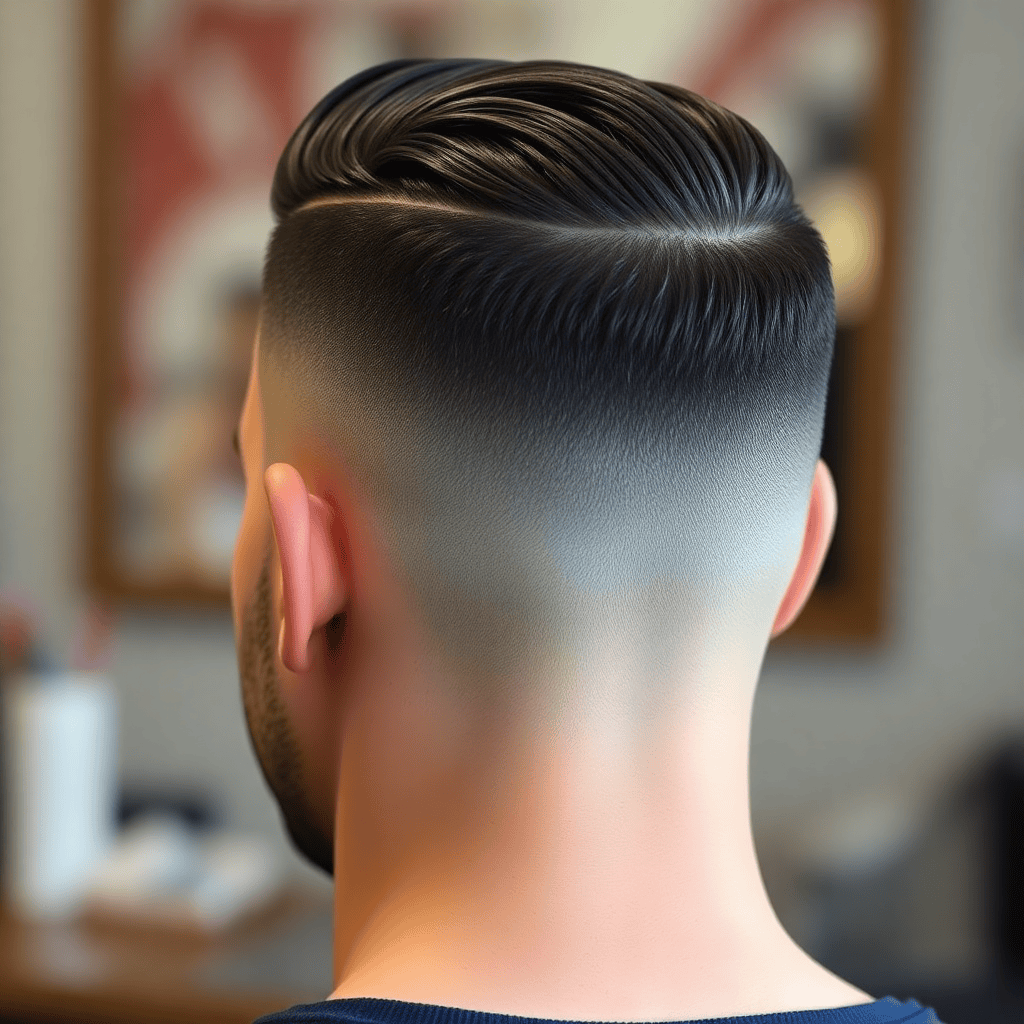
The top is cut to roughly one and a half inches with visible clumps running forward from the crown. The fade reaches skin at the lower sides, then drops behind the ears to follow the head’s curve and preserve a darker section around the back crown.
The curved fade adds shape when a standard horizontal fade makes the back appear flat. It suits thick or straight hair and can complement men who wear neatly shaped beards. Ask the barber for a low or mid drop depending on how much contrast you want behind the ears. Daily styling is simple, but the fade requires accurate blending, so choose a barber comfortable with curved guidelines and close clipper work.
7. Short Crop With Burst Fade
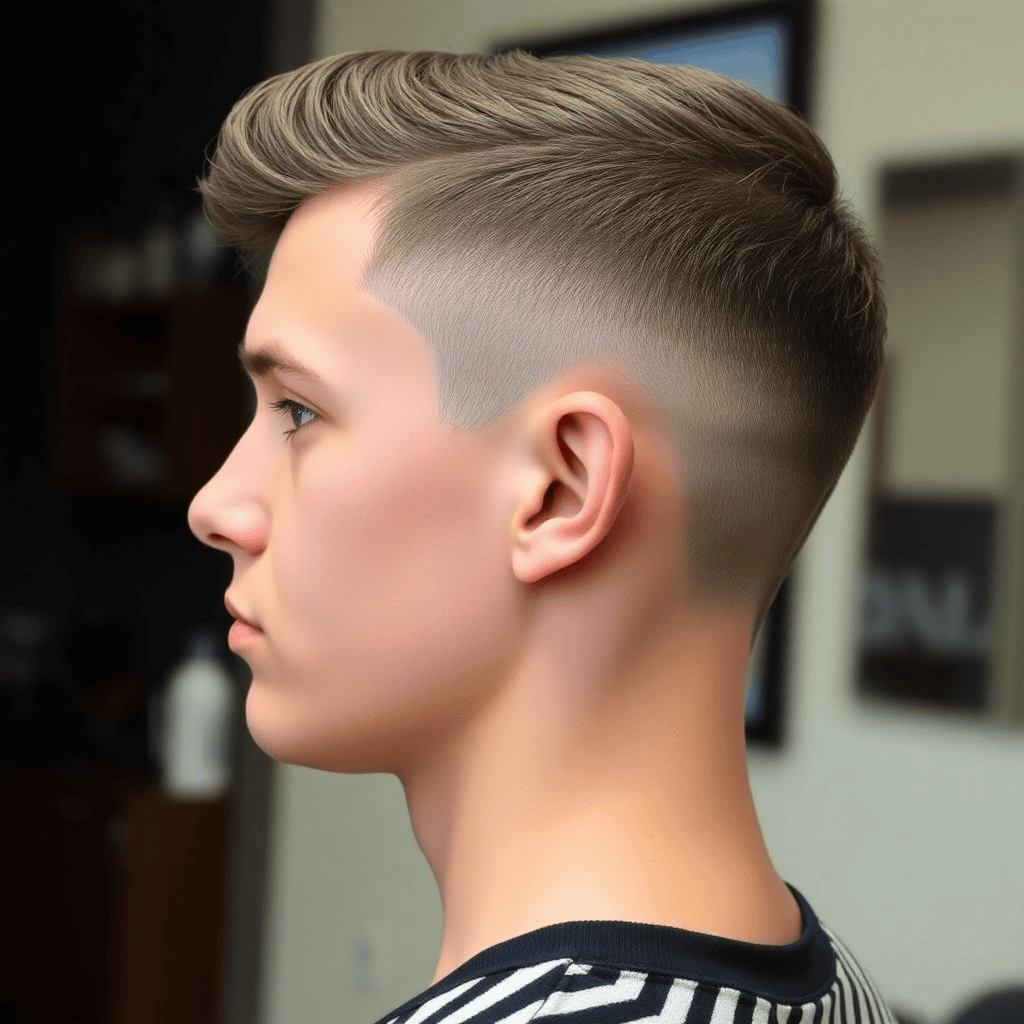
The top remains one to two inches long, cut into compact uneven layers and directed forward with a slight lift through the center. A burst fade forms a semicircle around each ear, while the back retains more length than the sides and ends in a neat tapered neckline.
This cut brings more personality than a standard mid fade but stops short of becoming a mohawk. It works with straight, wavy, or loosely curly hair, especially for younger men seeking distinctive men’s haircut inspiration. Tell the barber you want the burst shape kept low and the back controlled. Too much length behind the ears can make the outline look accidental as it grows.
8. Textured Crop With Temple Taper
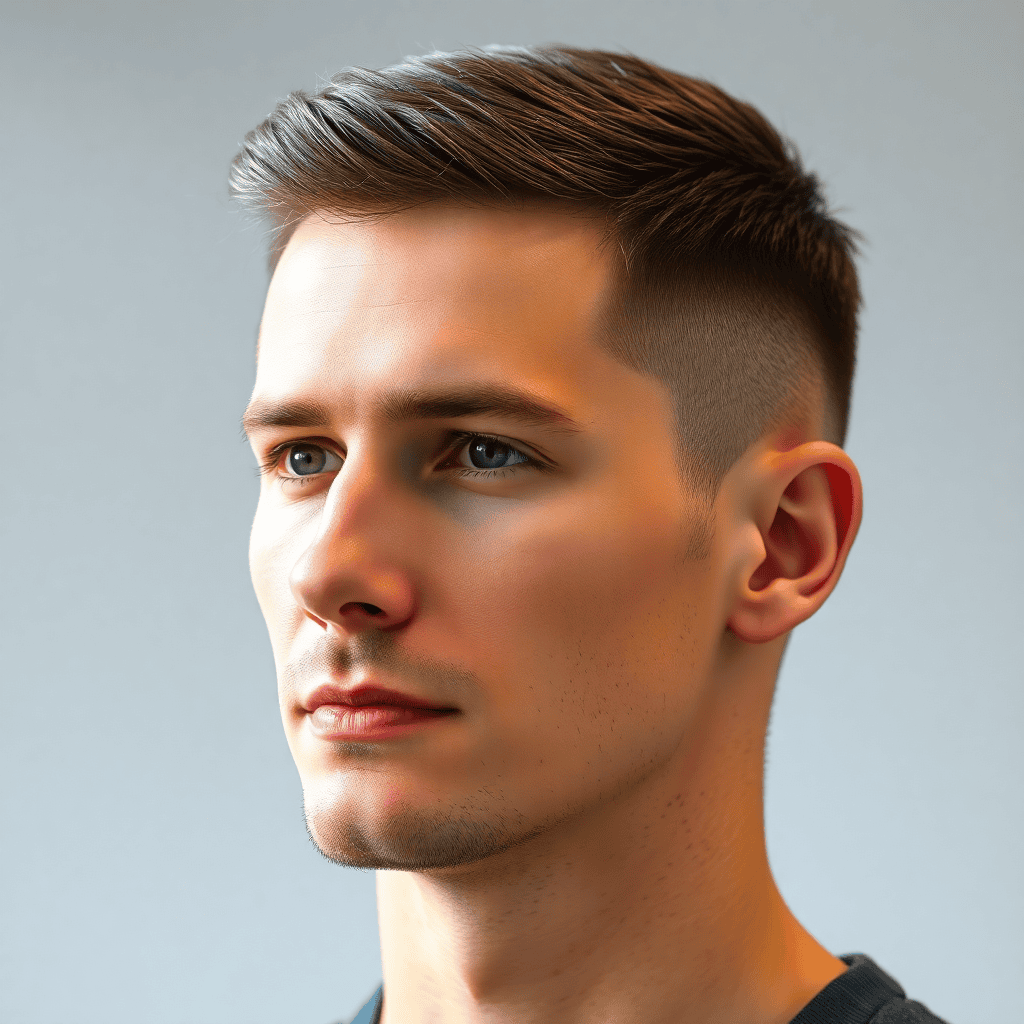
The top sits between one and two inches with short layers combed forward and slightly across the forehead. Instead of fading the full sides, the barber tapers only the temples and neckline, leaving natural density above the ears and through the back.
This softer outline suits professional haircuts for men because it avoids the dramatic contrast of a skin fade. It is also helpful for men with narrow faces who need some width at the sides. Ask for scissor-over-comb work through the side panels and a natural transition around the temple. A styling cream creates controlled separation while keeping the finish appropriate for offices, meetings, and formal settings.
9. Scissor-Cut Textured Crop With Natural Sides
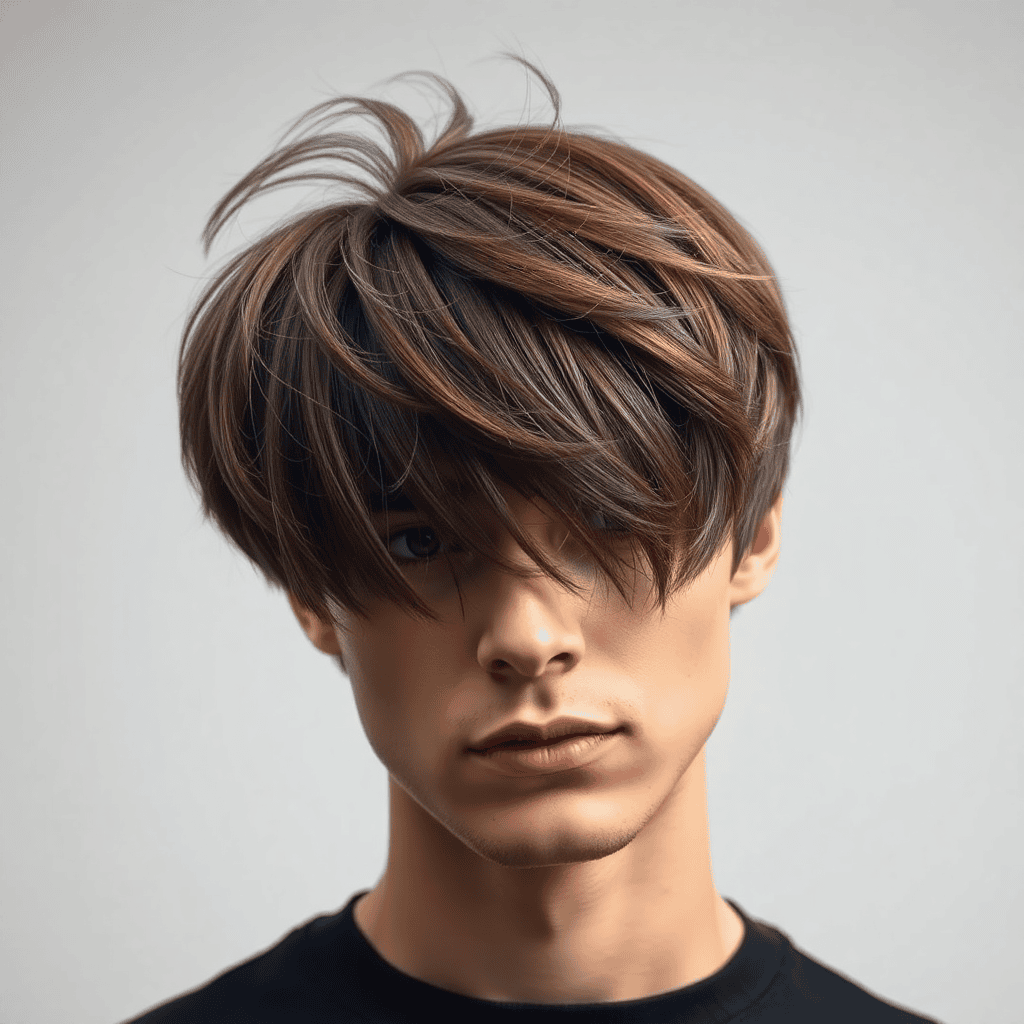
The top measures close to two inches, with irregular scissor-cut layers that follow the head rather than standing upright. The sides are shortened with scissors over a comb, the edges stay natural, and the fringe rests forward in soft uneven pieces.
Men who dislike visible fades may find this version easier to grow out. It suits oval, square, and longer faces because the side volume prevents the head from appearing too narrow. Ask the barber to remove internal weight while preserving enough fullness around the temples. This is one of the better business haircuts for men who need polish but do not want a severe outline. Light paste or grooming cream is usually enough.
10. Classic French Crop With Broken Fringe
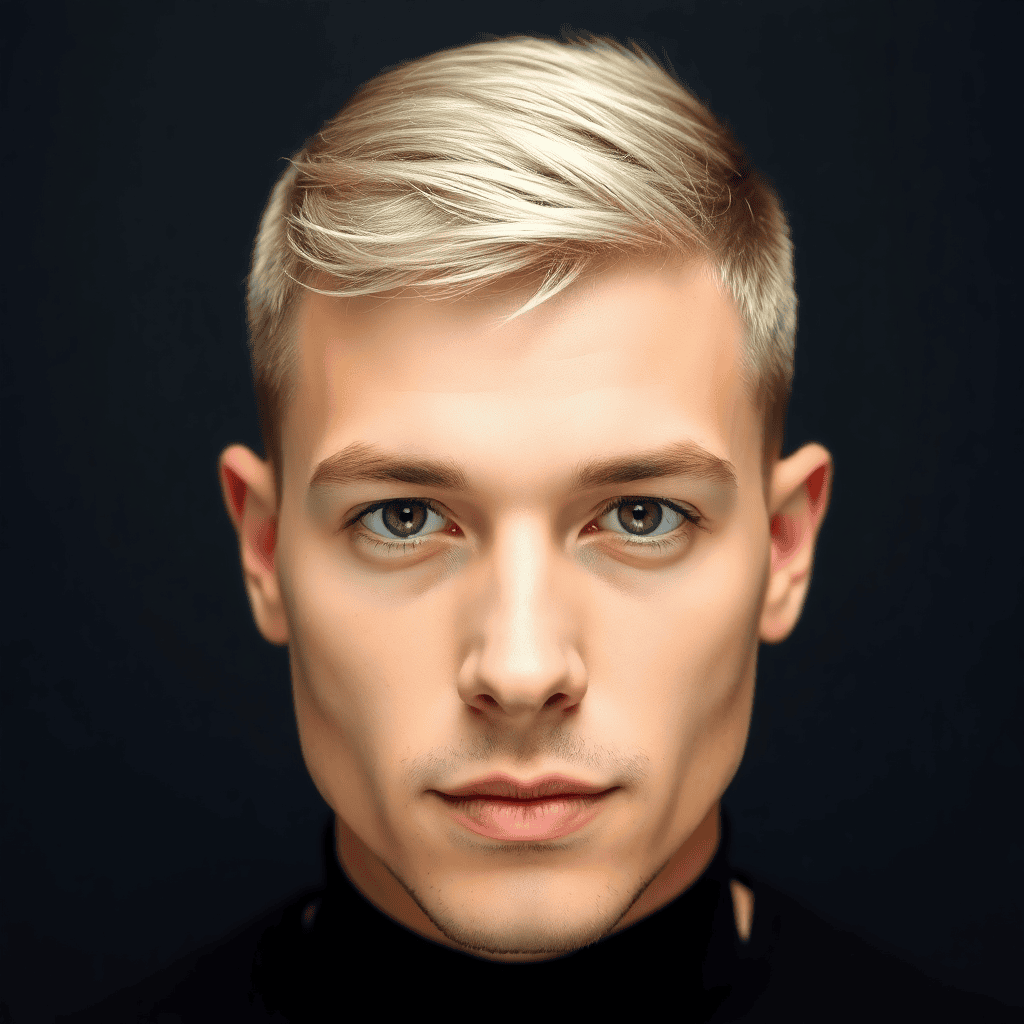
The top is kept around one and a half to two inches and styled directly forward in controlled choppy sections. The sides taper from short to shorter without reaching skin, while the fringe forms a compact horizontal shape with several broken points along its edge.
Compared with messier crop variations, this version has a more recognizable front boundary. It works well for straight and moderately thick hair, along with men who prefer classic haircuts for men with a modern finish. Ask the barber to keep the fringe narrow enough that it does not resemble heavy bangs. Blow-dry forward using your fingers, then press a small amount of matte clay into the ends rather than coating the roots.
11. Caesar-Inspired Textured Crop
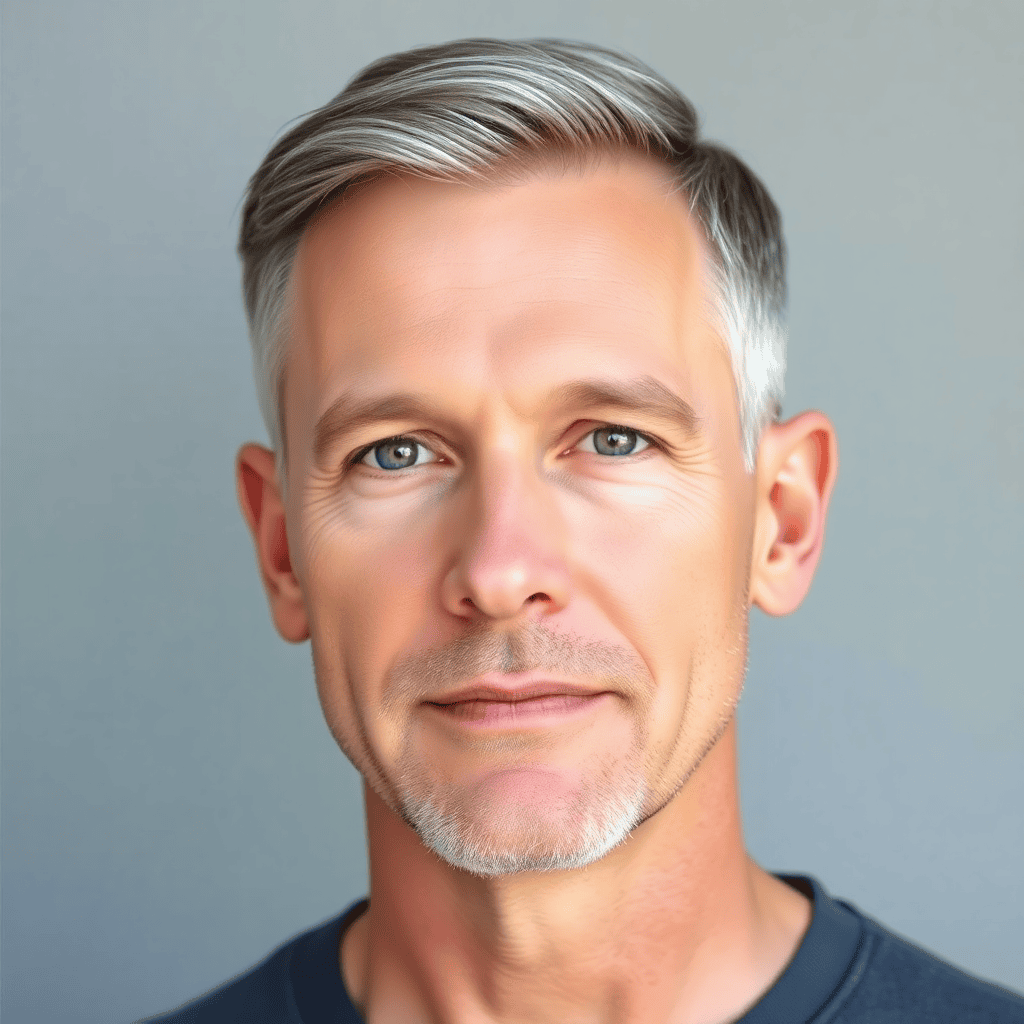
The top is cut to a consistent length of about one and a half inches, then softened with shallow uneven layers. Hair moves straight forward from the crown into a short curved fringe, while the sides remain clippered and gradually tapered without a dramatic fade.
The rounded fringe gives this style a calmer appearance than a jagged French crop. It can work well as a short haircut for receding hairline concerns because the forward direction reduces visible separation near the temples. Ask the barber to keep the front light rather than dense and heavy. Fine hair usually needs only a small amount of texture powder, while coarse hair may respond better to a soft matte cream.
12. Spiky Textured Crop With Mid Taper Fade
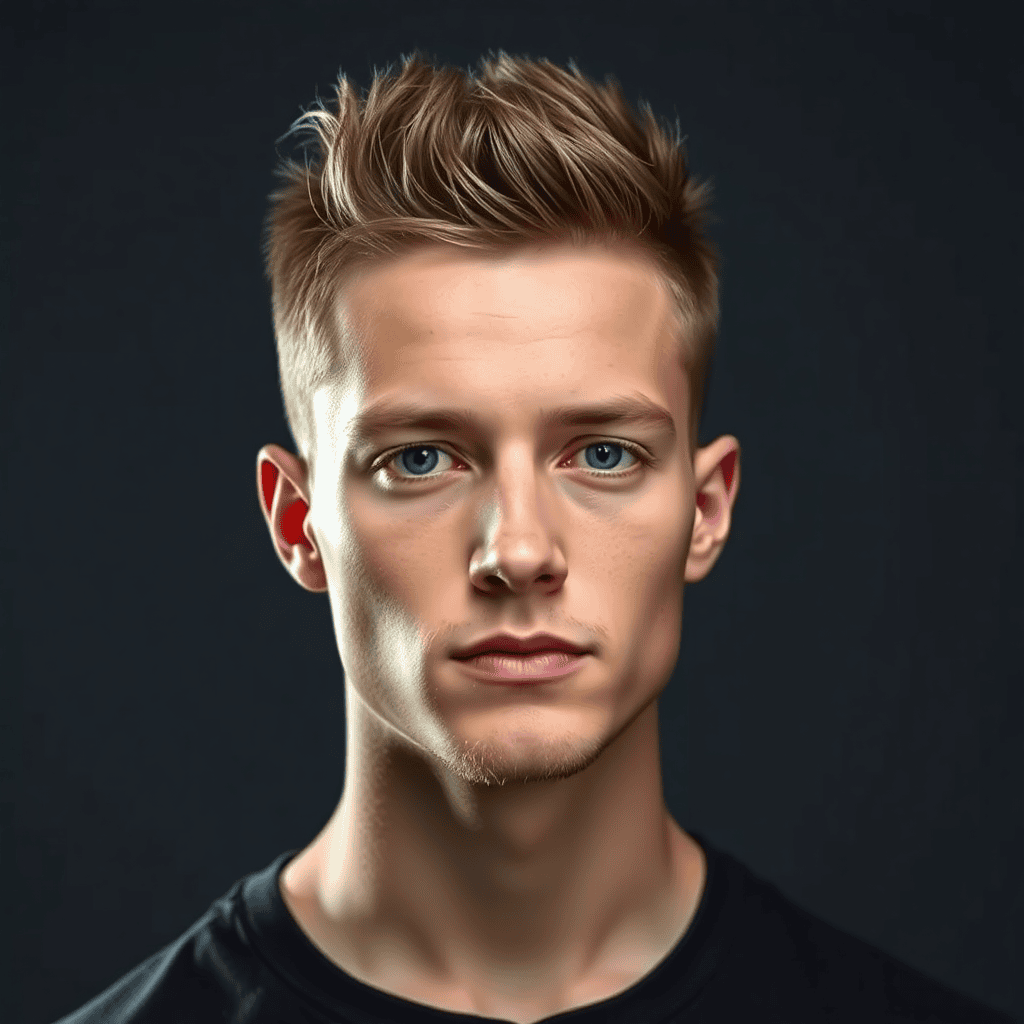
The hair on top reaches about two inches and is cut into pointed sections that angle upward and slightly forward. A mid taper fade cleans the temples and lower sides, while the front hairline stays natural beneath several short separated spikes.
This energetic shape is one of the more youthful haircut ideas for men, but it does require daily styling. Straight, thick hair holds the defined points most easily. Ask for enough weight removal that the spikes separate without becoming thin at the roots. Dry the top against its natural direction for lift, then twist small sections with matte paste. Avoid hard gel, which can join the spikes into a shiny solid ridge.
13. Messy Textured Crop With Low Fade
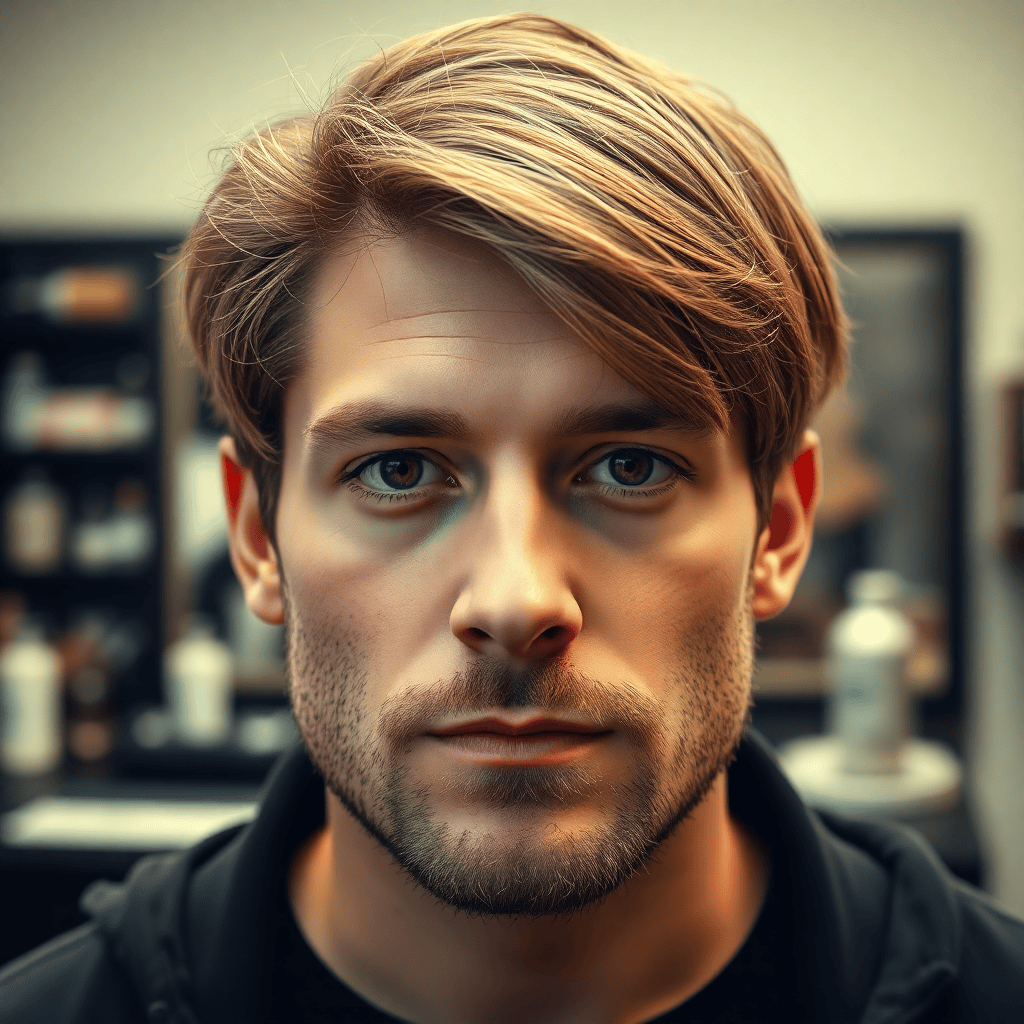
The top measures about two to two and a half inches, with uneven layers pushed forward, sideways, and upward in a loose pattern. A low fade keeps the lower sides neat, while the front breaks into soft pieces that land at different points above the eyebrows.
The intentionally disordered finish suits wavy hair and dense straight hair that resists smooth styling. It is among the modern haircuts for men that look better with some natural movement, though it may feel too casual for strict workplaces. Ask the barber to remove bulk through point cutting without thinning the ends excessively. Apply lightweight paste to nearly dry hair, then reshape individual sections instead of flattening the whole top.
14. Forward-Brushed Crop With Soft Taper
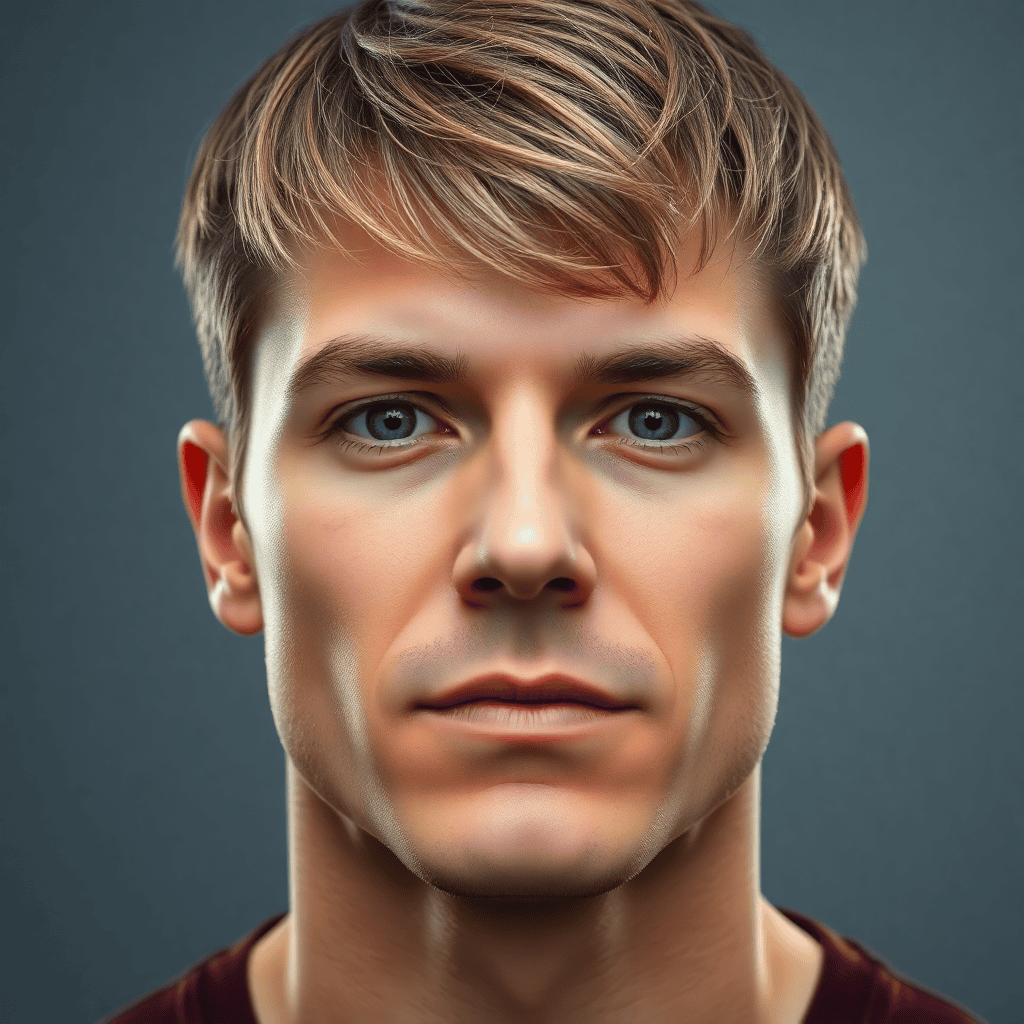
The top is left close to two and a half inches, with layered strands brushed smoothly toward the forehead. Texture appears mainly at the ends rather than throughout the roots, and the sides narrow through a soft taper that preserves coverage around the temples.
This controlled variation suits men who want easy hairstyles for men without an overly rugged finish. It works with straight or fine hair and can help manage a stubborn crown by following its natural growth direction. Ask for a soft, feathered fringe and no exposed skin around the ears. Use a vent brush or fingers while blow-drying forward, then add a light cream to maintain movement without creating stiff separated chunks.
15. Side-Swept Textured Crop With Low Taper
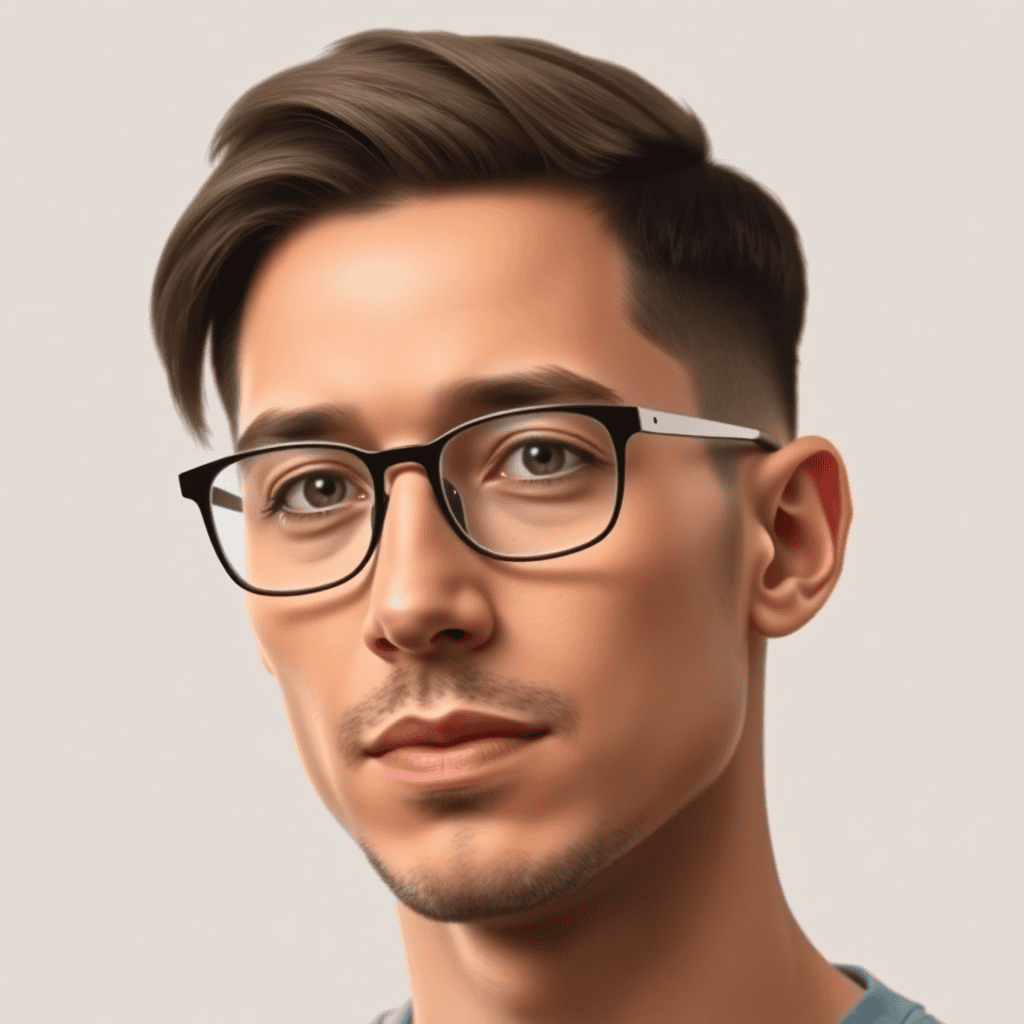
The top remains about two and a half inches long, with short internal layers directed diagonally from one side of the crown toward the opposite temple. A low taper cleans the sideburns and neckline, while the fringe sweeps across the forehead in separated, slightly raised pieces.
The diagonal movement can reduce the width of a round or chubby face and gives the crop more structure than forward-only styling. It also works among haircuts for men with glasses because the fringe can be positioned above the frames. Ask the barber to preserve extra length on the side you plan to sweep. A dryer creates the direction; lightweight clay keeps the ends apart.
16. Wavy Textured Crop With Low Skin Fade
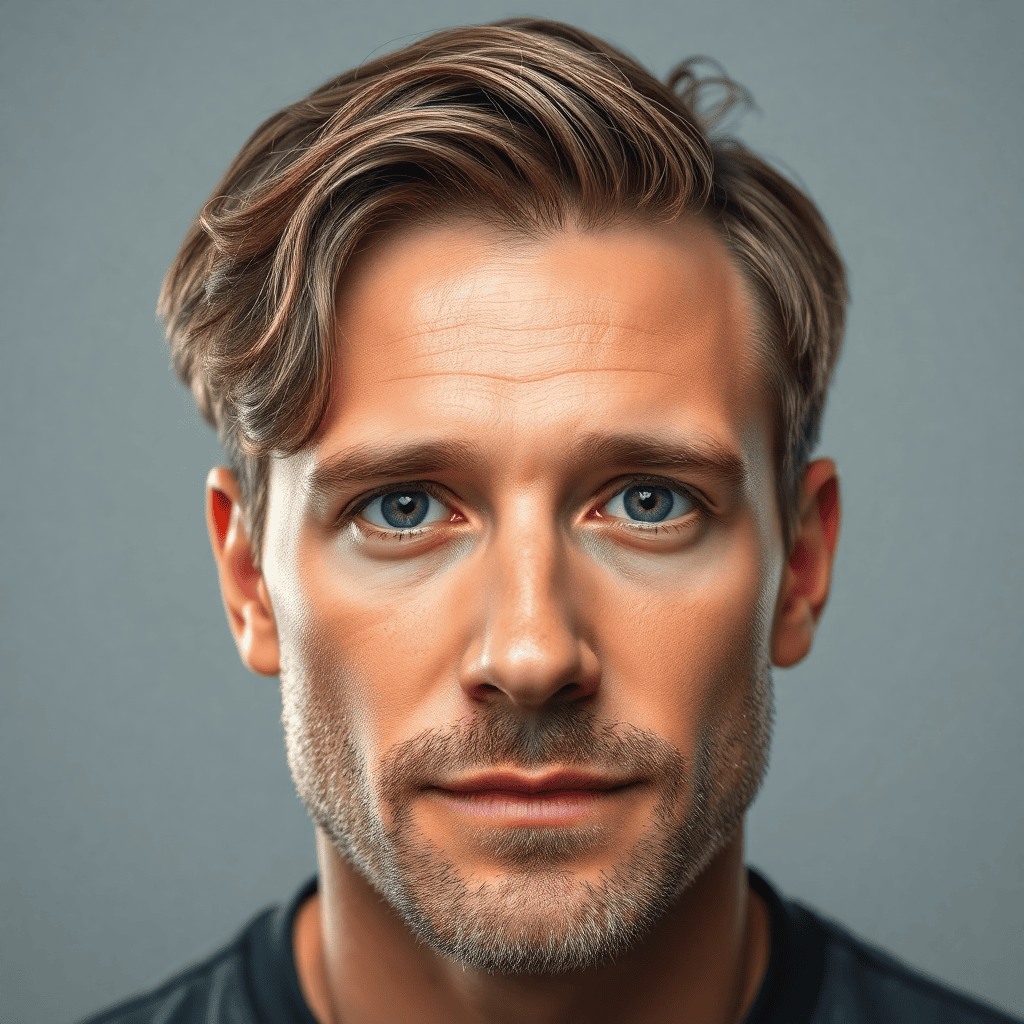
Natural waves cover the two- to three-inch top, moving forward in loose bends rather than straight spikes. A low skin fade creates a clean band around the ears and neckline, while the front falls into irregular curved pieces above the forehead.
This is one of the most adaptable haircuts for wavy hair men because the layers expose movement without allowing the sides to expand. Ask the barber to cut the top close to its dry shape, since waves contract after moisture leaves. Apply a light curl cream or matte paste while the hair is damp, then allow it to air-dry. Excessive brushing can turn the defined bends into broad, fluffy volume.
17. Curly Textured Crop With Temple Fade
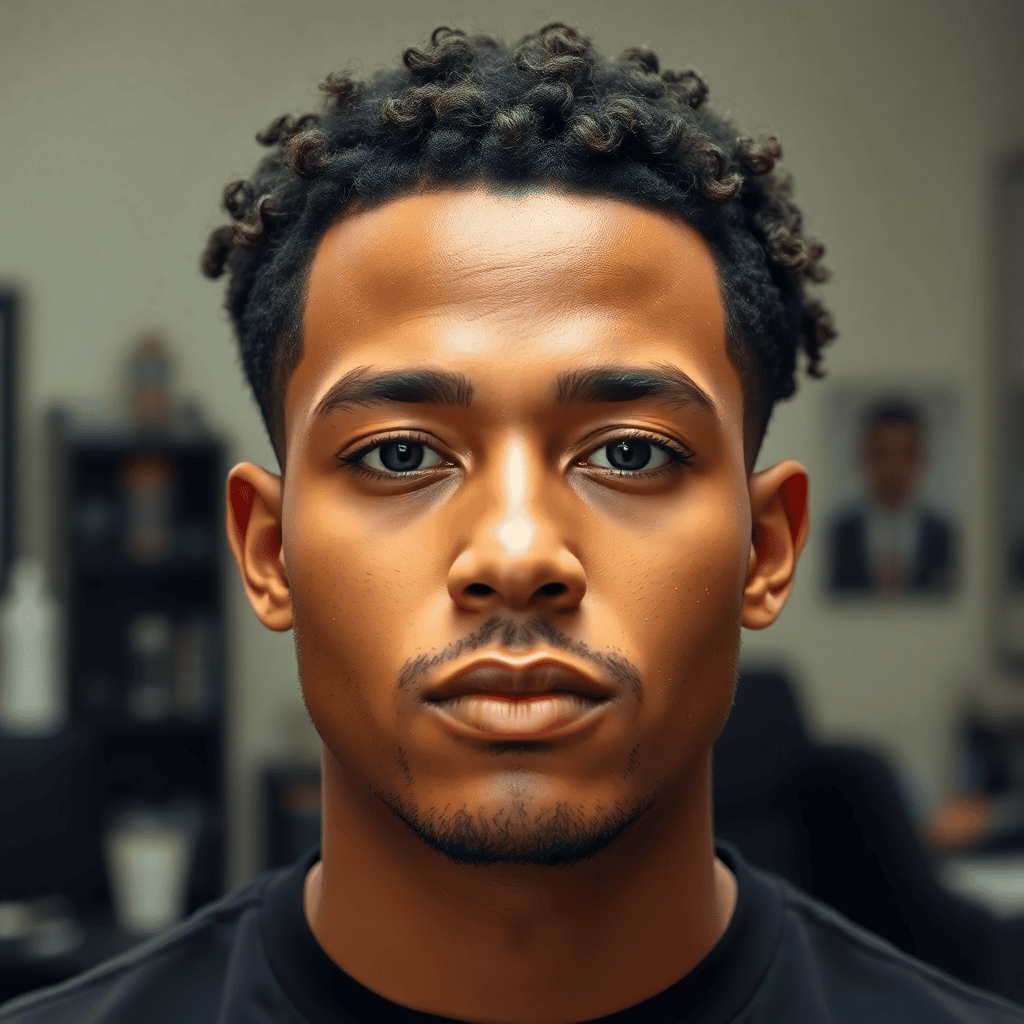
The top keeps two to three inches of compact curls, shaped so they lean forward while retaining visible coils across the crown. A temple fade removes hair around the sideburns and front corners, while the remaining sides stay short and softly blended into the curls.
The localized fade preserves curl density and avoids the top-heavy appearance that a full skin fade can create. It suits many haircuts for curly hair men, especially when the curls are consistent but prone to spreading at the sides. Ask the barber to shape the top while dry or lightly damp. Work curl cream through the hair with open fingers, then leave the pattern alone as it sets.
18. Coily Textured Crop With Sharp Lineup
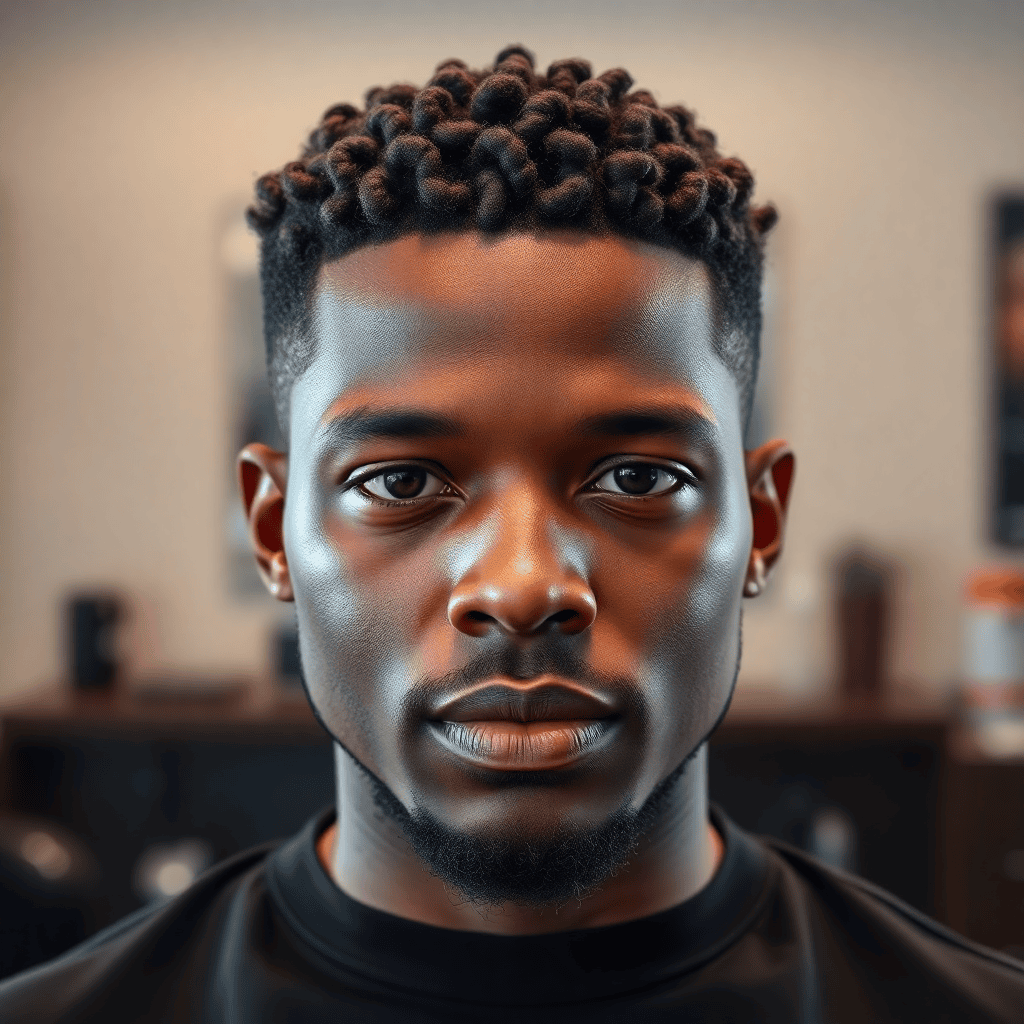
The top is shaped into a compact field of short coils measuring roughly one and a half to two inches. The sides fade from skin to dark stubble, while the forehead and temple edges form a crisp lineup that frames the natural coiled texture.
This option works especially well among haircuts for Black men who want a clean outline without flattening their natural pattern. Square and oval faces can carry the angular hairline comfortably. Ask the barber not to push the front edge backward while creating the lineup. A curl sponge can add separation across the top, but gentle circular movement is enough. Heavy pressure may disturb the shape and irritate the scalp.
19. Thick Layered Crop With Mid Fade
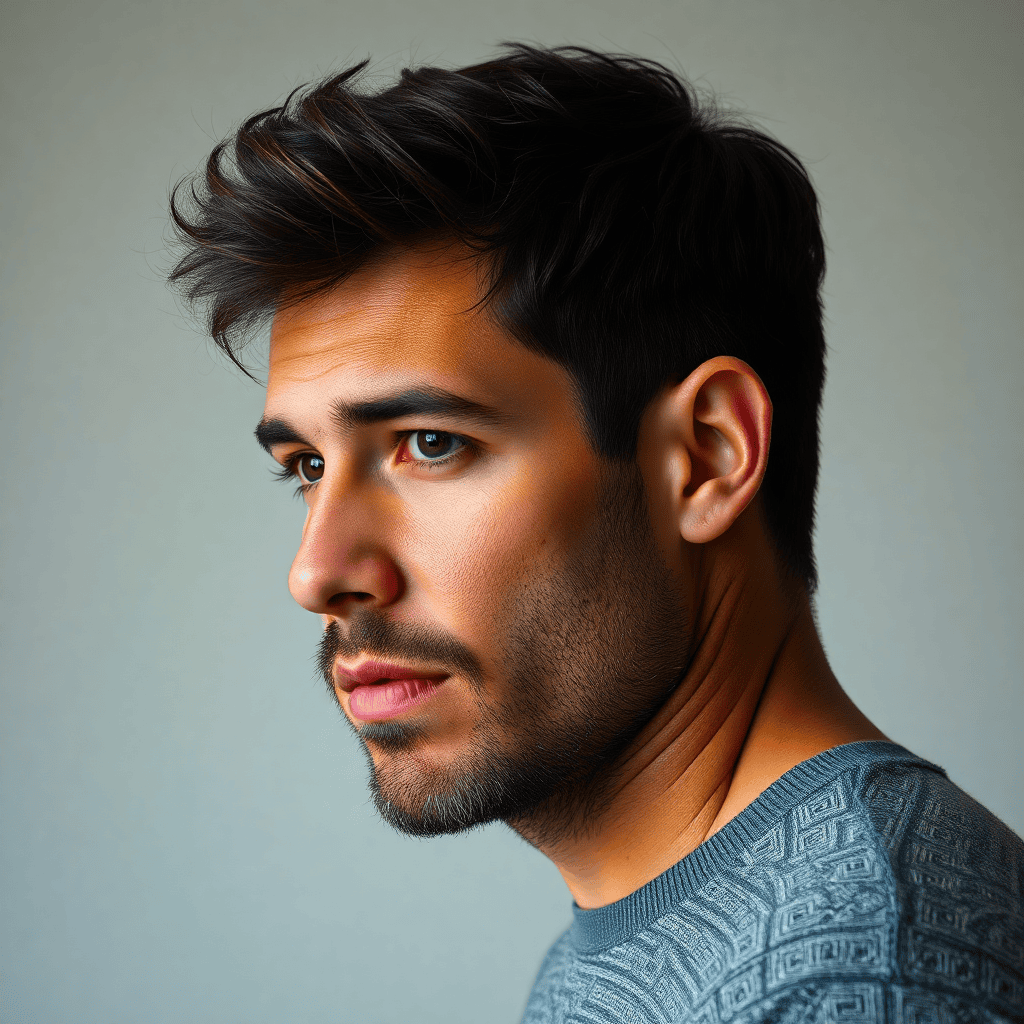
The top is left about two and a half inches long and heavily point-cut to form thick, separated sections. Hair moves forward from the crown with slight upward lift near the front, while a mid fade removes dense growth from the sides and creates a clean silhouette.
This variation is built for haircuts for thick hair men because the internal layers reduce weight without shortening the top too aggressively. Ask the barber to debulk beneath the surface rather than thinning every end. That keeps the crop from turning fuzzy after a few weeks. Blow-dry in sections, then use a firm matte clay only where added control is needed, especially around the front and crown.
20. Airy Textured Crop for Fine Hair
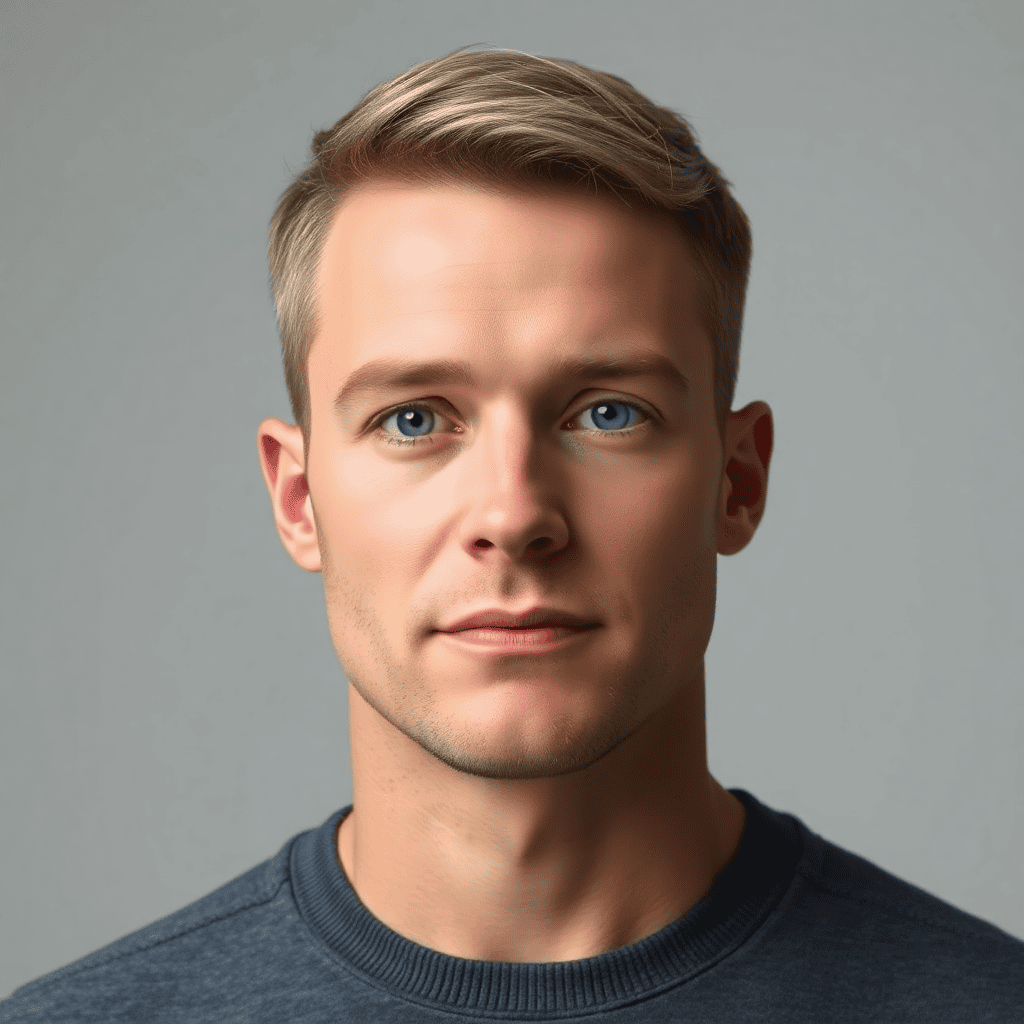
The top measures around two to two and a half inches with light, shallow layers that create space between the strands. The hair is directed forward and slightly upward, while the sides stay short through a low taper that avoids exposing too much scalp.
For haircuts for fine hair men, leaving some density is often more useful than aggressive thinning. This version adds movement without demanding hard separation. Ask the barber to use point cutting sparingly and preserve weight near the front. Blow-dry from below using low heat, then add texture powder at the roots. Heavy wax can collapse the airy shape and make individual scalp areas more noticeable.
21. Forward Textured Crop for a Receding Hairline
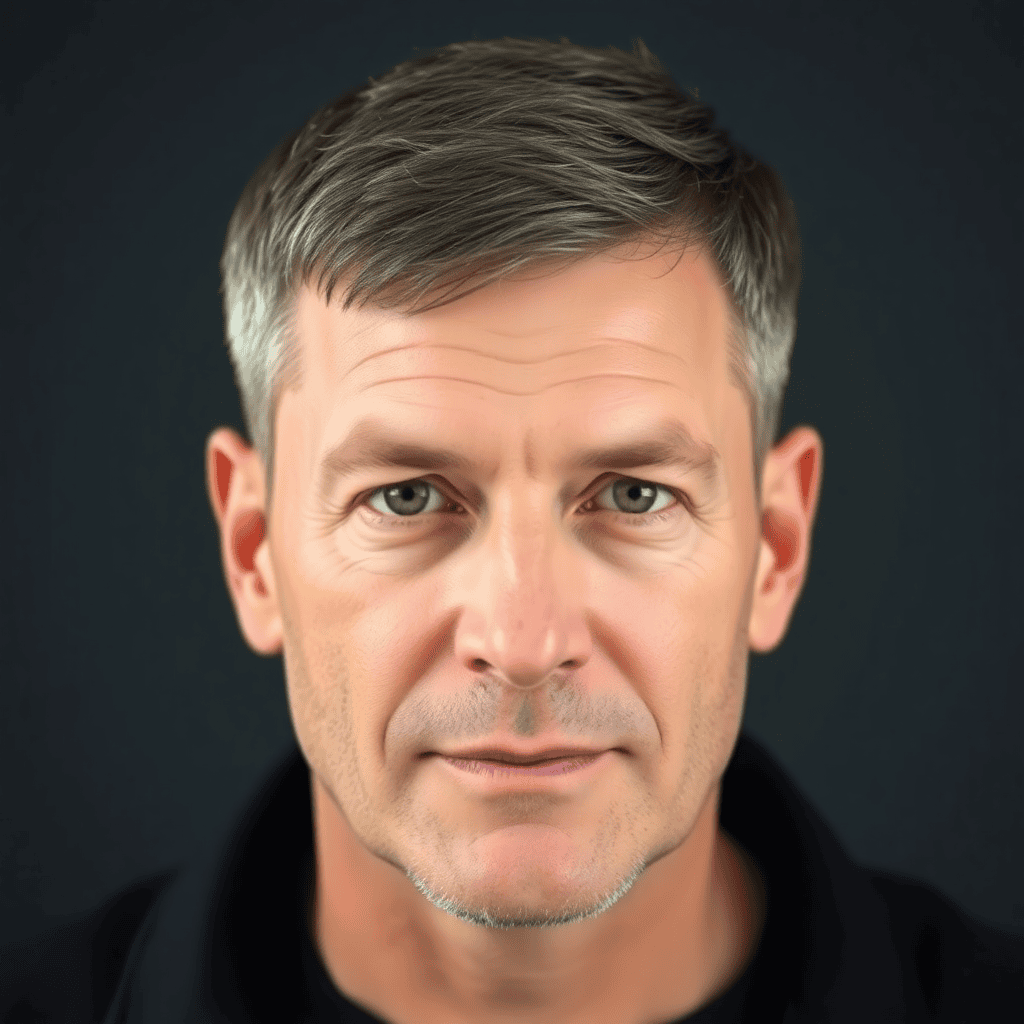
The top remains about two inches long and is layered toward the forehead, with the front separated into short pieces that rest naturally over the temple area. The sides use a low or mid fade, while the hairline stays soft rather than carved into an artificial straight edge.
Forward movement can reduce the contrast between thicker central hair and lighter corners. It will not hide every hairline, but it often creates a more balanced frame than a slicked-back style. Ask the barber to avoid cutting the fringe too thin. Dry it from the crown forward and use a light matte product. A rigid lineup may reveal more recession as the cut grows.
22. Textured Crop for a Widow’s Peak
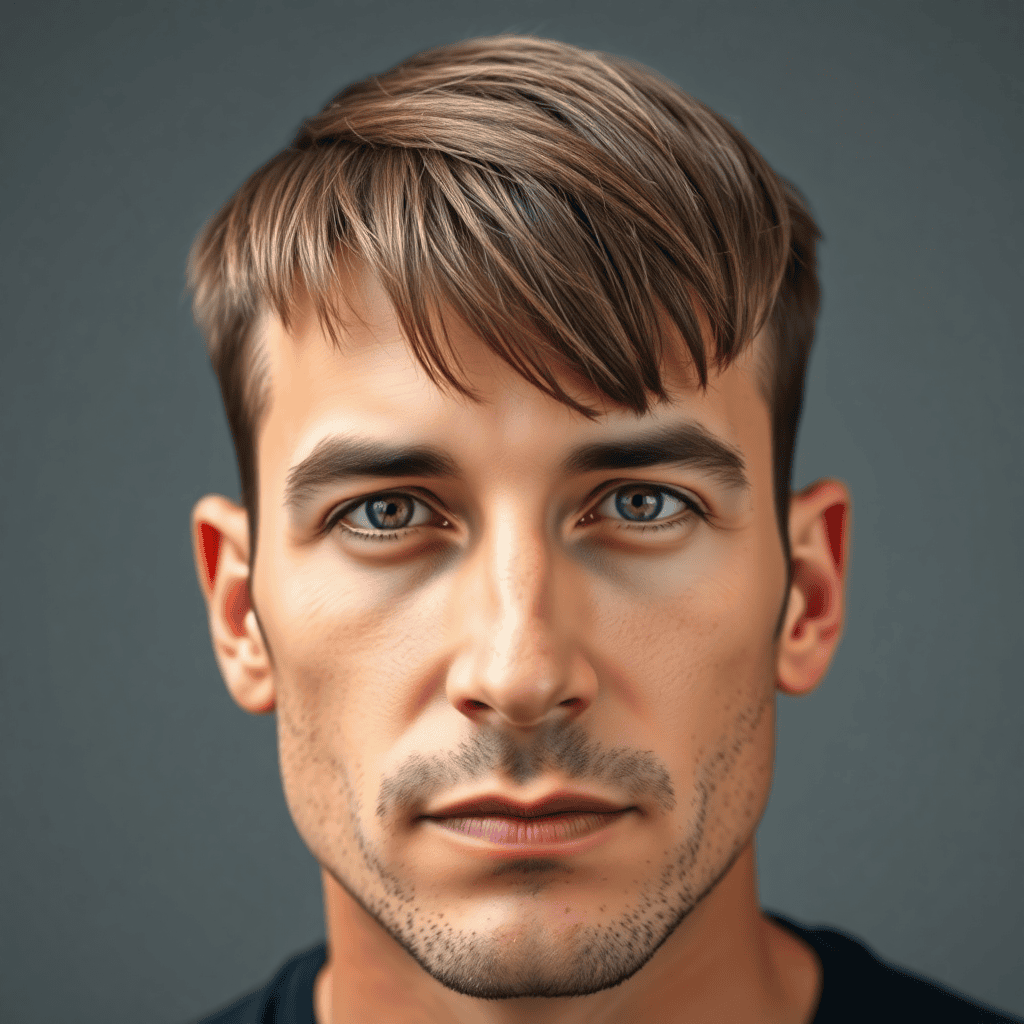
The top reaches two to two and a half inches, with layers directed diagonally forward from both sides of the crown. The center fringe breaks around the natural point of the hairline, while the sides taper cleanly without removing all density at the temples.
This shape works with haircuts for men with widows peak features because it includes the center point instead of trying to cover it with a straight artificial fringe. Ask the barber to leave the middle slightly longer and texture around it. Style the front in two loose directions so the hairline appears intentional. A low-shine paste gives enough control without drawing attention through glossy reflection.
23. Disconnected Textured Crop With Undercut Sides
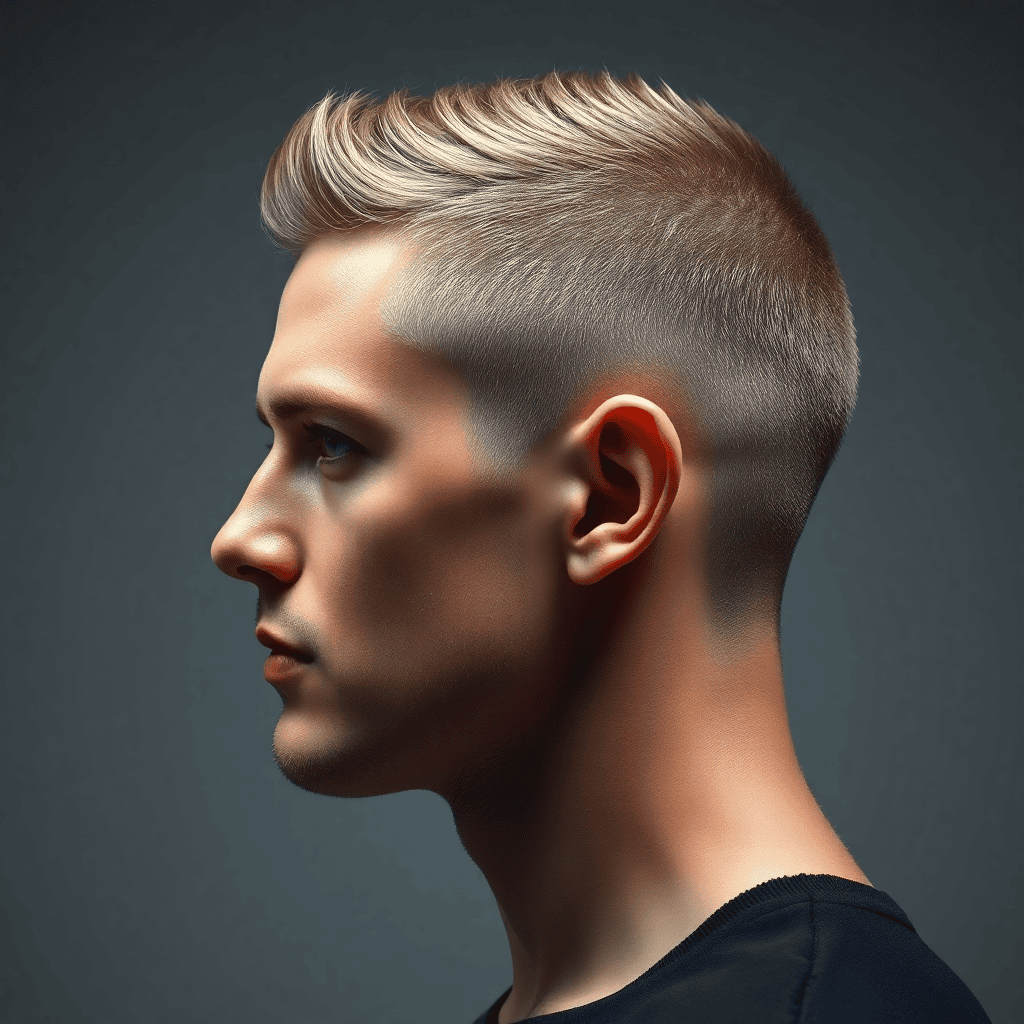
The top is kept around three inches and cut into thick jagged layers that fall forward and slightly to one side. The sides are clipped short with a visible disconnection beneath the longer top, while the temples and neckline receive clean, tight edging.
The abrupt length change gives this crop a bolder outline than blended barbershop haircuts for men. Dense straight or wavy hair supports the weight best. Ask the barber to preserve the corner where the long top meets the short side rather than blending it away. Styling takes more effort because the top can separate into large sections. A dryer and medium-hold matte paste help maintain the intended direction.
24. Long Textured Crop With Shaggy Fringe
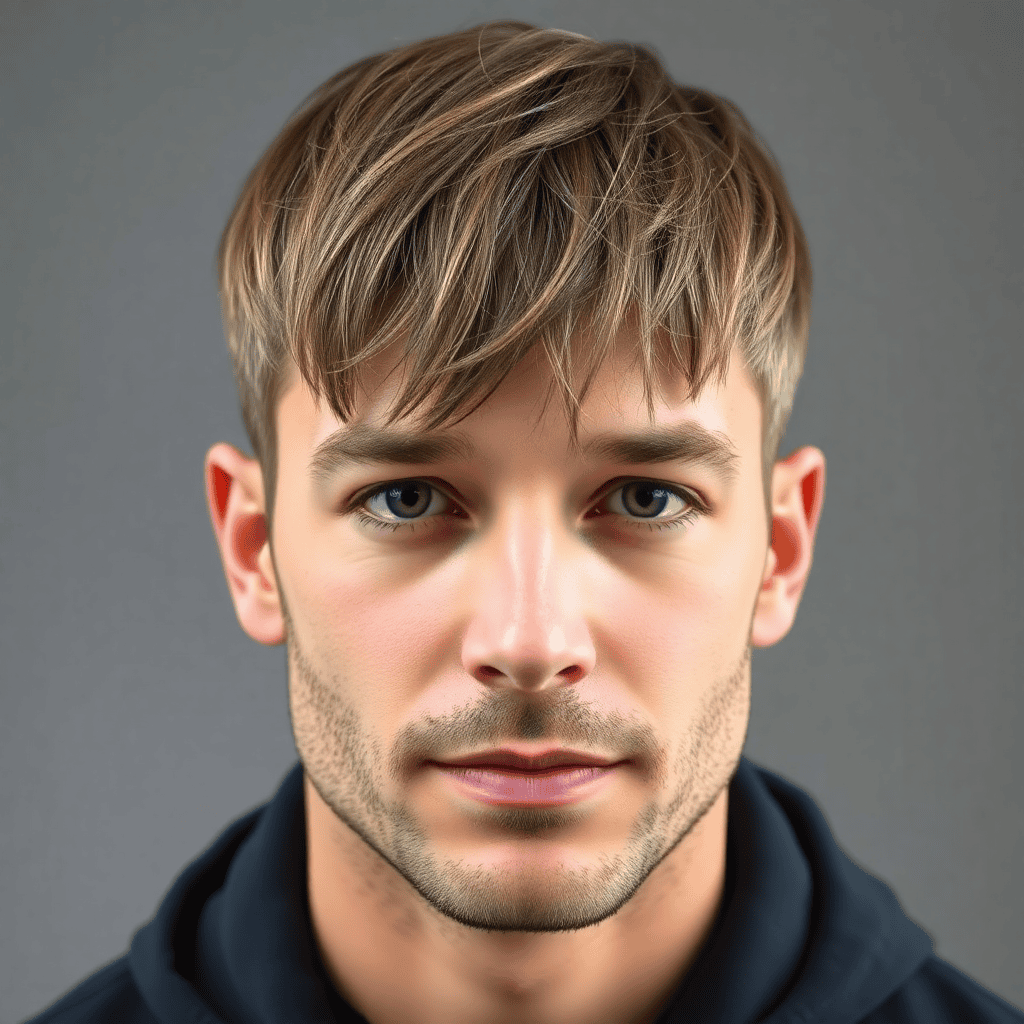
The top extends to three or four inches, with broken layers moving forward from the crown and falling into a loose fringe near the eyebrows. The sides remain scissor-cut and moderately short, while the ears are partly exposed and the neckline stays softly tapered.
This is a bridge between short crops and medium length hairstyles men can grow without entering awkward, shapeless territory. It suits wavy or dense straight hair but may overwhelm a small face if the fringe becomes too heavy. Ask for internal layering and a lighter perimeter around the front. Sea salt spray can bring out movement, although dry hair may respond better to a soft styling cream.
25. Textured Crop Mullet With Tapered Temples
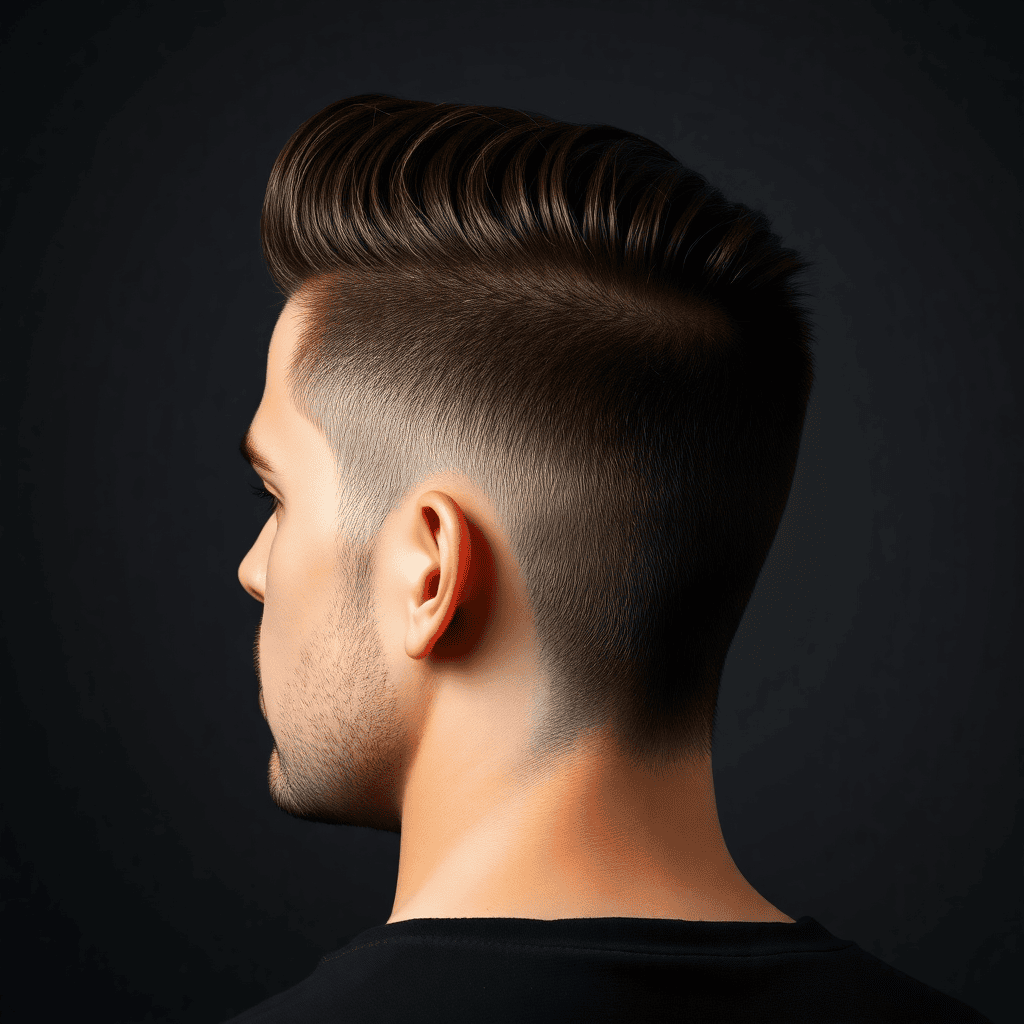
The front and crown remain two and a half to three inches long, cut into choppy pieces that move forward and upward. The temples are tightly tapered, the sides stay narrow, and the back extends past the occipital area in short feathered layers toward the upper neck.
This niche hybrid combines a familiar cropped front with a restrained modern mullet outline. It works best for wavy, curly, or thick straight hair and suits men comfortable with visible shape at the back. Tell the barber you want a gradual extension rather than a long disconnected tail. Texture spray can support movement, but the back should remain soft enough to settle naturally instead of forming stiff spikes.
Conclusion
Choosing among these cuts starts with three honest questions: How much natural texture does your hair have, how often will you return to the barber, and where do you want the visual weight to sit? Round faces often benefit from some height, while longer faces usually look more balanced with softer sides and a forward fringe. Thick hair can support deep separation, but fine hair tends to look fuller with lighter layering and less aggressive product.
Fade height also changes the character of a textured crop haircut. Skin fades produce a sharper result and need frequent cleanup. Tapers and scissor-cut sides grow out more quietly, making them useful for office settings or men who prefer longer gaps between appointments.
Before visiting the barbershop, save two or three reference images that show the front, side, and back. Choose examples with a hair type close to yours, then discuss which details are realistic. A good crop is not defined by how closely it follows a trend; it is defined by how naturally its lines work with the head beneath it.
Frequently Asked Questions
1. Is a textured crop a good haircut for round face men?
Added height and shorter sides can make a round face appear longer. Choose a crop with an elevated front rather than a heavy flat fringe. A low or mid fade can remove width near the cheeks without making the upper head look too narrow.
2. Which textured crop suits an oval face?
Most crop variations work with an oval face because the proportions are already balanced. Choose based on hair type and maintenance preferences. A low taper with a soft fringe looks understated, while a high fade creates a sharper and more dramatic outline.
3. Does a textured crop work as a haircut for square face men?
A textured top can soften the straight lines of a square face while still complementing a strong jaw. Low fades and rounded fringe edges produce a balanced result. Avoid an extremely boxy hairline if you want the face to appear less angular.
4. Can a crop balance a long face?
Keep some fullness around the sides and direct the fringe toward the forehead. High skin fades combined with tall styling can make the face appear longer. A scissor-cut crop or low taper usually creates better horizontal balance.
5. Which crop is suitable as a haircut for chubby face men?
Choose moderate height at the front, controlled texture through the crown, and a mid fade that reduces side bulk. Avoid a wide, heavy fringe covering the entire forehead because it may visually shorten the face and emphasize its width.
6. Is a textured crop a good haircut for big forehead men?
A forward fringe can cover part of the forehead and change its visible proportions. Broken or side-swept pieces often look softer than a thick straight line. The barber should set the fringe length after considering how much the hair lifts when dry.
7. Which textured crop works with glasses?
A side-swept or short broken fringe usually stays clear of the frames. Keep the temple area neat so the arms of the glasses sit comfortably. Bring your everyday glasses to the appointment so the barber can check the relationship between the fade and frames.
8. Are textured crops good haircuts for straight hair men?
Straight hair shows choppy separation clearly and responds well to point cutting. Fine straight hair needs lighter layers, while thick straight hair may need internal weight removal. Matte paste, clay, or texture powder can stop the top from lying flat.
9. How should wavy hair be cut into a textured crop?
The barber should follow the natural bends and check the final length as the hair dries. Over-thinning can create frizz or weak ends. A longer top with a low fade often gives the waves enough room to form without widening the sides.
10. Can curly hair men wear a cropped fringe?
Short curls can form a rounded or irregular fringe when shaped toward the forehead. The barber should account for shrinkage before setting the length. Curl cream or a lightweight styling product can maintain separation without making the curls stiff.
11. Can coily hair hold a textured crop shape?
Coily hair creates natural texture without needing heavy styling. A shaped top, temple fade, and careful lineup can produce a clear crop outline. The exact result depends on coil length, density, growth direction, and how much definition the wearer prefers.
12. What type of crop works for thick hair?
Deep point cutting and internal weight removal help thick hair form separated sections. A mid fade can reduce side bulk, while a two- to three-inch top preserves movement. Avoid thinning every end, since that may produce a fuzzy surface as the hair grows.
13. Are textured crops useful haircuts for thin hair men?
Short forward layers can make thin hair appear more compact by reducing wide partings. Keep the sides relatively short and avoid removing too much density from the top. A light matte powder usually adds shape without joining the strands into shiny groups.
14. How can a crop handle a strong cowlick?
Work with the growth pattern rather than forcing every strand in the opposite direction. The barber may leave the cowlick area slightly longer or shorten it enough to reduce lift. Blow-drying from damp hair gives the best chance of controlling its direction.
15. How do I ask my barber for a textured crop?
Describe the top length, fringe shape, fade height, and preferred finish. State whether you want chunky, soft, messy, or controlled texture. Bring clear front and side reference photos because the phrase “textured crop” can describe several different shapes.
16. Which clipper guard numbers are used for cropped sides?
A number one guard leaves about one-eighth of an inch, while a number two leaves roughly one-quarter inch. Fades often combine several guards and lever positions. Ask for the visible result you want rather than relying on a single guard number.
17. What is the difference between a low, mid, and high fade?
The difference is where the shortest section begins. A low fade stays near the ears, a mid fade begins around the temples, and a high fade rises toward the upper sides. Higher placement creates stronger contrast and exposes more scalp.
18. Is a taper the same as a fade?
A taper shortens the hair mainly around the sideburns and neckline while preserving more length through the sides. A fade usually blends a larger side area and may reach bare skin. Tapers tend to grow out more softly.
19. How should I describe the fringe to a barber?
Use terms such as blunt, broken, jagged, feathered, curved, side-swept, or softly uneven. Explain where the dry fringe should sit on the forehead. A photo remains useful because different barbers may interpret descriptive words differently.
20. Should the top be cut with scissors or clippers?
Scissors allow the barber to create varied lengths, remove internal weight, and shape specific sections. Clippers can produce an even short crop quickly. Many textured styles combine clippered sides with a scissor-cut top for greater movement.
21. Does a textured crop need a sharp lineup?
A lineup is optional. Crisp edges suit coily crops and high-contrast fades, while a natural hairline produces a softer result. Men with receding corners may prefer gentle edging because an aggressive straight line can reveal the recession as it grows.
22. What is the best styling product for a textured crop?
Matte clay suits thick hair and strong separation. Paste gives medium control with more flexibility, while powder adds lift to fine hair. Styling cream works well for soft crops, waves, and curls that need definition without a dry finish.
23. Is hair clay better than texture powder?
Clay offers stronger control and helps thick strands remain separated. Powder creates light root lift and is often easier on fine hair. Some men apply powder first and a tiny amount of clay at the fringe, though using too much can feel dry.
24. Should I blow-dry a textured crop?
Blow-drying helps set direction, lift the roots, and control cowlicks. Use low or medium heat and guide the hair with your fingers. Men with curly or coily hair may prefer air-drying or a diffuser to preserve the natural pattern.
25. Does sea salt spray work on cropped hair?
It can add grip and highlight waves on a longer crop. Apply a small amount to damp hair and avoid soaking the roots. Frequent heavy use may leave some hair types feeling dry, so adjust the amount based on the hair’s response.
26. How do I stop a textured crop from looking greasy?
Begin with less product than you think you need and apply it after the hair is dry. Spread the product fully across the palms before touching the top. Concentrate on the middle and ends instead of pressing oily product directly onto the scalp.
27. How often should a textured crop be trimmed?
Most versions hold their intended shape for about three to six weeks. Skin fades show growth sooner, while tapers and scissor-cut sides remain presentable longer. Fringe length, hair growth, and personal neatness standards also affect the schedule.
28. How often does a skin fade need cleaning up?
A sharp skin fade may need attention every two or three weeks. Men comfortable with a softer transition can wait longer. A temple or neckline cleanup between full cuts can extend the shape without shortening the textured top.
29. Is a textured crop easy to grow out?
The layered top usually grows into a longer fringe or short messy style without major difficulty. High fades can create a noticeable difference between the top and sides. Regular blending trims help the disconnected areas meet more naturally.
30. How long does daily crop styling take?
Short, well-cut versions may need only a minute or two of finger styling. Longer or spikier crops require blow-drying and more detailed product placement. Natural waves and curls may need added drying time but less manual separation.
31. Is a crop a practical summer haircut for men?
Short sides and a controlled top can feel cooler and stay out of the eyes. Matte products tend to look cleaner than oily pomades in warm conditions. Men who spend time outdoors may also prefer enough top coverage to avoid exposing more scalp.
32. Will wearing a hat ruin a textured crop?
A fitted hat can flatten the top, especially when clay or paste has already set. Carry a small comb or reshape the hair with damp fingers. Softer crops recover more easily than tall spikes or heavily lifted fronts.
33. Can a textured crop soften a receding hairline?
Forward layers can reduce the visual gap between the front hair and recessed corners. A soft fringe usually works better than exposing the hairline through slicked-back styling. Results depend on the location and degree of recession.
34. Is a crop suitable for thinning hair at the crown?
Keeping the top short can reduce the contrast between denser and thinner areas. Texture should follow the crown’s natural direction rather than opening a visible split. Avoid wet-look products, which may group strands and expose more scalp.
35. Are textured crops appropriate hairstyles for balding men?
They may work when enough top coverage remains to create a compact forward shape. A barber can shorten the surrounding hair to reduce contrast. Men with advanced hair loss may find an even buzz cut or clean shave easier to maintain.
36. Can men over 40 wear a textured crop?
A controlled crop with a low taper or scissor-cut sides can look mature and current. Keep the fringe soft and the styling deliberate. Extreme skin contrast or tall spikes may feel less suitable in conservative workplaces, though personal style remains the main factor.
37. Which crops make good haircuts for men over 50?
Scissor-tapered crops, short Caesar-inspired cuts, and soft forward crops work well because they preserve coverage and grow out gently. Choose products that support natural movement. A hard, shiny finish can make fine or gray strands look more separated.
38. Are textured crops good haircuts for teenage guys?
They offer many styling options without requiring long hair. A low fade or messy crop can look relaxed, while a sharper high fade makes a stronger statement. School grooming rules and willingness to style the top should guide the final choice.
39. What is the difference between a crop and a Caesar cut?
A Caesar traditionally keeps the top at a more consistent short length with a small forward fringe. A modern crop often includes stronger layering, more irregular texture, and a wider choice of fades. The two styles can overlap in softer variations.
40. How is a French crop different from a textured crop?
A French crop usually has a recognizable forward fringe and a controlled top shape. “Textured crop” is a broader label that may include messy, spiky, side-swept, curly, or longer versions. Many French crops are textured, but not every textured crop follows the French shape.
41. Is a low taper crop different from a low fade crop?
A low taper shortens limited areas around the sideburns and neck. A low fade blends the short section around more of the head and may reach skin. The taper keeps greater side fullness and often appears less severe as it grows.
42. Is a skin fade difficult to maintain?
The top may remain easy, but the exposed side transition loses its sharp appearance quickly. Home maintenance can create uneven lines if the guards are used incorrectly. Many men allow the fade to soften naturally until their next professional appointment.
43. Can a textured crop be worn in a corporate workplace?
Choose a moderate top length, controlled fringe, and low taper or subtle fade. Soft matte styling usually appears more polished than dramatic spikes. Business haircuts for men do not need to look old-fashioned, but the outline should remain tidy.
44. Can I style a textured crop for a formal event?
Direct the top into cleaner, larger sections and reduce the messy finish. A light paste or cream can create controlled texture without hard shine. Clean edges, a fresh neckline, and a neatly shaped beard also make the cut appear more formal.
45. Which textured crops work with beards?
Low fades and temple tapers can create a clear transition into short or medium beards. Longer beards often pair well with compact tops that prevent the head from looking overloaded. Ask the barber to connect or disconnect the sideburn based on the beard shape.
46. Is the textured crop still among men’s hairstyles 2026 trends?
Current grooming coverage continues to feature textured crops because they can be adapted through fringe length, natural movement, taper placement, and fade height. Trend status should remain secondary to whether the cut matches your density, face proportions, and routine.
47. Is a textured crop a low-maintenance men’s haircut?
Short crops with soft tapers can be easy to wash and style. Versions with skin fades, long fringes, or carefully separated spikes need more attention. Maintenance depends as much on the chosen details as it does on the basic haircut name.
48. What is the best hairstyle for face shape when choosing a crop?
Balance the face rather than following one fixed rule. Add modest height to round faces, keep side fullness for long faces, soften square features with irregular texture, and use fringe direction to manage forehead width or asymmetry.
49. Can highlights make a textured crop more visible?
Subtle color differences can make separated layers easier to see because light reflects from the strands at different levels. Strong contrast may require more upkeep as the hair grows. Discuss placement and hair condition with a trained color professional.
50. How should I choose between these 25 textured crop ideas?
Select two or three options that match your natural hair pattern first. Compare their fade height, fringe length, workplace suitability, and styling needs. Take the references to your barber and ask which shape can be reproduced consistently on your head.
Modern Haircuts and Hairstyles for Men
Explore flattering cuts for different hair types, face shapes, lengths, textures, and personal styles.