
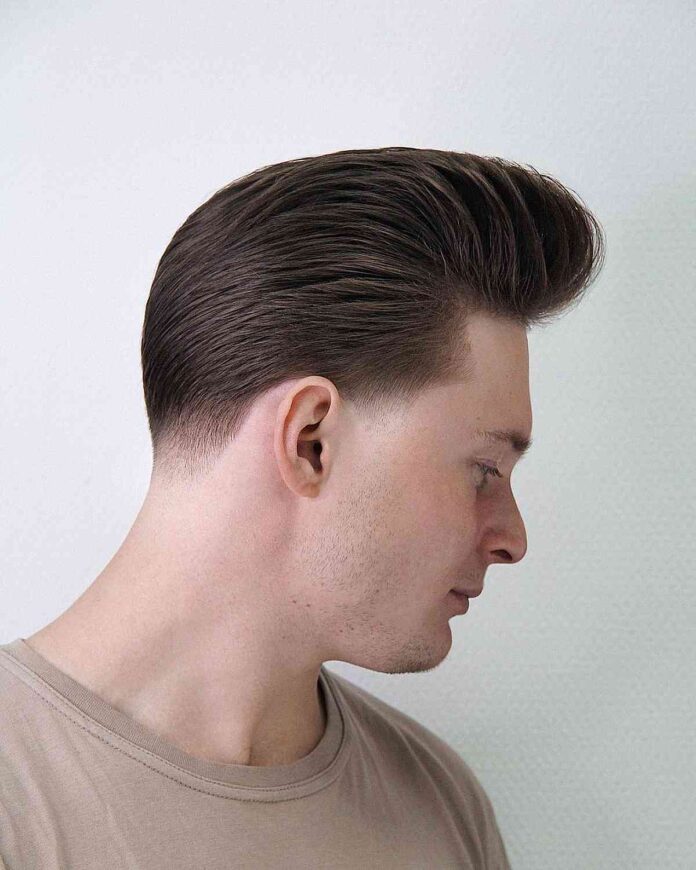
The strongest pompadour hairstyle ideas range from the clean classic pompadour and low-fade version to looser textured, curly, and modern disconnected shapes. If you want a safe starting point, the classic, low-fade, short-textured, and side-part pompadours are the easiest choices to adapt to everyday clothes, work settings, and different face shapes. These 25 options give you room to go subtle or dramatic.
A pompadour lives or dies by proportion. Height gets attention, but the relationship between the top, temples, sides, and back decides whether the haircut looks deliberate or simply overstyled.
| Quick Pick | Best For | Overall Shape | Upkeep |
|---|---|---|---|
| Classic Pompadour | Traditional style | Smooth and swept high | Medium |
| Low-Fade Pompadour | Office-to-weekend wear | Clean sides, controlled volume | Medium |
| Short Textured Pompadour | Easy daily styling | Compact and separated | Low |
| Skin-Fade Pompadour | Sharp modern looks | Strong top-to-side contrast | High |
| Side-Part Pompadour | Smart dressing | Structured and directional | Medium |
| Wavy Pompadour | Natural movement | Loose, dimensional volume | Medium |
| Curly Pompadour | Naturally curly hair | Sculpted curls on top | Medium |
| Messy Pompadour | Casual wardrobes | Broken, relaxed texture | Low |
| Disconnected Pompadour | Statement cuts | Dramatic contrast | High |
| Long Pompadour | Maximum presence | Tall, flowing silhouette | High |
Classic Pompadour Hairstyle Ideas
Classic pompadour hairstyle ideas depend less on aggressive fading and more on controlled silhouette. These are the cuts to consider when you want the recognizable swept-back shape without turning every detail into a trend.
1. Classic Full Pompadour
The classic full pompadour builds a rounded wave from the front hairline before flowing backward into a smoother crown. The sides stay noticeably shorter without disappearing into bare skin, which keeps the silhouette balanced. From the side, the front should look lifted rather than vertically spiked.
Ask your barber for “scissor length through the top with enough front length to sweep back, tapered sides, and a connected classic finish.” Straight or slightly wavy medium-to-thick hair usually makes the shape easier to control. The drawback is morning styling time because the clean surface quickly shows uneven sections.
2. Low-Fade Pompadour
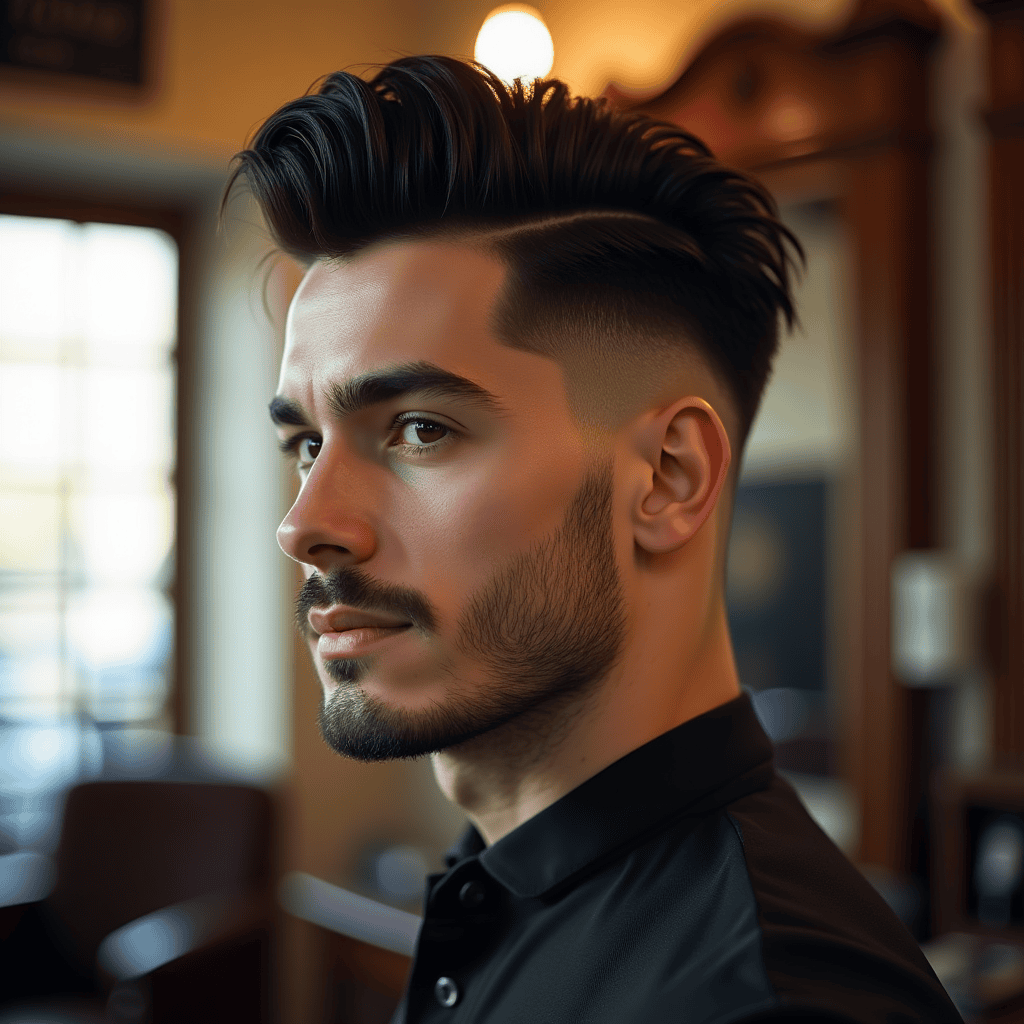
A low-fade pompadour keeps the dramatic part of the haircut above the temples while quietly cleaning up the lower sides. The transition begins near the ears, leaving enough weight higher up to support the larger top. It looks particularly polished from the front because the fade doesn’t overpower the pompadour itself.
Tell your barber, “Keep the fade low and preserve some weight around the temples, with four to five inches in front for a controlled pompadour.” It suits men who want modern pompadour hairstyle ideas without an extreme contrast cut. You’ll need regular edge cleanup if you want the lower fade to stay crisp.
3. Side-Part Pompadour
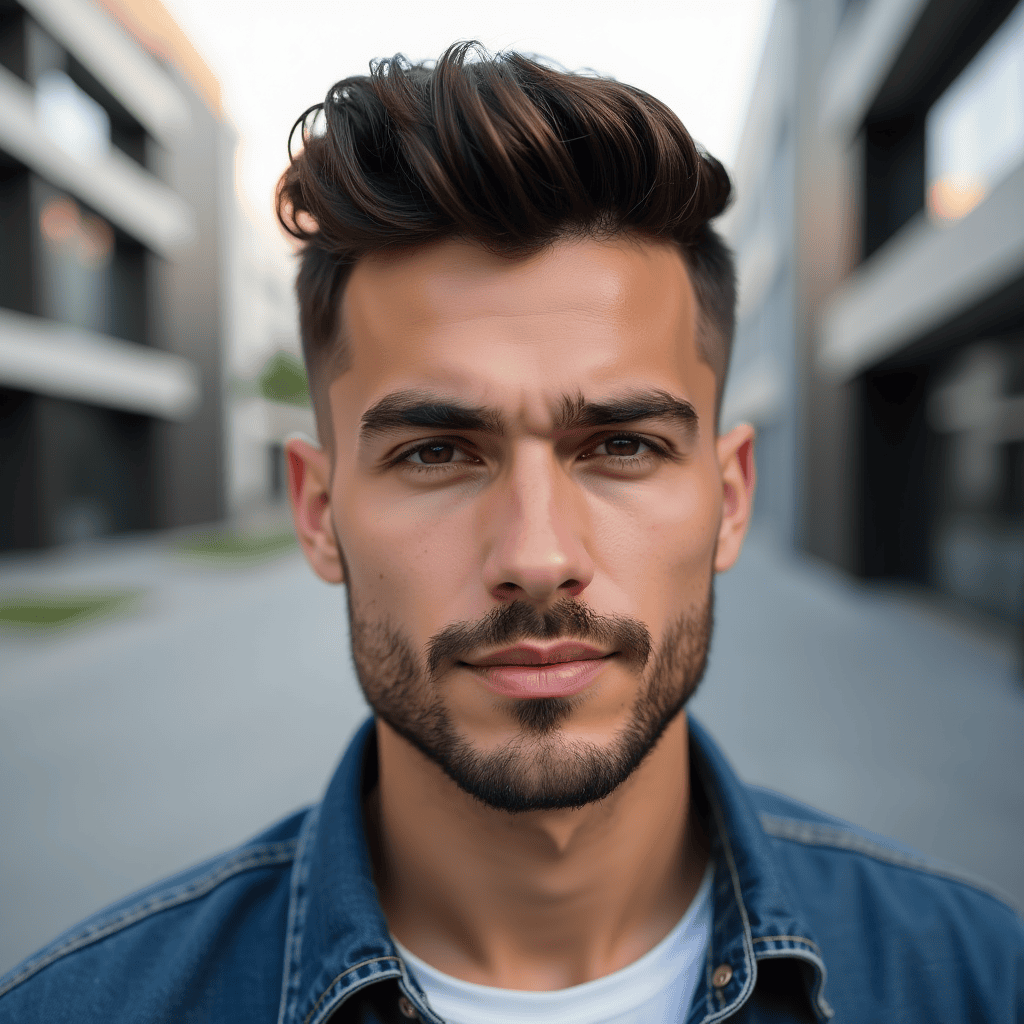
The side-part pompadour combines height with a definite directional line instead of pushing every strand straight backward. One side rises into the main wave while the opposite side sits tighter, giving the front a slightly asymmetrical profile. That small imbalance makes a formal cut feel less rigid.
Ask for “a natural side part with enough top length to build the pompadour across and back, keeping the sides neatly tapered.” This works well with suits, collared shirts, and business-casual wardrobes because the part gives the volume structure. A severe razor-hard part can make the look harsher, so skip it unless you specifically want that effect.

4. Scissor-Cut Pompadour
The scissor-cut pompadour carries more softness around the sides and back than clipper-heavy versions. Instead of a stark fade, the hair gradually shortens while retaining movement, so the top blends into the rest of the haircut. The result feels tailored rather than aggressively edged.
Tell the stylist, “Keep the whole haircut scissor-cut, remove bulk around the sides, and leave enough front length for a loose swept-back pompadour.” Men with thick hair often benefit because scissors can preserve shape while reducing unwanted weight. Its weakness is that the outline loses precision sooner than a tight clipper cut.
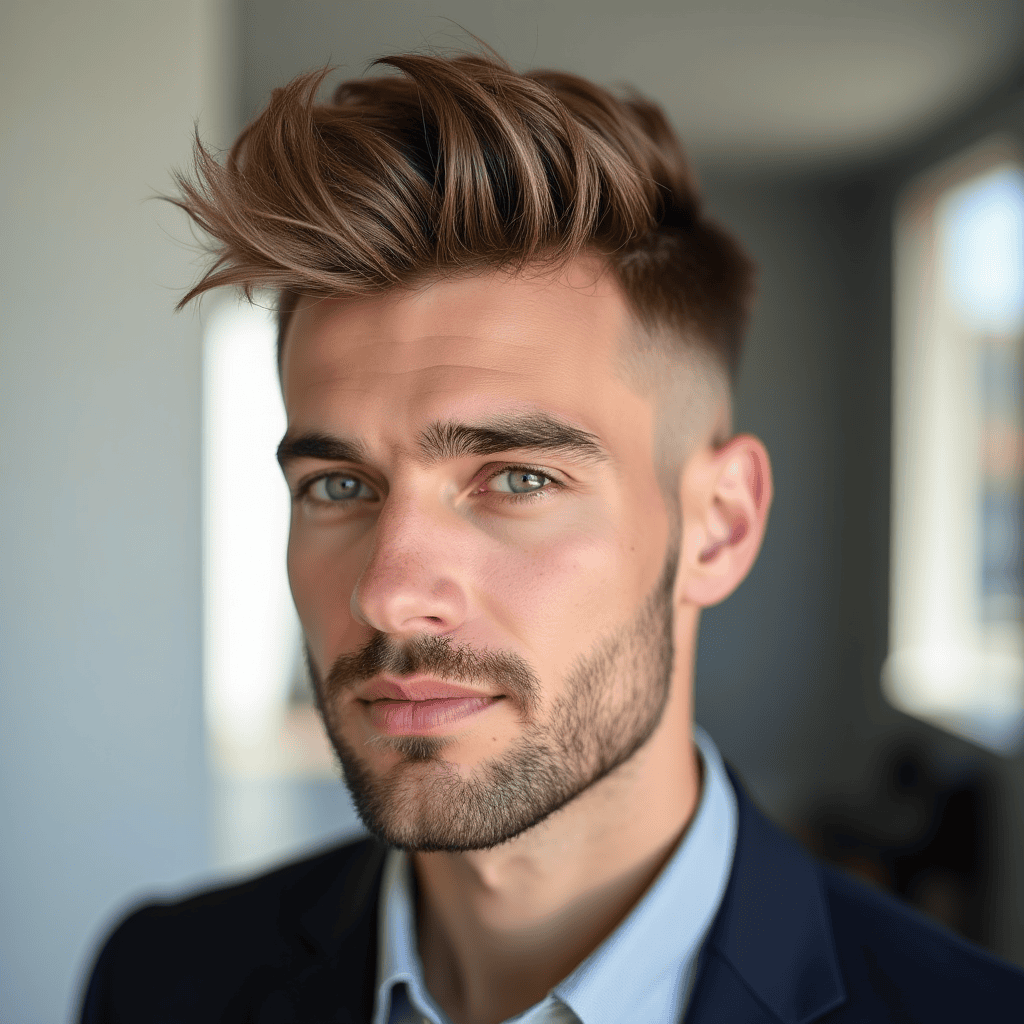
5. Gentleman’s Taper Pompadour
The gentleman’s taper pompadour narrows cleanly around the sideburns and neckline without removing much visual weight from the sides. The top stays smooth, with moderate rather than towering height at the front. Think neat contours and quiet volume instead of maximum contrast.
Ask for “a traditional taper at the sideburns and neck with connected sides and a medium-height pompadour on top.” It’s one of the easier pompadour hairstyle ideas to pair with tailoring, wedding attire, or conservative workplaces. Men wanting a dramatic barbershop transformation may find it almost too restrained.
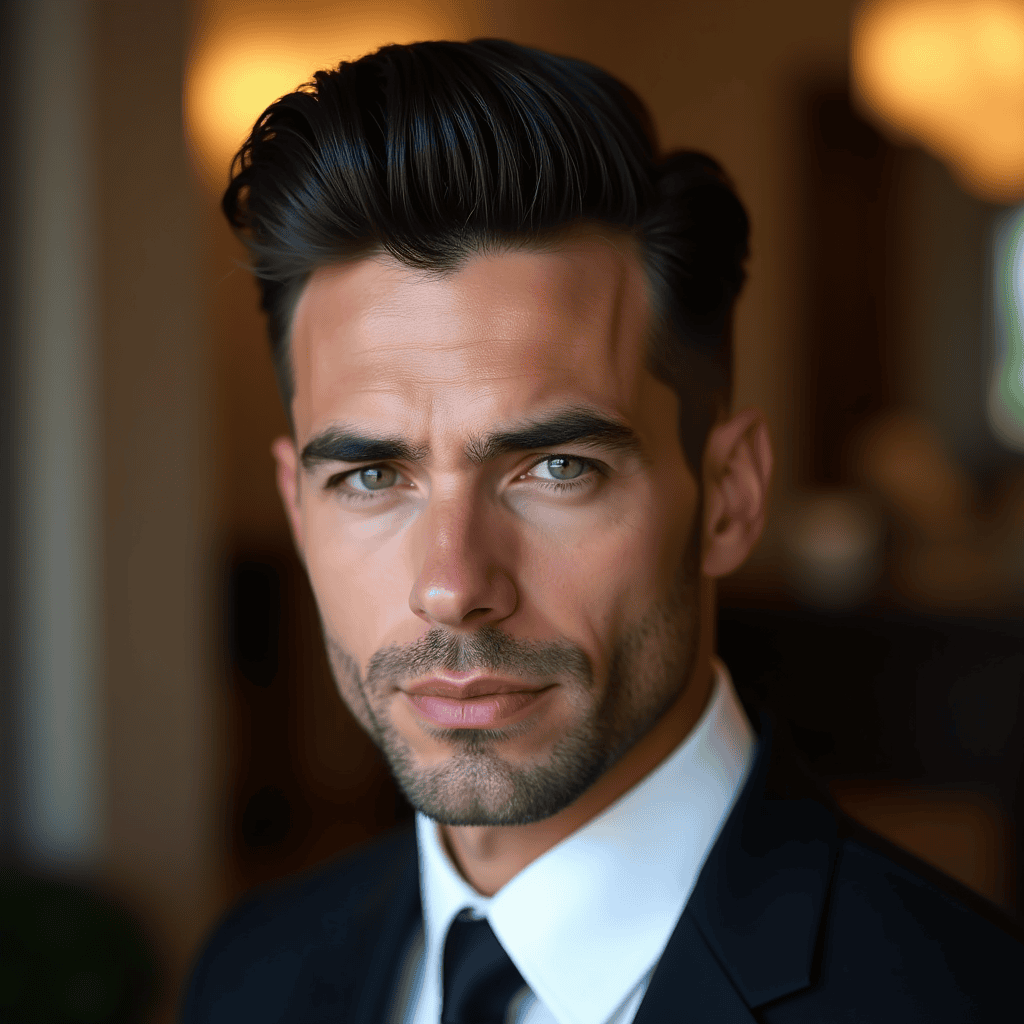
Short and Easy Pompadour Hairstyle Ideas
You don’t need five inches of hair and twenty minutes with a blow dryer to make the shape readable. Shorter pompadour hairstyle ideas keep the front visibly elevated while stripping away some of the maintenance that comes with a taller silhouette.
6. Short Textured Pompadour
A short textured pompadour sits only slightly above the forehead, with separated pieces creating depth instead of a large smooth wave. The crown remains compact, and the sides can be tapered without making the haircut look top-heavy. Matte texture suits the shorter proportions particularly well.
Ask your barber for “a short pompadour with two to three inches in front, point-cut texture through the top, and tidy tapered sides.” Fine-to-medium hair often benefits because separation can suggest more dimension than a slick finish. The tradeoff is that you won’t get the dramatic side profile associated with a full pompadour.
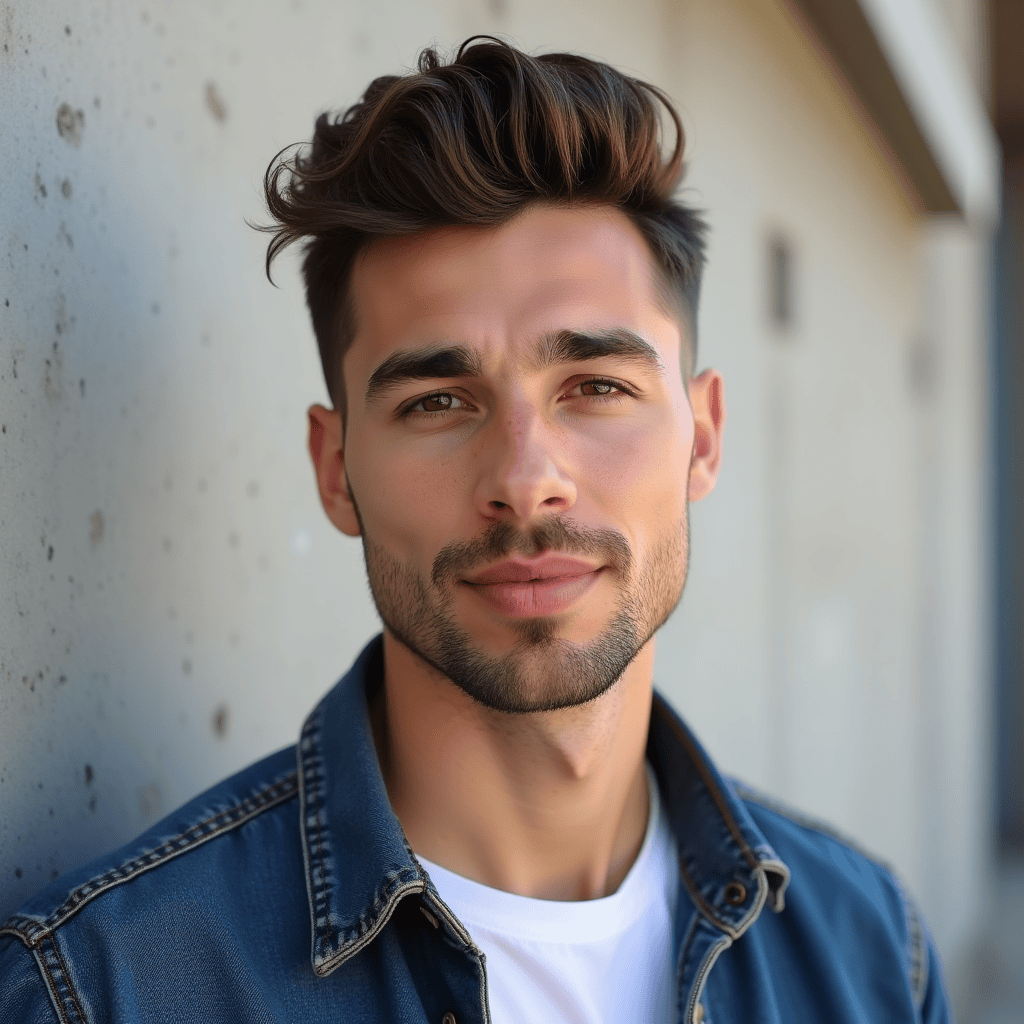
7. Short Pompadour With Mid Fade
This version raises the fade higher while keeping the pompadour compact enough for quick styling. The front forms a modest crest, and the mid fade removes bulk through the temple area. Because both features are controlled, neither overwhelms the other.
Say, “Give me a mid fade with a short textured pompadour and enough weight at the front to push up and back.” It works for men who like close sides but don’t want a long section flopping forward during the day. The fade grows visibly softer within a few weeks, so the haircut rewards frequent barber visits.
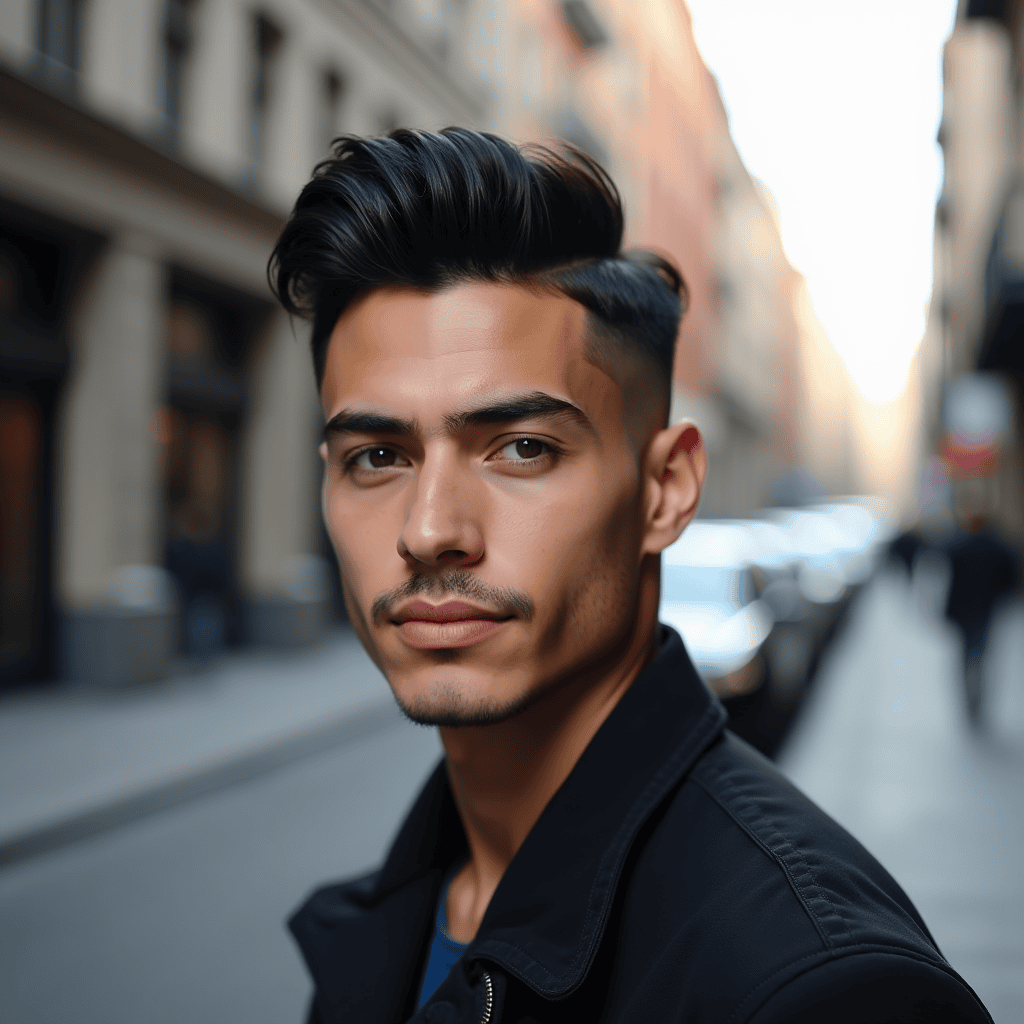
8. Mini Pompadour
The mini pompadour is almost understated enough to pass as a regular short back-and-sides until you see the front. About two inches of hair is pushed upward and slightly backward, producing a small rounded lip over the forehead. Everything behind it becomes progressively flatter.
Tell your barber, “Keep the front long enough for a small pompadour but make the rest of the top compact and easy to control.” It’s useful for beginners experimenting with pompadour hairstyle ideas or anyone who doesn’t want their haircut dominating their appearance. Coarse hair that strongly grows forward may require more styling effort than the haircut appears to demand.
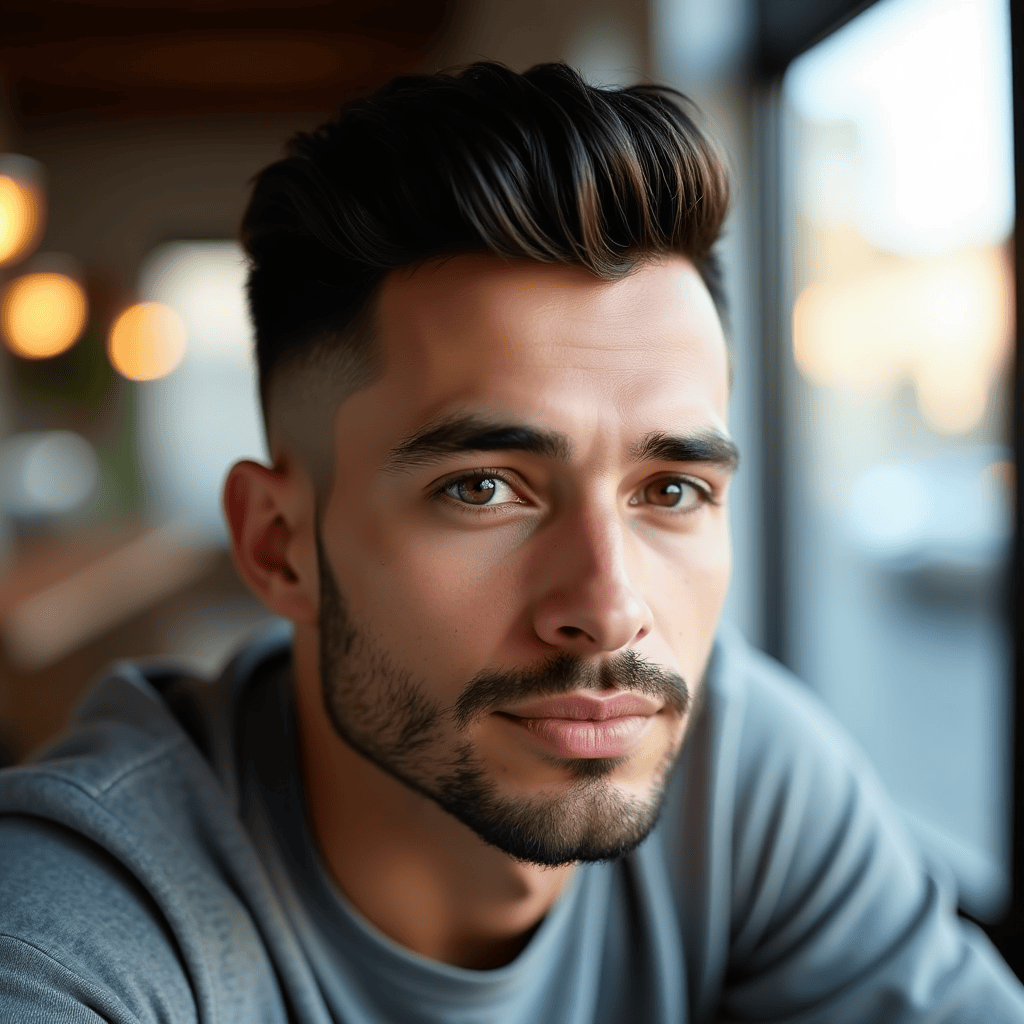
9. Crop-to-Pompadour Hybrid
This hybrid keeps the back half of the top short and textured while leaving a noticeably longer front panel. That front section rises into a small pompadour, creating a sharp change in direction without requiring long hair across the entire head. The silhouette is modern but still practical.
Ask for “a textured short top with extra length left only through the fringe so I can style it into a pompadour.” Men growing out a crop can use this as an effective transition haircut. The downside is limited styling freedom at the crown because most of your usable length remains concentrated at the front.
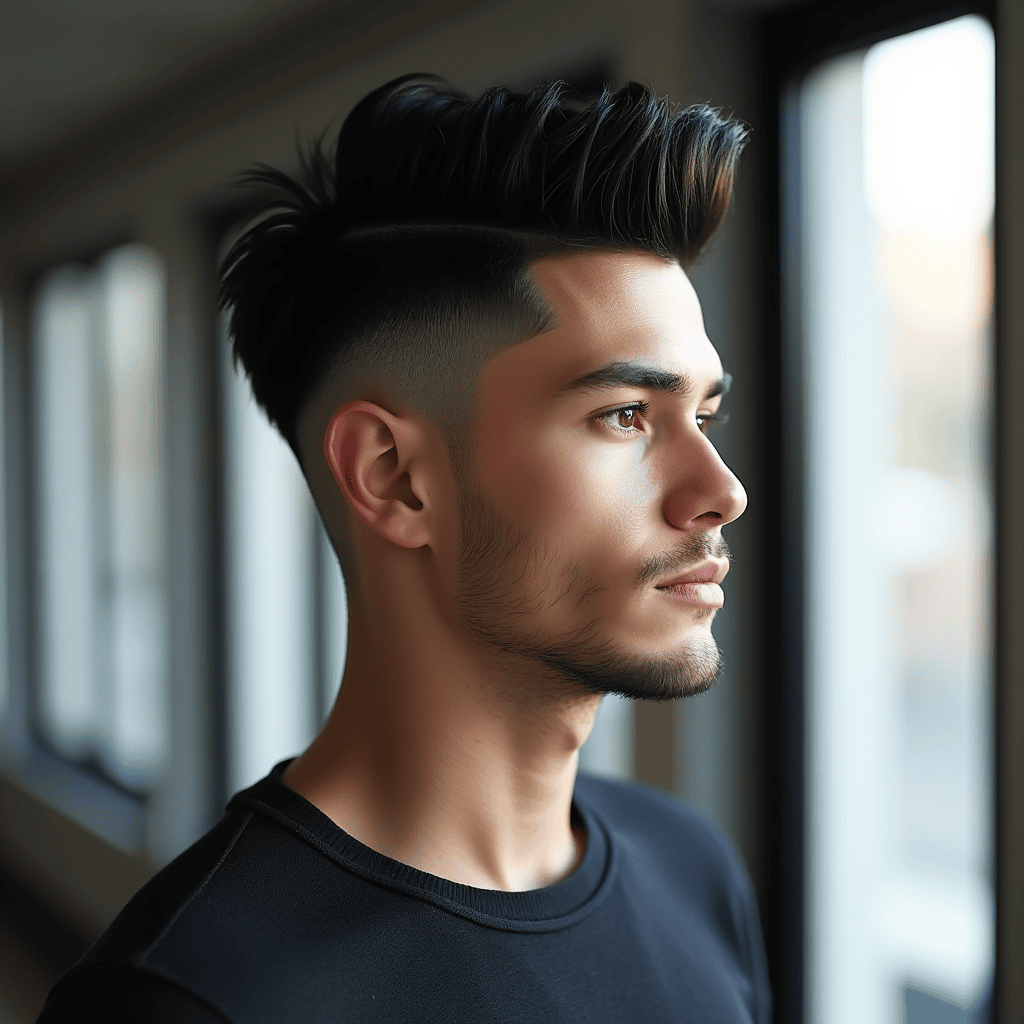
10. Low-Maintenance Natural Pompadour
The natural pompadour avoids the lacquered surface and rigid outline of highly finished versions. Hair is encouraged backward with moderate lift, allowing small separations and flyaways to remain visible. It reads more like naturally good hair than a sculpted barbershop showpiece.
Ask for “a soft pompadour that follows my natural growth pattern, with texture left in the top and easy tapered sides.” This is among the most forgiving pompadour hairstyle ideas for men who prefer finger styling over combing every strand into place. Anyone chasing a glassy vintage finish should choose a more structured version.
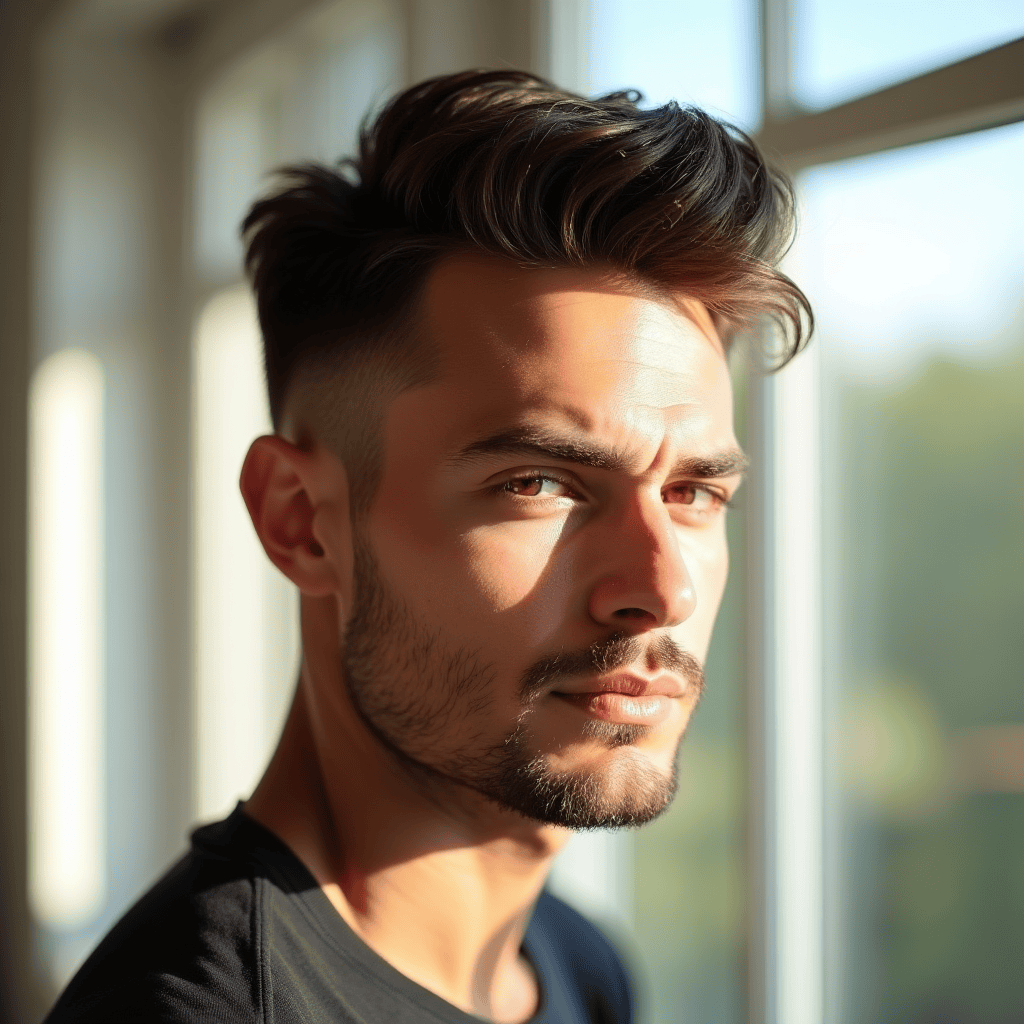
Fade and High-Contrast Pompadour Hairstyle Ideas
A fade changes the visual center of the pompadour. Removing weight from the sides makes even moderate top length appear taller, so these pompadour hairstyle ideas carry more impact without necessarily requiring a larger front section.
11. Skin-Fade Pompadour
The skin-fade pompadour creates one of the strongest contrasts in the group. Hair rises high through the front while the sides descend through progressively shorter lengths until the lower section reaches skin. That negative space makes the pompadour seem larger from almost every angle.
Ask your barber for “a skin fade blended smoothly into a full pompadour, keeping enough corner weight so the top doesn’t look disconnected by accident.” Dense straight or wavy hair handles the height particularly well. The obvious drawback is maintenance because a skin fade loses its freshly cut appearance faster than a softer taper.
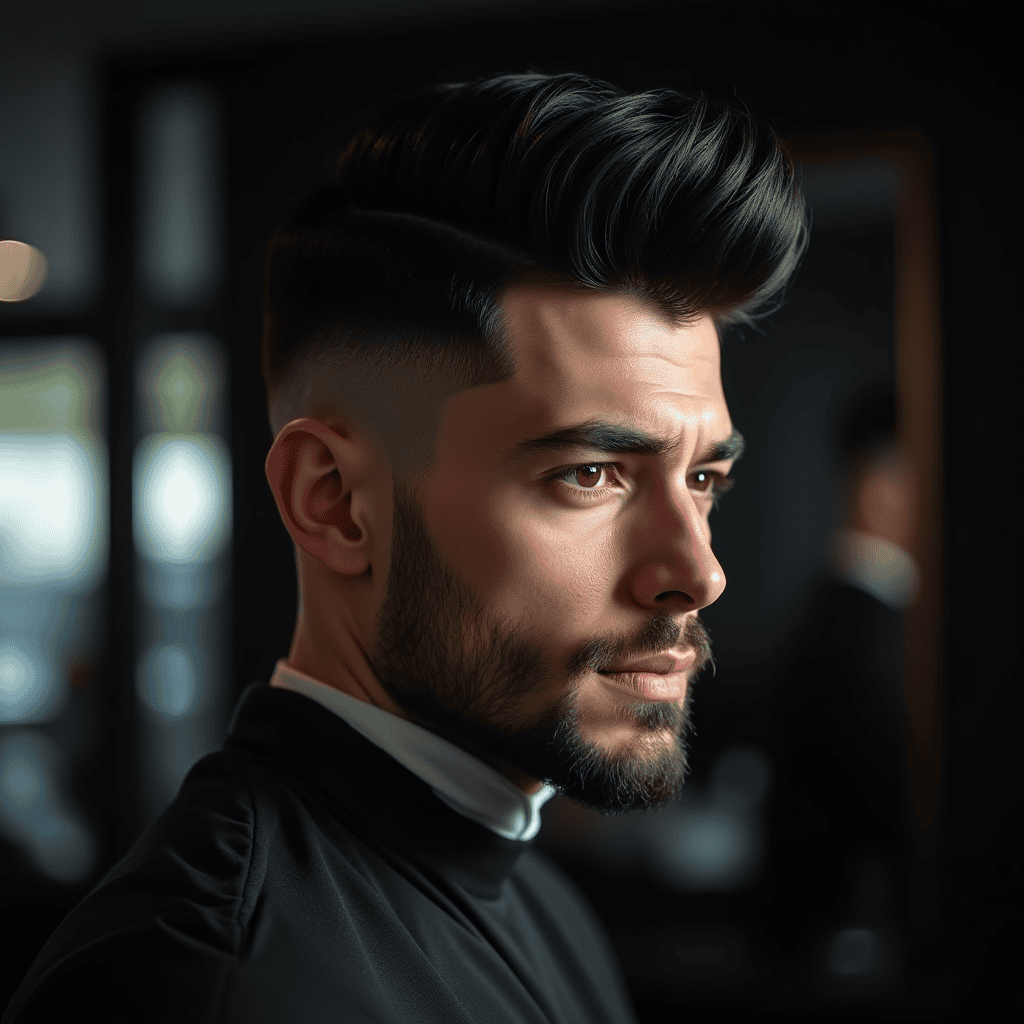
12. High-Fade Pompadour
A high-fade pompadour removes most side volume before the top begins, creating a narrow and elongated overall shape. The front remains tall and the transition sits above the temples, so the eye travels immediately upward. It looks sharper than a low fade even when the top is styled identically.
Tell your barber, “Take the fade high but leave enough transition beneath the top so the pompadour still has a deliberate shape.” This suits men who prefer contemporary barbering and don’t mind exposing more of the sides of the head. Those with very long, narrow faces may prefer a lower fade that preserves more horizontal width.
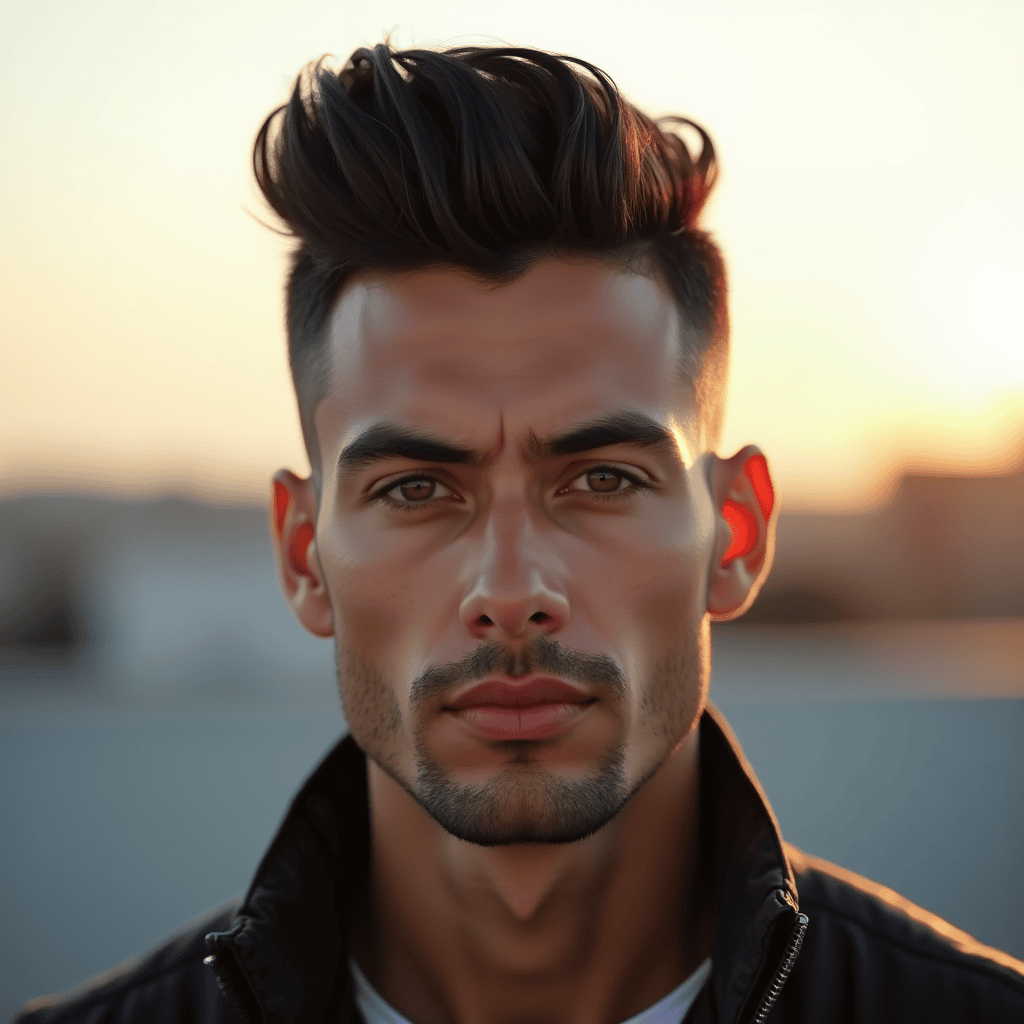
13. Drop-Fade Pompadour
The drop fade curves downward behind the ear rather than following one straight horizontal level around the head. Combined with a pompadour, that curved fade emphasizes both the top height and the natural shape at the back of the skull. The profile becomes more dimensional than a standard fade.
Ask for “a drop fade that follows behind the ear with a connected pompadour and clean but not overly sharp transition.” It’s worth considering if you pay attention to how a haircut looks from the side rather than only in the mirror. The extra fade geometry needs an accurate barber, and mediocre blending becomes easy to spot.
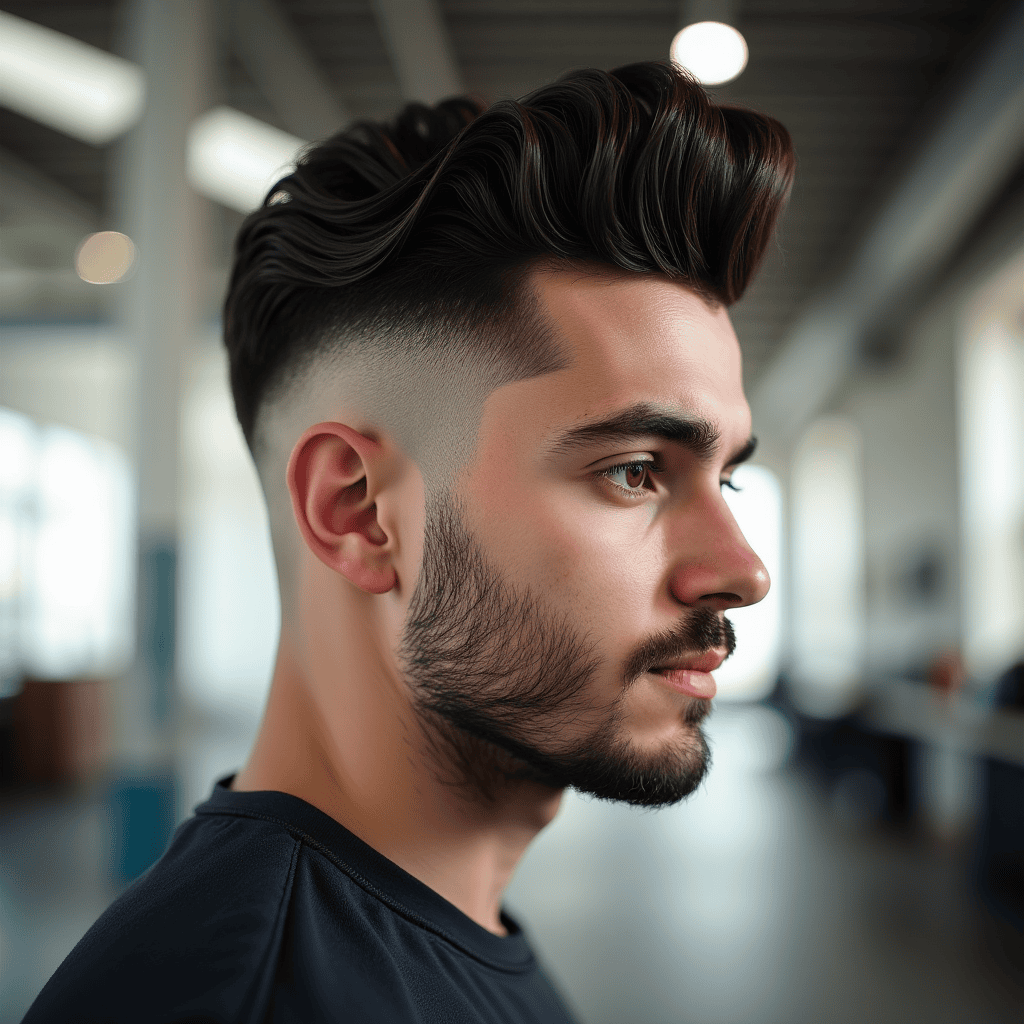
14. Burst-Fade Pompadour
The burst-fade pompadour concentrates the shortest hair in a curved area around the ear while retaining more length toward the back. From the side, the fade resembles a semicircular burst instead of a continuous horizontal gradient. It gives the familiar pompadour silhouette a more individual edge.
Tell the barber, “Keep my pompadour full through the top and use a clean burst fade around the ear without turning the back into a mohawk shape.” It works for men who want less conventional pompadour hairstyle ideas while keeping the top recognizable. The unusual fade can clash with conservative dress codes more easily than a taper.
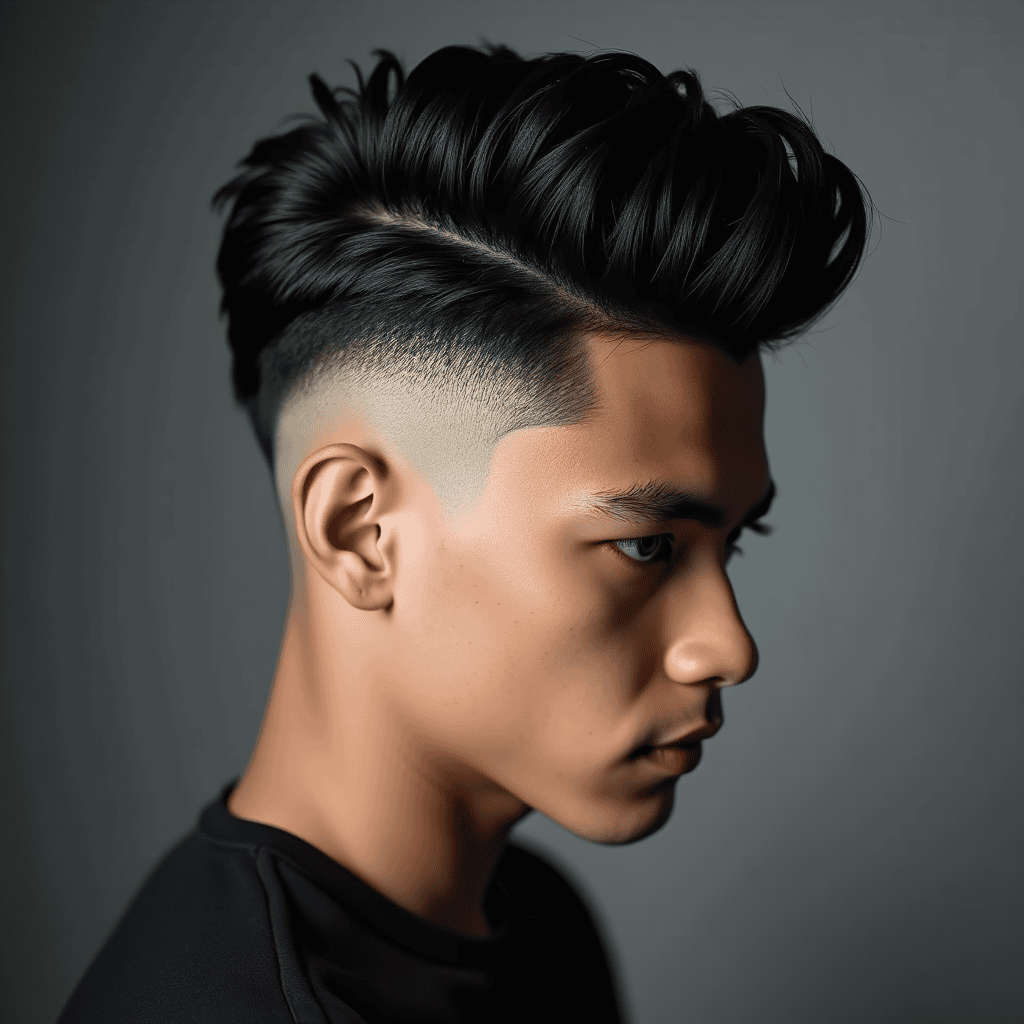
15. Disconnected Pompadour
The disconnected pompadour deliberately refuses a gradual transition between the long top and short sides. A clear weight line sits beneath the swept-back section, exaggerating the difference in length. Seen from the side, it has a bold shelf-like silhouette that softer versions avoid.
Ask for “a clearly disconnected pompadour with long top length and short sides, keeping the separation intentional rather than heavily blended.” Thick hair helps maintain the mass required for the upper shape. Regrowth around the transition can become awkward, making this less forgiving than blended pompadour hairstyle ideas.
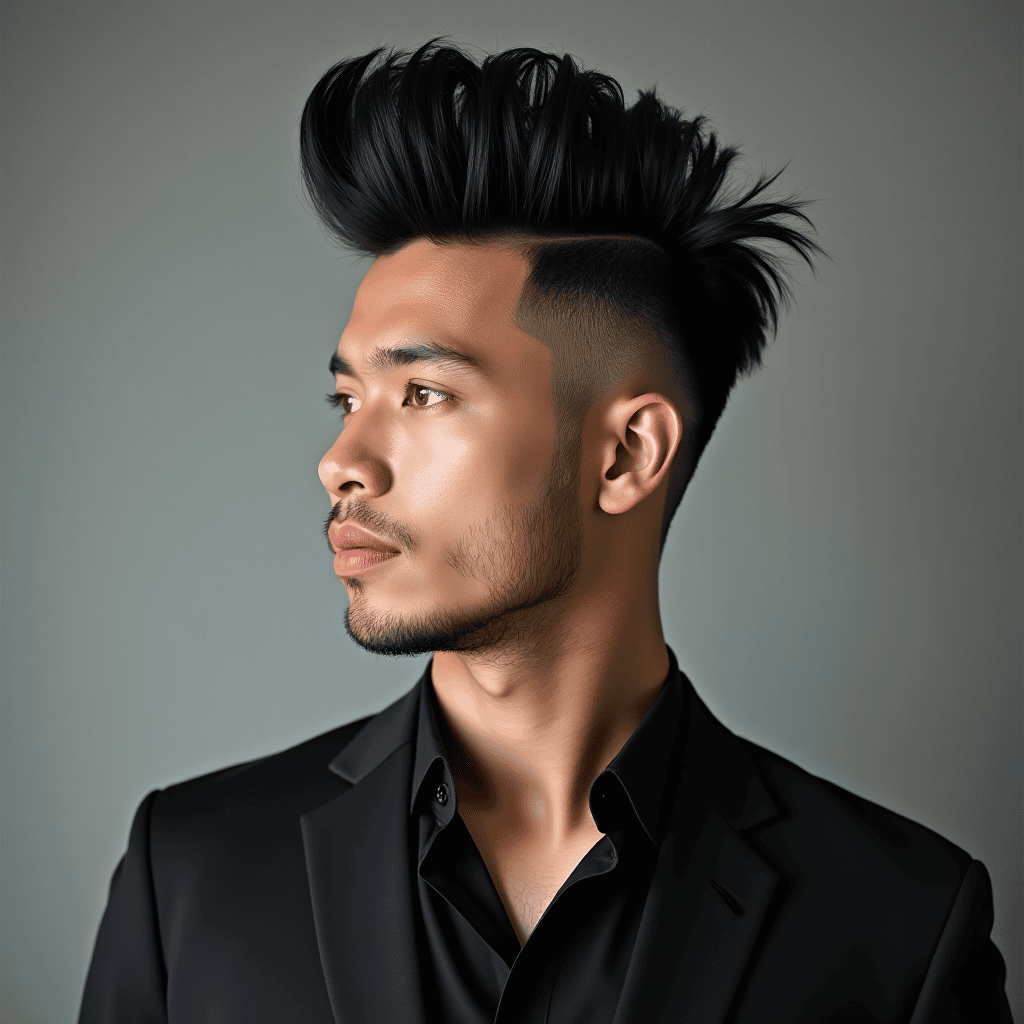
Textured, Wavy, and Curly Pompadour Hairstyle Ideas
Perfectly straight hair isn’t a requirement. In fact, texture can make pompadour hairstyle ideas look less formal because natural bends interrupt the smooth surface and create movement that doesn’t need to be combed into submission.
16. Wavy Pompadour
A wavy pompadour lets natural bends create the surface pattern instead of brushing them completely smooth. The front still travels upward and backward, but small waves remain visible through the top and crown. The outline stays controlled while the interior feels relaxed.
Ask your stylist for “enough top length to keep my natural waves visible while shaping the front into a loose pompadour.” Medium and thick wavy hair can gain impressive fullness without extreme height. Avoid working too much heavy product through it, since collapsing the wave defeats the point of choosing this version.
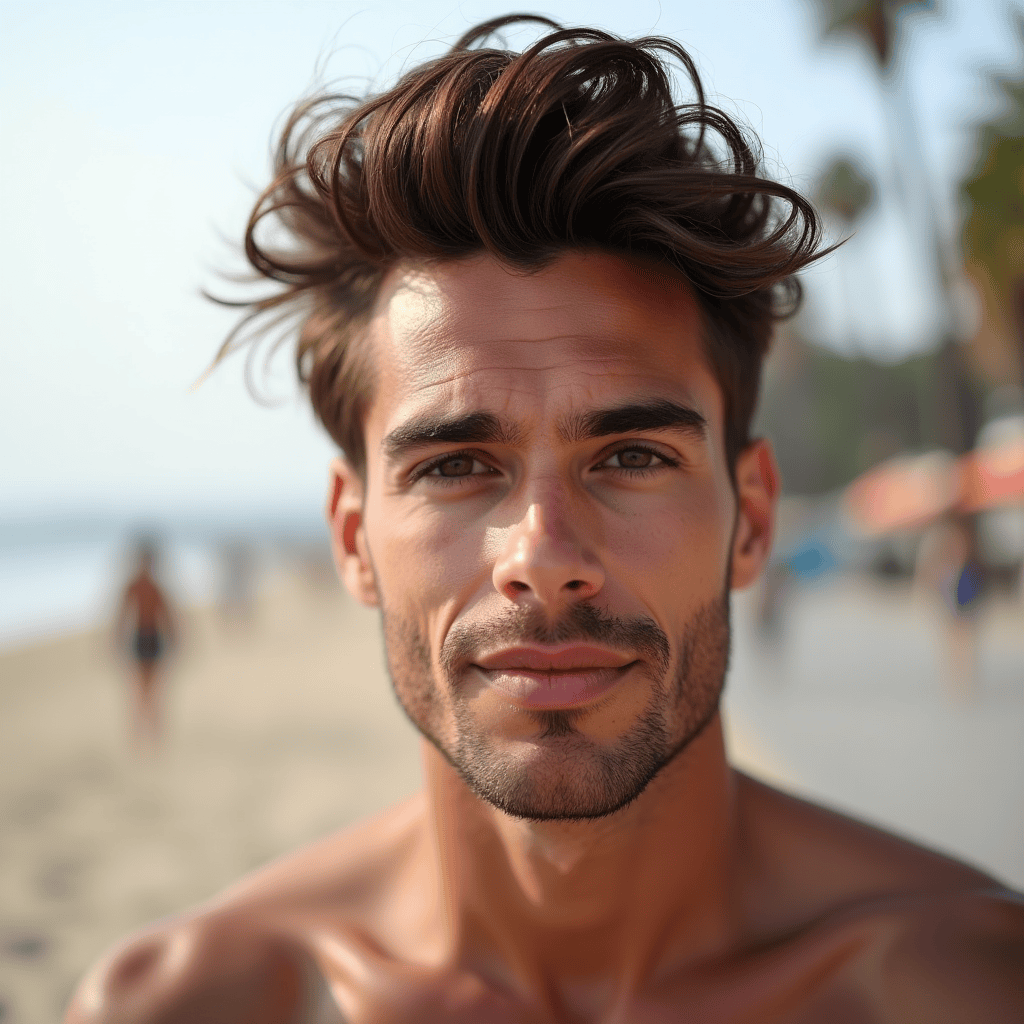
17. Curly Pompadour
The curly pompadour gathers curls upward and backward while letting their individual shape remain recognizable. Instead of one continuous front wave, multiple curls combine to create height. Shorter sides keep the volume concentrated where it matters.
Tell the barber, “Keep enough curl length through the front and top for height, shape it backward, and taper the sides without flattening my natural texture.” Curly hair should generally be handled according to its own detangling needs rather than forced into straight-hair styling habits; the American Academy of Dermatology’s curly-hair guidance is a useful reference. The main challenge is consistency because humidity and curl pattern can change the finished silhouette from day to day.
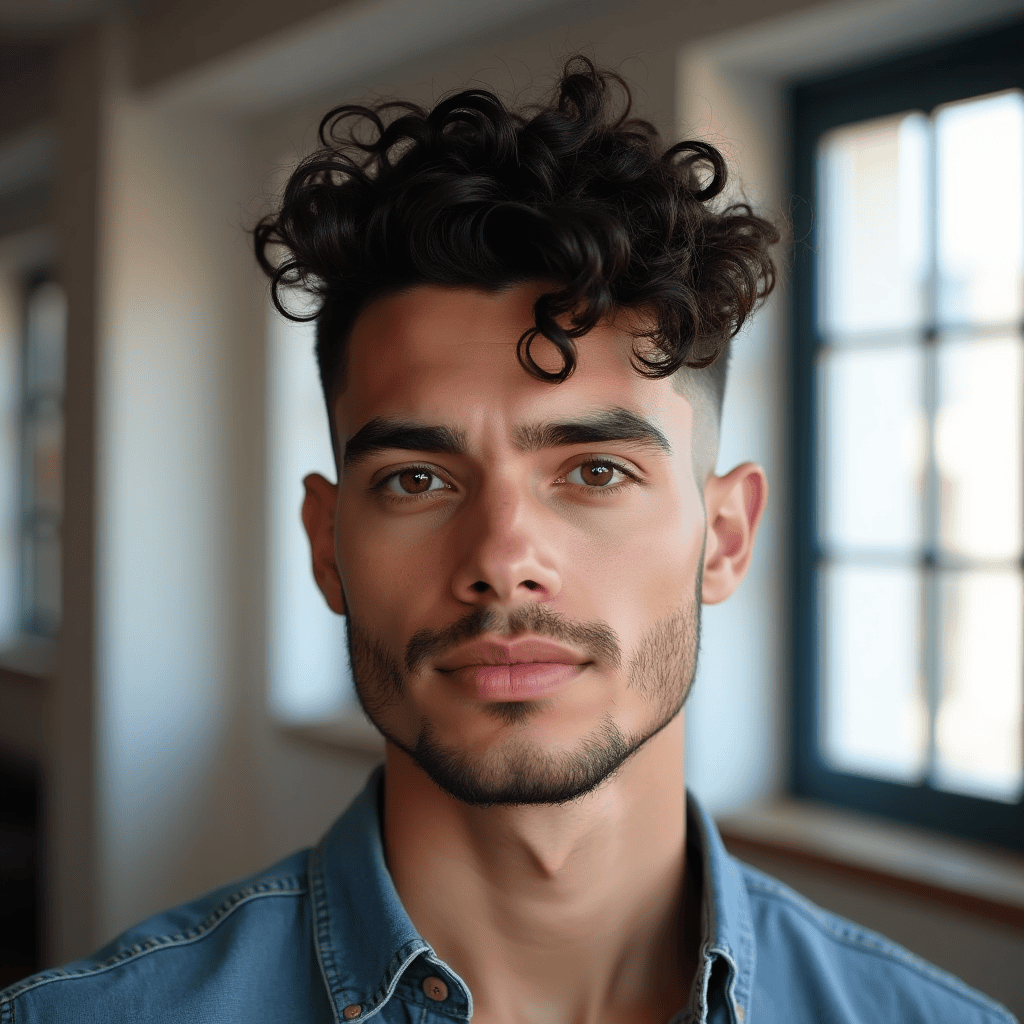
18. Loose Textured Pompadour
A loose textured pompadour breaks the top into broad irregular sections rather than polishing everything into a single continuous shape. Some strands point diagonally while others sweep backward, yet the front still has enough height to read as a pompadour. The overall effect is deliberate disorder.
Ask for “a layered, heavily textured top that I can push into a loose pompadour, with the front left longest.” It suits casual wardrobes and men who don’t want every morning to involve precise comb work. The risk is going too messy; once the front loses a defined upward direction, the haircut begins to read as an ordinary textured quiff.

19. Matte Pompadour
The matte pompadour keeps the traditional swept shape while removing most visible shine. Texture becomes easier to see because light isn’t bouncing off a slick surface, and the result feels more contemporary. The front can still be substantial, but the finish looks dry and touchable.
Tell your barber, “Keep a classic pompadour outline but add enough internal texture that I can style it with a matte finish.” It’s a smart bridge between old-school and current pompadour hairstyle ideas. Too much dry styling product can leave the hair stiff or powdery, so restraint matters more than piling on extra hold.
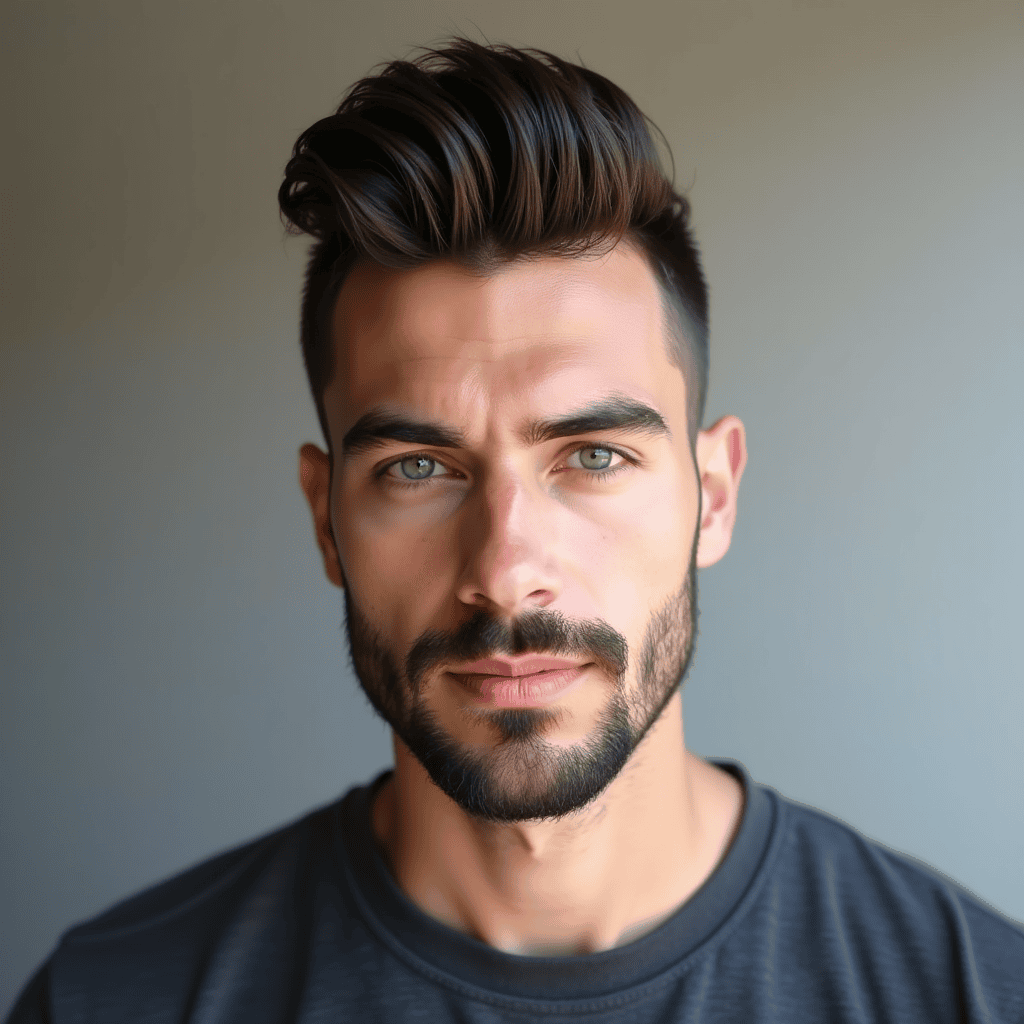
20. Messy Pompadour
The messy pompadour keeps the front lifted but allows sections to fall at different angles. A few strands can drift forward while the main mass still moves back, which stops the haircut from looking overprepared. It works best when the overall silhouette remains readable from several feet away.
Ask for “a layered pompadour with loose texture and enough front length to let a few pieces fall naturally.” Men with thick or slightly wavy hair usually have plenty of material to build the shape. The drawback is a narrow line between relaxed and unfinished, especially when the sides have also grown out.
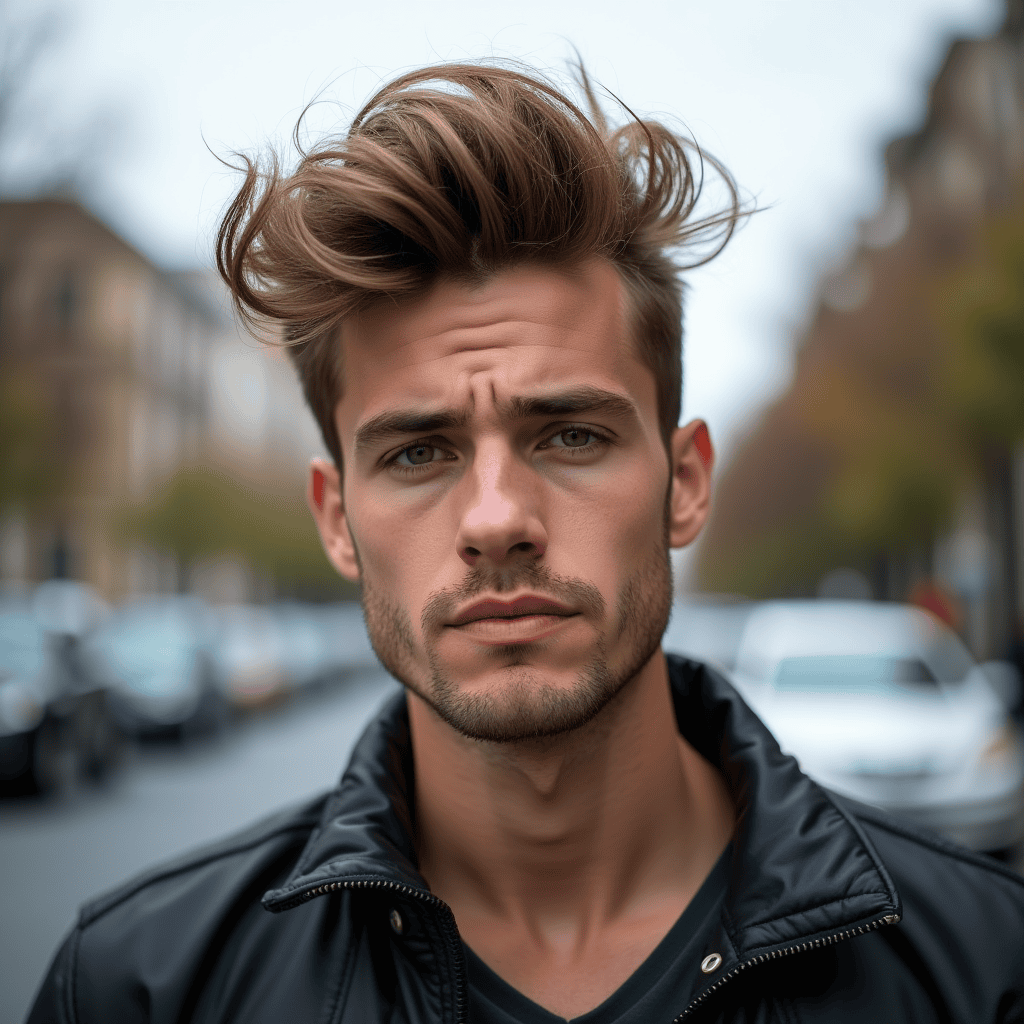
Bold and Longer Pompadour Hairstyle Ideas
These final pompadour hairstyle ideas demand either extra length, stronger proportions, or more commitment to styling. They make sense when the haircut itself is meant to be part of the outfit rather than a neutral finishing detail.
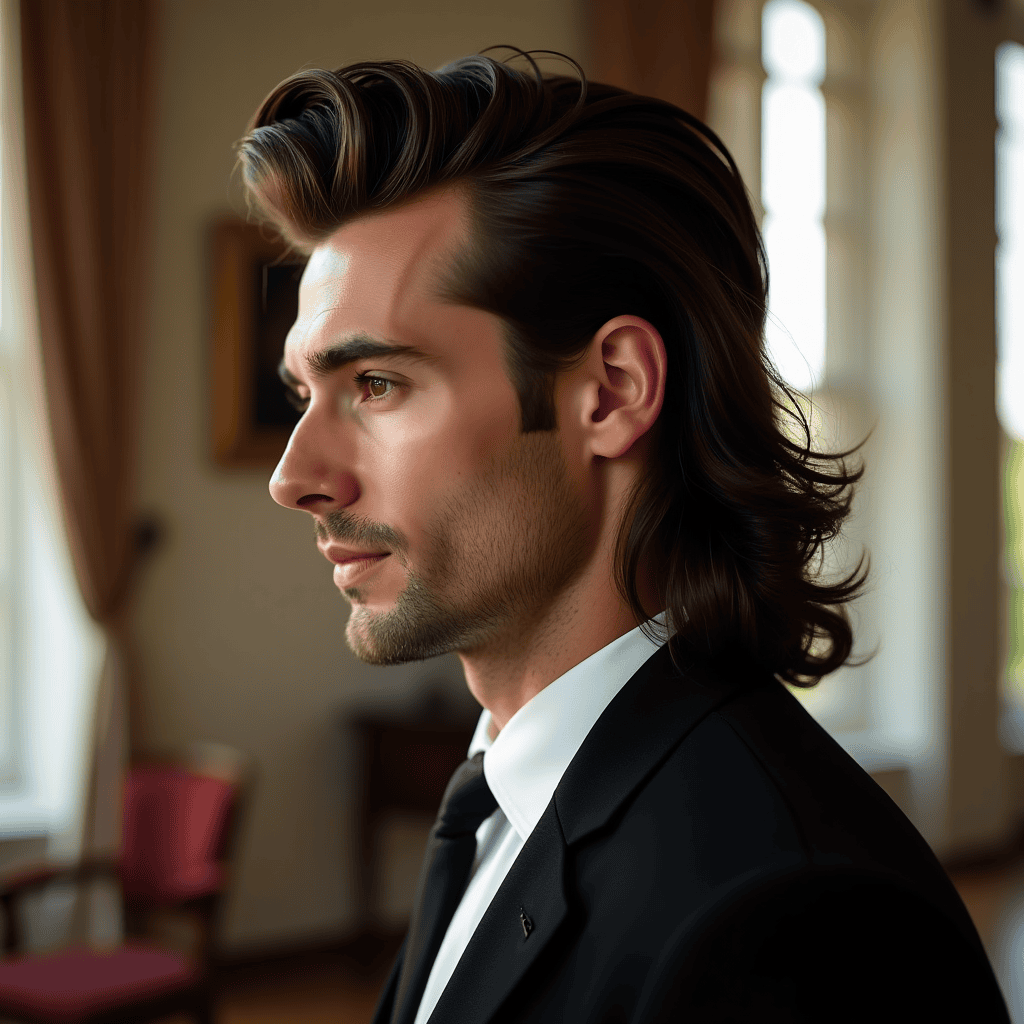
21. Long Flowing Pompadour
The long flowing pompadour uses extra length to build a high front before allowing the hair to travel backward in a broad curve. The crown keeps some movement instead of being compressed tightly against the head. Viewed from the side, it has a sweeping, almost wave-like profile.
Ask your stylist for “long layered top length with the front kept longest, enough movement through the crown, and sides that support rather than compete with the volume.” This works for thick hair and anyone willing to spend more time controlling direction. Long top sections can become heavy, so the lift may collapse later in the day.
22. Extra-High Pompadour
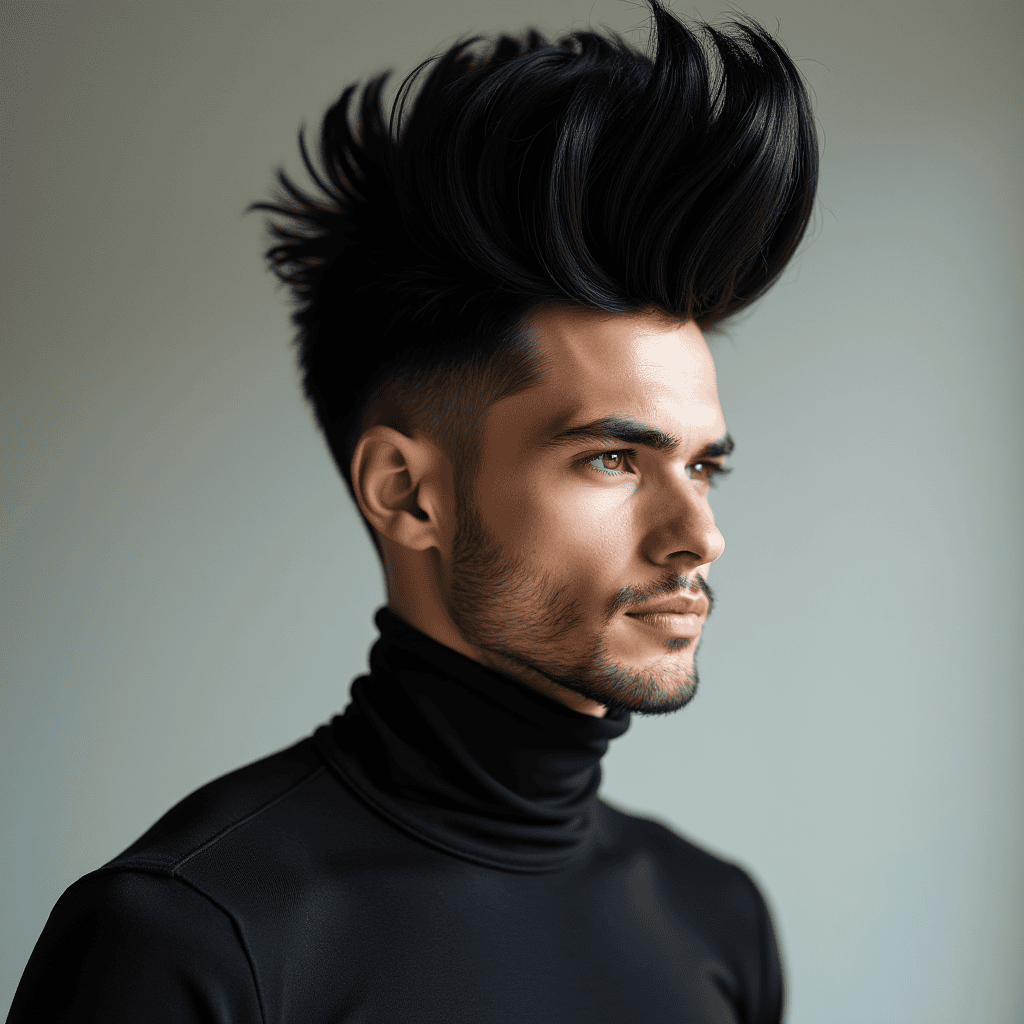
The extra-high pompadour pushes vertical volume beyond traditional proportions. Hair rises steeply from the front hairline before bending backward, creating a silhouette visible even from straight ahead. Tight sides intensify the height further.
Tell your barber, “I want maximum front height with enough length and internal support to keep the pompadour upright, but don’t thin the top until it loses structure.” Thick, cooperative hair is the easiest foundation. This is not a roll-out-of-bed haircut, and excessive repeated heat isn’t a good shortcut; dermatologists recommend limiting high-heat styling and using lower settings when possible. Hair-styling guidance from the American Academy of Dermatology offers sensible precautions.
23. Slick Pompadour
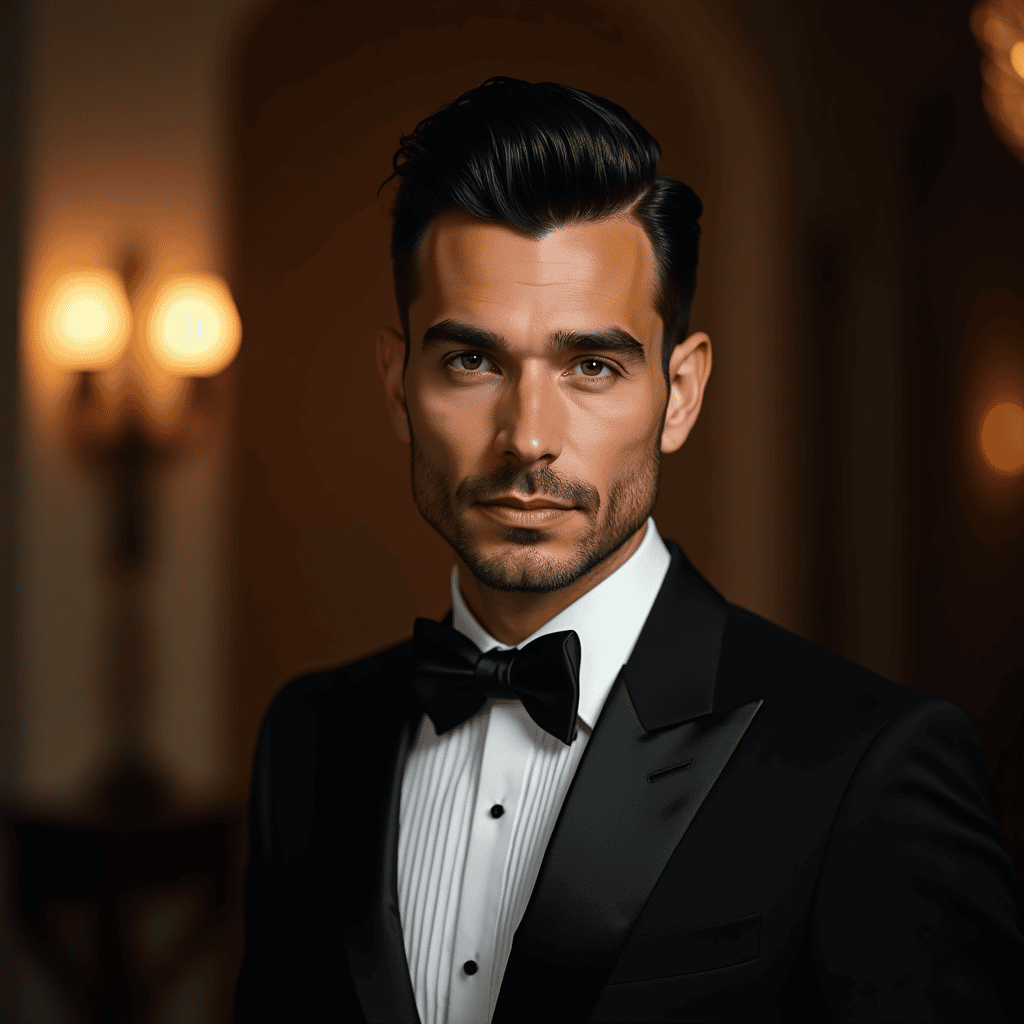
The slick pompadour creates a smooth surface with strands arranged tightly into the same backward direction. Shine makes the curvature more visible, particularly from the crown toward the front crest. The edges remain controlled, giving the haircut a dressed-up finish.
Ask for “a connected classic pompadour with enough length for a smooth combed-back finish and clean tapered sides.” It suits evening wear, formal events, and wardrobes where the grooming is meant to look deliberate. Fine hair can separate under too much product, while heavy application may make any hair type appear flatter than intended.
24. Pompadour With Beard Fade
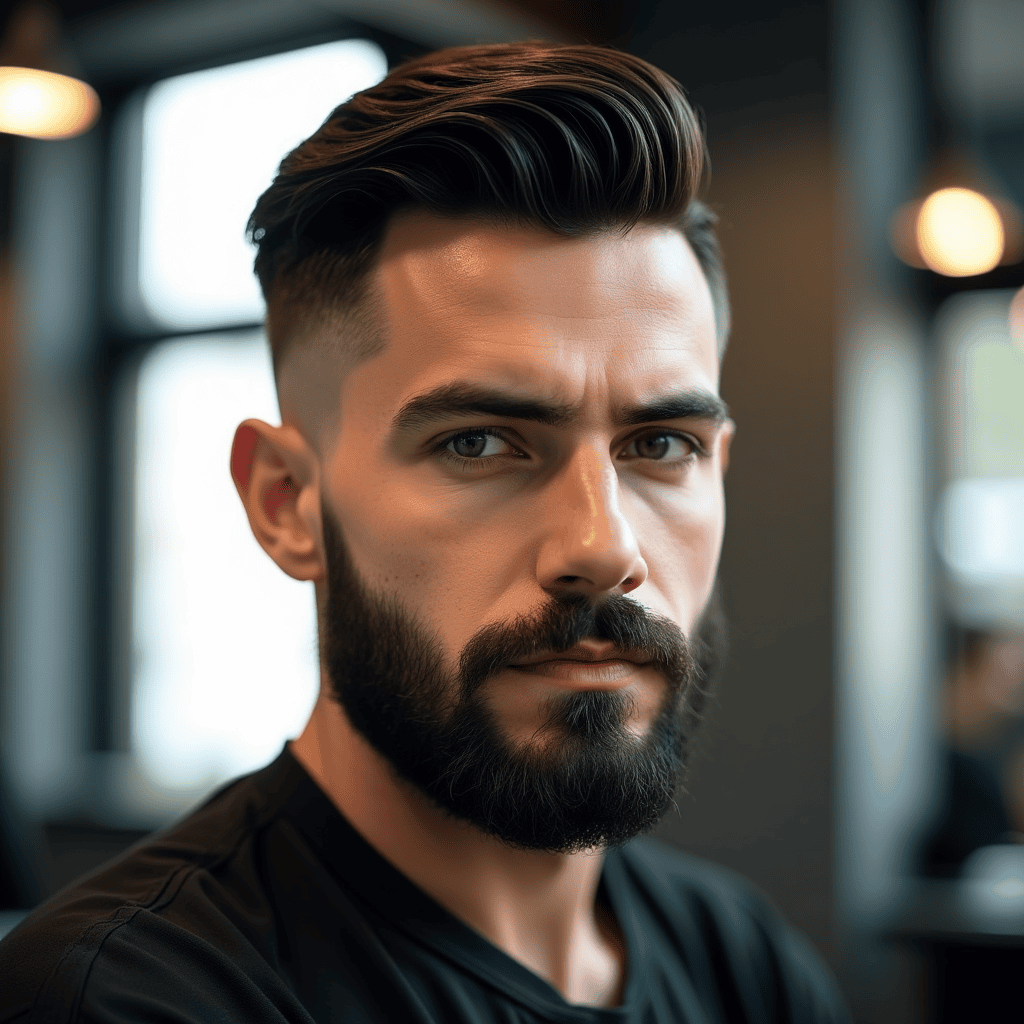
This variation links the haircut visually to facial hair by gradually transitioning the sideburn area into a beard. The pompadour provides height above while the beard creates weight below, leaving the faded temples as a cleaner break between them. Balance matters more here than sheer size.
Tell your barber, “Shape the pompadour first, then blend the sideburns smoothly into my beard so the haircut and facial hair look connected.” It suits men already committed to maintaining both areas regularly. Skip the idea if you dislike frequent outline work because an untidy beard fade can distract from an otherwise excellent pompadour.
25. Modern Rockabilly Pompadour
The modern rockabilly pompadour borrows the dramatic front roll of older styling but pares back the costume effect. The front rises into a large curved crest, while the sides remain clean and relatively controlled rather than heavily rounded. A little visible texture keeps it from appearing frozen in another decade.
Ask for “a tall rockabilly-inspired pompadour with a rounded front roll, cleaner modern sides, and enough texture that it doesn’t look overly slick.” It works best when you’re comfortable making your hair part of the outfit, especially with denim, leather, boots, or other visually strong pieces. Subtle dressers may find the proportion too theatrical.
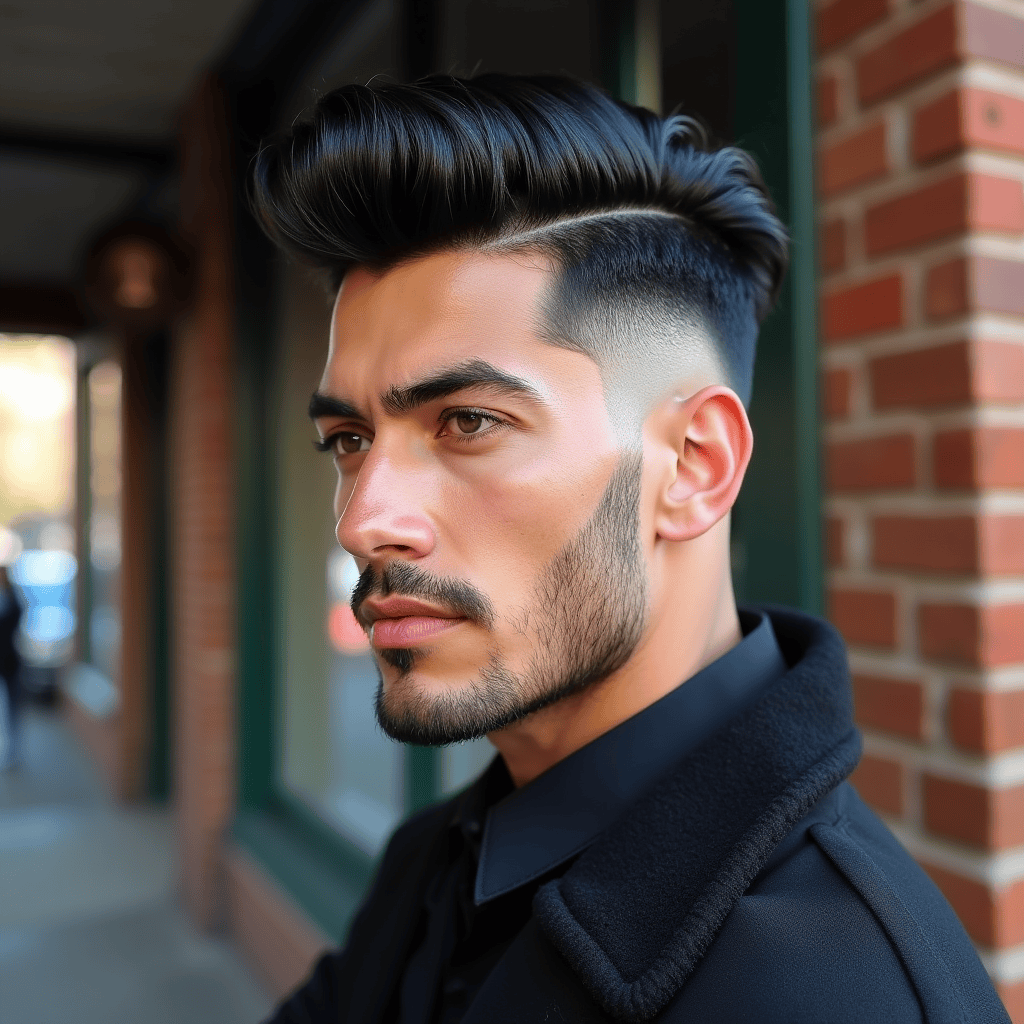
How to Choose the Right Pompadour
The right choice comes down to how much natural volume you have, how much contrast you want at the sides, and how much styling you’re prepared to repeat. Start with the shape your hair naturally wants to make rather than selecting the tallest photograph you can find.
For straight, dense hair, classic and higher pompadour hairstyle ideas are usually easier to reproduce because the front can be directed as a single mass. Wavy and curly hair deserves a version built around the existing texture instead of one that requires constant straightening.
Face proportions matter too. Keeping more width around the temples can balance a longer face, while shorter faded sides can visually narrow a broader outline. These aren’t fixed rules; they’re useful starting points for discussing proportions with your barber.
Bring two or three reference images showing the front and side view you want. Tell the barber which detail matters most: front height, side tightness, texture, parting, or low maintenance. “Give me a pompadour” leaves too much open to interpretation.
At home, build the direction before obsessing over finish. Get the front moving upward and backward first, establish the silhouette, then refine individual sections. If you regularly use heat, lower temperatures and sensible frequency are better habits than repeatedly blasting the hair at maximum heat; the AAD’s healthy-hair advice specifically recommends limiting excessive heat exposure.
Where Pompadour Hairstyles Can Go Wrong
The biggest mistake with pompadour hairstyle ideas is chasing height without considering the haircut underneath. If the top is long but the weight hasn’t been distributed properly, you can end up with a front section that stands while everything behind it collapses.
Overly aggressive fading causes another problem. Removing every bit of weight around the temples may produce an impressive photograph, but it can make the top appear detached once the cut starts growing. A slightly softer fade often survives the weeks between appointments better.
Product overload is equally common. More product doesn’t automatically create more hold. Too much can pull the front downward, separate fine hair into obvious strands, or turn deliberately textured hair into a solid block.
And don’t assume a pompadour has to be perfectly polished. Some of the strongest modern pompadour hairstyle ideas rely on waves, curls, matte separation, or deliberate looseness. The recognizable ingredient is the elevated front moving upward and backward, not a mirror-smooth finish.
Frequently Asked Questions
Questions about pompadour hairstyle ideas usually come down to length, texture, maintenance, and what to tell a barber. The answers below cover the decisions that tend to matter before choosing a specific version.
What is the easiest pompadour hairstyle for beginners?
A short textured or mini pompadour is usually the least intimidating starting point. It needs less front height, works with relatively modest top length, and doesn’t require the highly polished finish of a classic version. Keep the sides tapered rather than extremely faded for easier grow-out.
How long does hair need to be for a pompadour?
You can create a small pompadour with roughly a couple of inches at the front, while a fuller version generally needs substantially more workable length. What matters is whether the front can travel upward and backward without immediately falling forward.
Which pompadour hairstyle ideas work with thick hair?
Classic full, long, textured, high-fade, and disconnected versions all make good use of dense hair. Thick hair provides structure, but excess bulk can also make the shape heavy. Ask your barber to manage interior weight without thinning the front until it becomes weak.
Can men with curly hair wear a pompadour?
Yes. A curly pompadour uses the same basic elevated front silhouette while keeping visible curl definition. Rather than trying to make the surface perfectly smooth, shape the curls upward and backward and use shorter sides to concentrate the visual volume on top.
Is a pompadour good for thin or fine hair?
A compact pompadour can work better than an oversized one because exaggerated height can expose separation between fine strands. Short textured versions, moderate tapers, and lighter finishes tend to make more sense than long, heavily slicked shapes.
What’s the difference between a quiff and a pompadour?
Both can have front height, but a pompadour traditionally carries the hair upward and backward into a fuller continuous silhouette. A quiff often concentrates more movement at the fringe and may appear looser, shorter, or more forward-directed through the front.
How do I explain a pompadour haircut to my barber?
Describe the front length, desired height, side treatment, and finish separately. For example: “Keep enough front length for medium pompadour height, taper the sides rather than taking them to skin, and leave some texture on top.” Reference photos remove even more ambiguity.
Which pompadour hairstyle works best for formal occasions?
A gentleman’s taper, classic full pompadour, side-part version, or restrained low-fade pompadour pairs naturally with formal clothing. They keep the recognizable height while maintaining cleaner transitions and less extreme contrast than high fades or heavily disconnected cuts.
How often should a pompadour haircut be trimmed?
There isn’t one schedule for every version. Tight skin and high fades reveal growth quickly, while scissor cuts and softer tapers tend to change more gradually. Book according to how much visible regrowth bothers you rather than assuming every pompadour needs identical maintenance.
Can I style a pompadour without making it shiny?
Yes. Matte pompadour hairstyle ideas use texture and controlled lift instead of a glossy surface. Build the basic shape first, keep the front elevated, and choose a finish that preserves separation rather than coating the hair heavily.
What pompadour should I choose for everyday office wear?
A low-fade pompadour, gentleman’s taper, short textured version, or side-part pompadour provides enough shape to look intentional without becoming the loudest part of your appearance. Moderate height is usually easier to pair with everyday shirts, knitwear, jackets, and tailoring.
Are high pompadours difficult to maintain?
They demand more attention because extra height magnifies problems with direction, weight, and collapse. You need enough front length, a haircut that supports the shape, and consistent styling habits. If you want easier mornings, a compact textured pompadour gives you the basic effect with less work.
Choosing Your Next Pompadour
Don’t choose your next haircut by height alone. Decide whether you want clean, textured, faded, curly, or classic first, then let your barber adjust the proportions around your actual hair density and growth pattern. The most useful pompadour hairstyle ideas are the ones you can reproduce after leaving the barber’s chair. Save the two reference looks closest to your hair type, show both angles at your appointment, and ask which version your current length can support.
Best Men’s Hairstyle Reports
Discover modern men’s haircut ideas, classic barber styles and fresh hairstyle inspiration for every look.